
Growing and caring for garlic in open ground
Content
Planting in open ground
Garlic is mentioned in inscriptions left on the surface of ancient Egyptian pyramids. A clay bulb was discovered inside the tomb of Tutankhamun himself. And the world-famous Pythagoras called the beloved garlic the king of spices. And it's no coincidence that it earned such a resonant name. Although it has been known worldwide for about 3,000 years, it remains popular among people in countries such as Italy, Korea, India, and China.
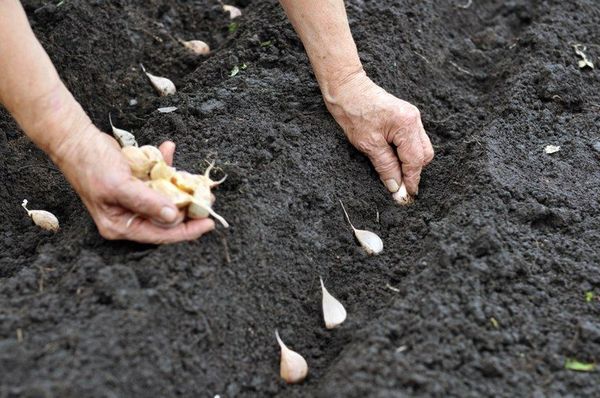
Gardeners in our country have been successfully growing garlic for many years. Many, especially beginners, are interested in proper planting and care in open ground, so we'll discuss the key points in more detail below. You'll learn the best time to plant garlic, how to prepare the beds, and how to plant it yourself.
Landing dates
Nowadays, breeders have successfully developed many excellent garlic varieties. Three of these are suitable for growing in your own garden: winter non-bolting, winter bolting, and spring non-bolting varieties, all familiar to experienced gardeners. Among their characteristic features, winter varieties ripen early, have large heads and cloves, and are known for their high yield. However, they don't store well for very long. They are used for preparing various dishes and for canning.
Winter varieties include Yubileyny Gribovsky, Komsomolets, Boguslavsky, Gulliver, Petrovsky, and others. Spring varieties require special storage conditions and can be stored for a long time. Popular varieties for outdoor planting include Elenovsky, Yershovsky, Degtyarsky, Gafuriysky, and Ukrainsky Bely.
Bolting winter garlic varieties, which tend to form bulbs with 2-6 large cloves, and non-bolting varieties, which form multi-clove bulbs, are recommended to be planted 35-45 days before frost. This period typically occurs between the second half of September and early October. Before planting, select large and medium-sized bulbs and separate them into cloves weighing no more than 6 grams. Bulbs with 2-3 cloves should not be used. It is recommended to replant the bulbs every 3-4 years.
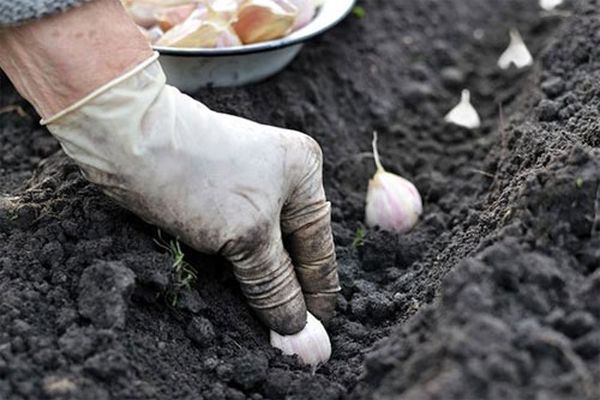
The recommended time for planting spring garlic is early spring. Planting can be planned for the first few days of sowing, but no later than the first ten days of April.
Spring bulbs often have multiple cloves. It's best to avoid medium-sized cloves for planting.
Preparing the garden bed
Proper soil preparation is essential for growing garlic. It's recommended to choose a site with fertile, neutral soil. Garlic thrives in loamy soil, but it shouldn't be too dry. Avoid planting in low-lying areas, as rainwater and snowmelt often accumulate there. The site should be dug over in the fall, reaching a sufficient depth. Be sure to add about 30 grams of superphosphate, 20 grams of potassium salt, and 1 bucket of compost per square meter. When spring arrives, you'll only need to level the site using a rake.
All cabbage varieties are considered excellent predecessors for garlic, as are pumpkin, squash, beans, peas, and green manure. It is not recommended to plant garlic after carrots, cucumbers, tomatoes, onions, and garlic. Crops such as black currants, potatoes, raspberries, gooseberries, strawberries, and wild strawberries benefit from growing garlic near them. Garlic will certainly provide reliable protection against pest attacks.
How to plant
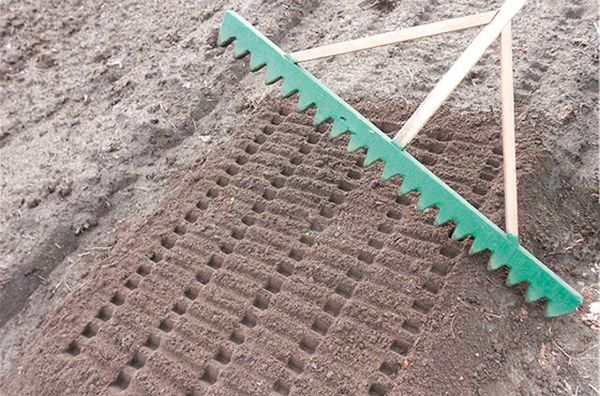
Garlic can be planted when the soil temperature is around 12–15 degrees Celsius. This will allow the plant to develop a strong root system. This will increase the plant's winter hardiness. Before planting, the area must be leveled. The ideal spacing between rows is 20 to 25 cm. The spacing between cloves should be no more than 12 cm. Furrows are acceptable, but do not press them into the soil. The planting depth is approximately 8 to 9 cm. To prevent the cloves from freezing, it is recommended to use planting material 6 to 7 cm thick. The bed must be mulched. High-quality humus, peat, or sawdust can be used for this purpose. Brushwood spread throughout the area will help retain snow on the beds. Be sure to remove the top layer when the spring thaw begins.
Outdoor care
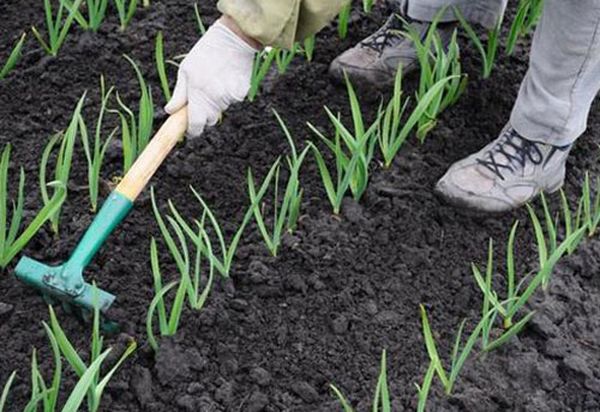
To ensure a good harvest, you need to regularly water the plants, weed and loosen the soil, and apply appropriate fertilizers. You should also remove any emerging shoots, which drain the garlic of its energy and nutrients, redirecting them toward planting material. You should also know how to help the plant if it's attacked by diseases and pests. We'll cover proper watering and fertilizing in more detail below.
Watering
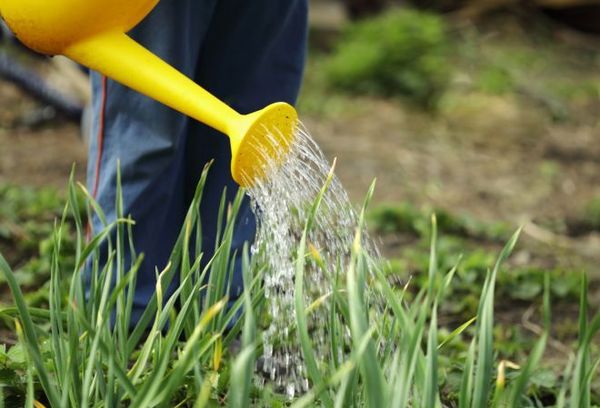
The plant requires watering as the soil dries out. If the weather is relatively dry, it's necessary to water thoroughly. The typical frequency is 10-12 liters per square meter. If there's consistent rainfall, natural precipitation should be sufficient. This makes things easier for the gardener, as watering is no longer necessary. Watering should be stopped in August. By this time, the bulbs have already gained sufficient weight and volume, meaning they are fully formed.
Fertilizers and dressings
Garlic responds well to mineral and organic fertilizers. Fertilizing should be done in early spring. High-quality potassium and phosphorus fertilizers are required. To ensure a good harvest, three applications are necessary. The first application should include superphosphate at a rate of up to 100 grams, ammonium nitrate at approximately 60 grams, and potassium sulfate at the same rate per square meter. The second application should be done one month after the first. The same fertilizers and quantities are used as for the first application.
When the heads reach the size of a walnut, you can fertilize the plants for the third time. When fertilizing in the spring, remember that nitrogen-containing fertilizers are only needed during the initial growth phase. Later, only fertilizers containing sufficient amounts of elements such as phosphorus and potassium are acceptable. A deficiency in these elements can cause yellowing of the foliage. You can also fertilize your favorite crop in the summer. To do this, in June, add a solution of 10 liters of water with 2 tablespoons of superphosphate to the soil and water the beds.
Diseases and pests of garlic
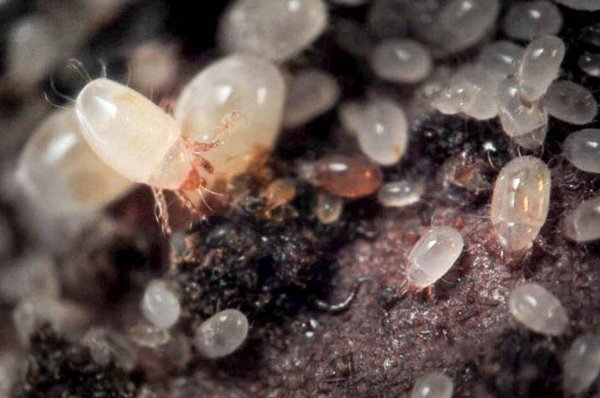
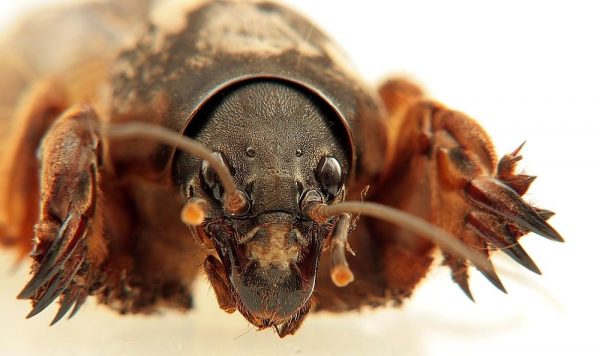
Common diseases that affect garlic include sulfur, neck rot, and white rot, as well as fusarium, helminthosporiosis, yellows, smut, downy mildew, mosaic, tracheomecosis, and rust. Garlic pests include tobacco thrips, stem nematodes, onion weevils, cabbage loopers, winter moths, garden moths, and gamma moths, onion flies, sprout flies, onion moths, crane flies, and mole crickets.
Preventing the occurrence of problems is by observing crop rotation and agricultural practices. The crop can be replanted in its original location after 4-5 years. The storage area should be treated with a solution of 400 grams of bleach dissolved in 10 liters of water several months before planting. Pre-sowing treatment of the bulblets and cloves is also important. It is recommended to warm the cloves at a temperature of approximately 40-42 degrees Celsius for 10 hours.
Modern fungicides are commonly used to treat diseases. For example, having identified rust lesions on a crop, a gardener can purchase the copper oxychloride-based product "Hom." This should be applied to the plant. In the early stages of the disease, fungicides such as "Kuproksat," "Gamair," and "Champion" are effective. The products "Thiram," "Polycarbocin," "Fentiuram," and "Arcerida" are effective against downy mildew. The modern product "Fitosporin" effectively combats all fungal diseases. Its solution should be applied not only to the soil, but also to the seeds and storage areas.
Video: "When and How to Plant Garlic in Open Ground"
In this video, you'll learn when and how to plant garlic in open ground in the fall.