
Rules for growing and caring for spring garlic
Content
Planting dates
When growing garlic of any variety, planting time is crucial. Delaying planting can reduce the yield by approximately half.
A distinctive feature of this crop is that it grows well at low temperatures. Roots from planted seeds begin to sprout when the soil warms to 2-3 degrees Celsius, and leaves can be expected at 5-6 degrees Celsius. The optimal temperature for growing this plant is considered to be 16-20 degrees Celsius.
Spring garlic grows most vigorously in late April and early May. However, in summer, when the heat sets in, all vegetative processes slow down. Therefore, when choosing a time to plant spring garlic, consider the outside temperature.
Typically, this crop is planted after the snow melts and the soil has warmed slightly. These conditions occur in late April (between the 20th and 26th). By this time, the soil is sufficiently moist, and frosts will not cause significant damage to the plants.
Soil preparation
The second key aspect of growing spring garlic is proper soil preparation. This variety typically develops a moderately developed root system. Therefore, the seedlings should be planted in well-prepared and fertilized soil. This will create optimal conditions for the normal growth and development of both above-ground and underground parts.
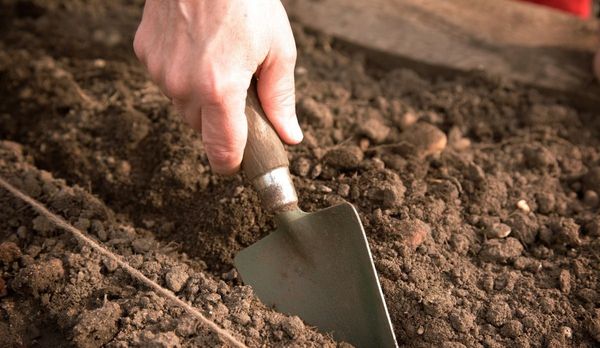
Experienced gardeners recommend choosing neutral, humus-rich soils for spring garlic. It's important to remember that the chosen site shouldn't be overly humid and should receive ample daylight throughout the day.
When choosing a site for garlic, it's important to consider crop rotation. Spring varieties should be grown in the same location no more than once every five years. Good predecessors for this crop include potatoes, cabbage, tomatoes, cucumbers, and legumes.
Preparation of the beds begins in the fall and involves the following steps:
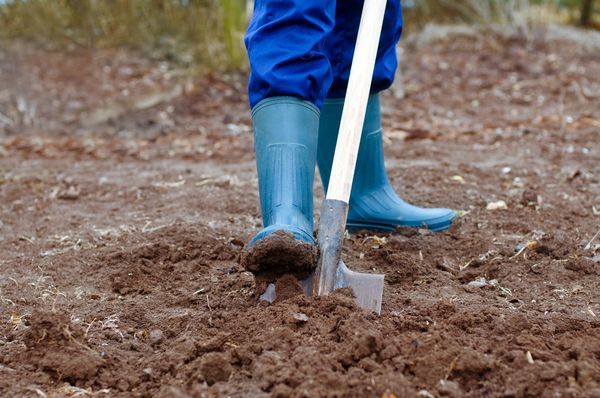
- deep digging of the earth;
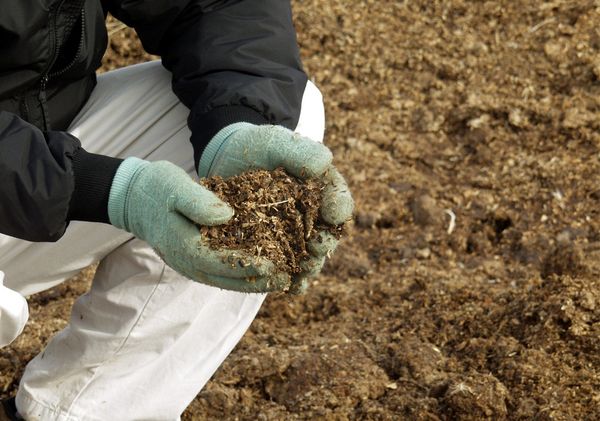
- Fertilizing. Humus or compost can be used. Half a bucket of fertilizer should be applied per square meter of plot. Peat crumbs or ash are also permitted (10-15 g per square meter). Some sources recommend adding potassium salt (15 g), superphosphate (20 g), and well-rotted manure or humus (4-6 kg) to the soil at this time.
Further preparation of the beds will take place approximately 14 days before planting. This involves digging the soil to a depth of 15-20 cm and re-fertilizing. This time, 8 liters of organic fertilizer are applied per square meter.
Typically, one tablespoon of potassium sulfate and three tablespoons of superphosphate are used for this purpose. Both substances are diluted in 10 liters of water. The homemade solution should be evenly sprayed over the area. Afterwards, the soil is leveled. Raised beds are also allowed. Cover the prepared area with plastic wrap. The beds remain in this condition until planting.
Planting technology
Spring garlic has a specific planting technology, which consists of two stages:
- Preparing the seed material. At this stage, seeds that possess the desired characteristics (large, healthy, not deformed) are selected;
- The seeds that have been selected are planted in beds.
Before planting the planting material, the soil is fertilized. Well-rotted manure or humus is suitable for these purposes.
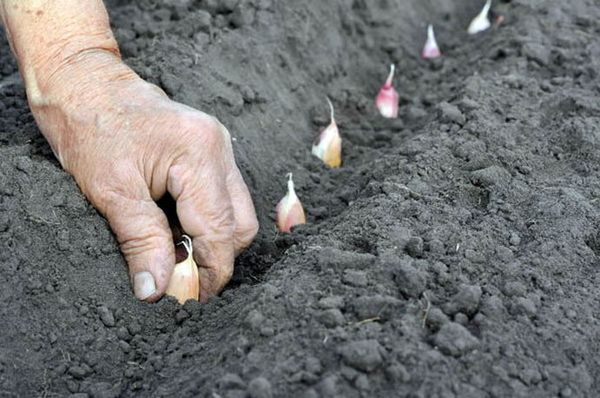
Spring garlic seeds are planted in rows. The distance between seeds should be approximately 6-8 cm. The distance between rows should be 20-25 cm. The planting material should be buried approximately 5 cm deep in the soil. When planting the garlic, ensure that the base of the garlic is at the bottom. Otherwise, the plant will not be able to properly develop its root system, which will delay the development of both the above-ground and underground parts.
Once the seedlings are planted in the beds, they are covered with soil. The soil is then mulched with peat. Mulching will prevent weeds from appearing in the area and will also help the soil stay moist longer.
Growing spring garlic immediately after planting does not require watering or fertilizing. No further care is required until the first shoots emerge.
Correct planting of spring garlic and proper care are the key to the formation of large heads.
Care instructions
To get a good garlic harvest, you need to know how to grow healthy and strong plants. Spring garlic is an easy-to-care-for crop. However, proper watering and fertilization are essential. Otherwise, yields will be low.
Fertilizer
Garlic, regardless of its variety, is a plant that is quite demanding of the soil in which it grows. To maintain the required amount of nutrients in the soil, it is necessary to periodically apply fertilizer.
Organic fertilizers are considered the best for spring varieties. These include:
- green manure;
- vermicompost;
- manure;
- compost.
All these substances are a natural product that was obtained by processing plant residues by worms.
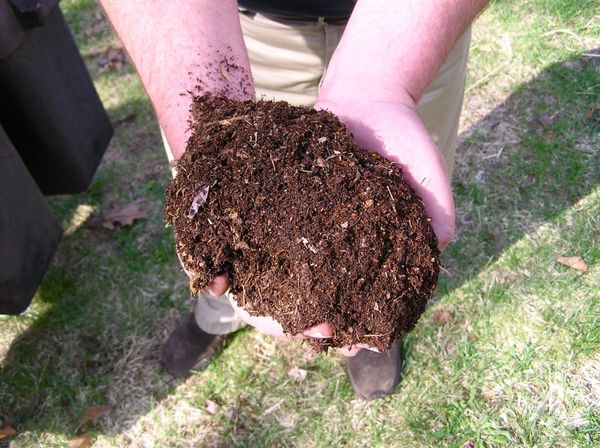
During spring digging, use humus (3-4 kg per square meter) or compost (4-6 kg per square meter). You can also enrich the soil by adding potassium (12-17 g per square meter) and phosphorus (6-8 g per square meter).
In addition, garlic requires mineral fertilizers. Nitrogen fertilizers, which stimulate growth and development, are typically applied in the spring. Apply 90-130 g per square meter. Half of this dose is applied before planting, and the remaining portion is divided into two equal doses and applied in mid-May and early June. The final nitrogen fertilizer application should be made approximately one month before harvest.
It's worth noting that garlic is chloride-tolerant. Therefore, mineral fertilizers should be used with caution, as excessive amounts in the soil can lead to the accumulation of toxic and poisonous substances in the bulbs.
Therefore, for top dressing, choose fertilizers that have a low chloride content or do not contain this component at all (for example, Azofoska). Spring varieties also respond well to the application of Florovit. The concentration of the prepared solution should be 0.3%. This product is used in dry spring weather.
If it's unavoidable to avoid using such fertilizers, they should be applied only during the sowing period. Applying such preparations during the growing season is prohibited.

The fertilizing scheme for spring garlic is as follows:
- The first application of fertilizer is carried out when the leaves rise 12-14 cm above ground level. In this case, a solution of mullein is used for feeding;
- The second feeding is carried out 14 days after the first. Nitrophoska is used here. To prepare it, dilute 2 tablespoons of the substance in 10 liters of water. Typically, 3-4 liters of solution are used per square meter.
- The third time, fertilizer is applied before harvesting (in late July or early August). In this case, a superphosphate solution is used. To prepare it, dissolve 2 tablespoons of the solution in 10 liters of water. Apply 4-5 liters of the prepared solution per square meter.
The amount and type of fertilizer applied to the soil depends on the soil's fertility. If the soil is poor in nutrients, fertilizers should be applied more frequently than prescribed.
Watering
Watering is also an important aspect of care. To grow excellent spring garlic, you need to ensure proper and regular watering. It's especially important to water the plants on time during the formation and growth of the head. The rest of the time, you only need to monitor the soil moisture in the area.
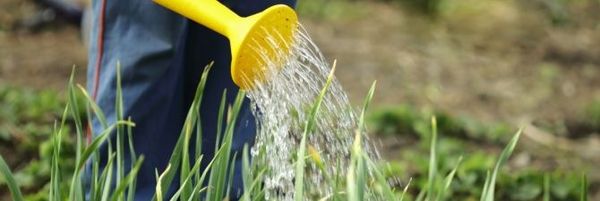
To ensure proper watering of spring varieties, the following rules must be observed:
- Watering should be done in the morning. This will allow the soil to dry quickly, limiting the growth and development of weeds. However, watering in the evening is also permitted;
- Regular watering should be carried out during May and June, and for some varieties in July;
- You should stop adding water to the soil 2-3 weeks before you plan to harvest.
Don't allow the soil to dry out even once. Garlic doesn't tolerate this. Drying out will result in poorly developed bulbs. The yield will also be significantly reduced.
To check whether your plants need watering, simply feel the soil with your fingers. If the top layer of soil feels dry, water the beds immediately.
Per square meter of planting, 10-12 liters of water are needed. If the weather is warm, watering should be done once every 1-1.5 weeks. In hot and dry weather, water garlic every 5-6 days.
It's important to remember that after each watering, proper air circulation for the root system must be ensured. Therefore, the soil must be loosened after watering. Otherwise, the resulting soil crust will prevent air from reaching the roots.
Little tricks for caring for garlic
Caring for spring garlic varieties can be made a little easier. However, to do so, you need to know a few tricks. Some can be figured out on your own, but they require experience. More experienced gardeners can share others. In any case, knowing certain subtleties of caring for garlic plants can minimize your monitoring to some extent.
You can simplify care in the following way:
- The soil around plants can be mulched. Straw is often used for this purpose. Mulching the soil significantly retains moisture longer, reducing the risk of the topsoil drying out and forming a crust. In this case, plants also need to be watered less frequently. The straw layer acts as a natural barrier to weed growth. Therefore, mulching eliminates the need for regular weeding.
- High-quality soil fertilization during the preparation stage will reduce the need for additional fertilizers during the growing season. On nutrient-rich soils, the number of fertilizer applications can be reduced by up to half.
- When growing spring garlic in clay soil, it is recommended to add sand. Coarse river sand is best. The amount of sand added is determined by the quality of the soil.

- during the period of active plant growth (May, June, early July) during the month of planting, water the plants 3-4 times;
- If the summer is warm and rainy, water as needed. Keep in mind that overwatering can cause root rot. Excess moisture can also stimulate the development of bacterial and fungal infections in both the above-ground and underground parts of plants.
- Loosening the soil periodically is necessary. It's best to do this with a pitchfork to avoid damaging the root system;
- Preventative spraying. Garlic is a plant with a strong immune system and is rarely exposed to various types of pathogenic microflora. However, the risk of infection remains. Therefore, garlic should be periodically sprayed with folk remedies that prevent the development of various ailments.
Now we've learned everything about growing and caring for spring garlic. To obtain a large, high-quality harvest of spring varieties of this crop, all you need to do is maintain proper watering and periodically fertilize the soil.
Video: "Garlic Care"
This video will show you how to properly care for garlic.