
Rules for growing an excellent garlic crop
Content
Types of garlic
Before you begin growing garlic, you should know the different varieties available. Today, this crop is represented by the following varieties:
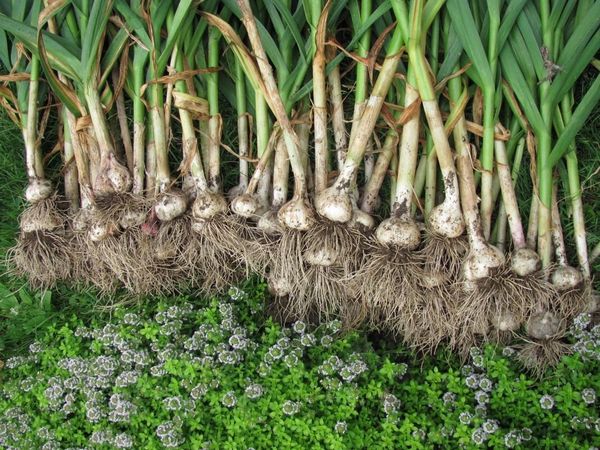
- Winter. This variety has excellent cold tolerance and forms a stalk. Planting occurs in the fall. As a result, the plant overwinters in the ground, and the following season, a large, full-sized head emerges. It contains a few even cloves. The head also has a central stem, which is not typical of the spring variety. The harvest is best eaten fresh.
- Spring garlic. This variety does not form a stalk. Planting occurs in the spring. This garlic can be stored for a long time. The harvest of this variety is not as abundant.
Garlic growing equipment is selected based on the chosen variety. Gardeners often prefer bolting varieties when growing this crop. With proper care, these produce an excellent harvest.
A distinctive feature of this crop is that garlic adapts very poorly to climate changes during cultivation. Therefore, to increase the chances of successfully achieving an excellent harvest, it is important to select the highest-quality planting material. Choosing the right variety is crucial. When choosing a variety, consider the following factors:
- productivity;
- early maturity;
- winter hardiness;
- shelf life.
Gardeners note that the following winter garlic varieties produce excellent harvests: Zaoksky, Nadezhny, Antonnik, etc. Among spring varieties, Moskovsky, Yershovsky, Kalininsky Bely, etc. have proven themselves excellent.
To understand how to properly grow garlic, you need to understand not only the planting material but also how to propagate it.
Methods of reproduction
Propagating garlic is one of the stages of its cultivation. Garlic can be propagated in the garden in the following ways:
- vegetatively;
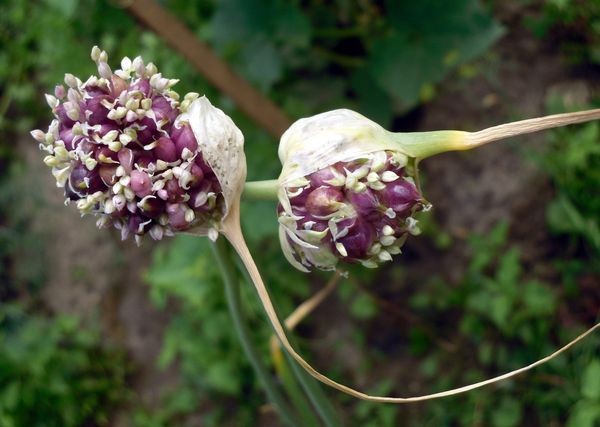
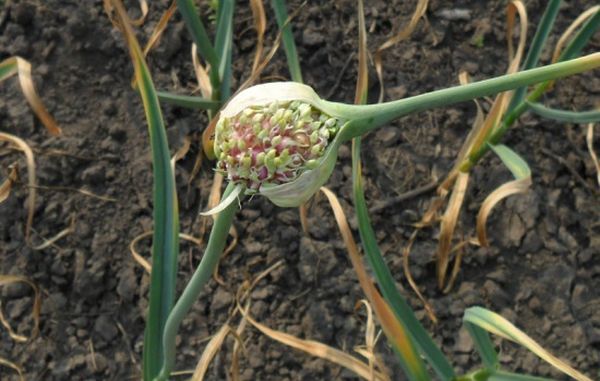
- seeds that form in the ejected arrow.
Spring garlic can be propagated in the garden using bulb cloves. Winter varieties can be propagated using seeds formed by aerial bulblets, as well as cloves. When using seeds, wait two years for full-grown bulbs to form.
Growing garlic in the first year produces small sets consisting of a single clove. These have the same beneficial properties as regular garlic. The following year, you can grow a full-size bulb with many cloves.
Cultivation methods don't vary much depending on the chosen propagation method. This crop is most often propagated using cloves. In this case, a full harvest can be obtained in the same year as planting. Before growing garlic, it's important to select the healthiest and best seed material.
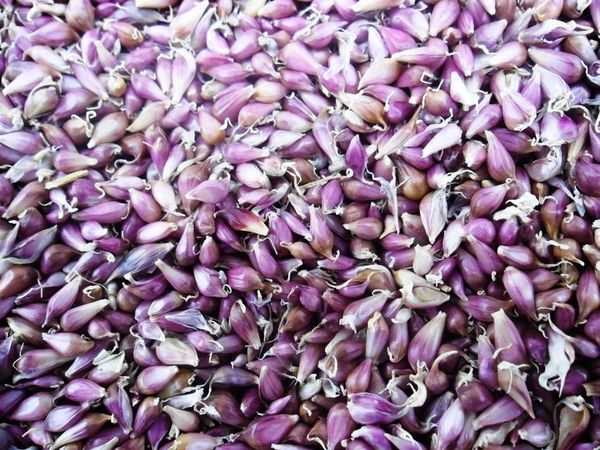
When selecting planting material, the following steps should be taken:
- Size calibration. Large cloves should be planted. Diseased, small, or deformed (two-apexed or double-topped) specimens are not suitable for planting.
- Selection by density. The cloves should be sufficiently dense. At the same time, their outer shell should not contain cracks or holes;
- Disinfection. All selected cloves must be disinfected in ash lye. This solution is prepared by diluting 400 g of ash in two liters of water. To prepare, boil the solution for 30 minutes, then cool and drain. The cloves are soaked in the resulting solution for two hours.
In addition, experienced gardeners recommend periodically updating the variety.
Spring varieties should be germinated before planting. This will promote faster growth. Germination is carried out as follows:
- The cloves, which have been moistened with water, are placed on a cloth napkin;
- The planting material, along with the napkin, is placed in a plastic bag. They can be stored in this way for 2-3 days;
- Germination is carried out at room temperature.
Before propagating, garlic bulblets should be thoroughly dried. Here, too, only the largest bulblets should be selected. Other planting material can be used, but this will make it difficult to obtain good garlic.
What does garlic like?
To ensure effortless growing and care of garlic, it's important to choose the right planting location. Since this crop can be planted in both spring (spring) and fall (winter), the choice of variety should be based on the climate of the growing location. For example, winter varieties are grown in colder regions, while spring varieties are grown in warmer ones. In the latter case, planting requires the use of sprouted cloves.
To ensure garlic grows healthy and strong, and produces a bountiful harvest, it shouldn't be planted in the same spot for more than two years. In fact, it's best to choose a new location each year.
The area where garlic is grown should not have been planted with onions or potatoes the previous year. At least four years must pass after growing these crops before garlic can be planted. This is the time it takes for the soil to be completely renewed. The best yield can be achieved by planting garlic cloves after cabbage, cucumbers, beets, squash, and legumes. This will ensure the soil is optimally fertilized with organic matter after these crops. This means that caring for the plants will be much easier, and the risk of disease is significantly reduced.
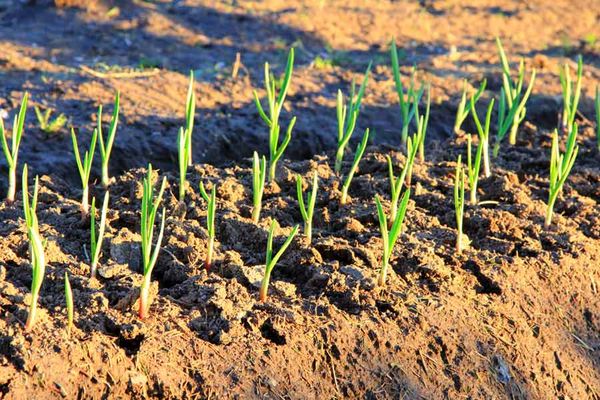
The garlic bed should be well-lit. Otherwise, the harvest will consist of small bulbs. The best solution is to grow garlic in separate, unshaded beds. These beds can be located next to berry bushes (raspberries, gooseberries, black currants, and strawberries) and vegetables (potatoes, carrots, and cucumbers). Garlic is also grown next to flowers: tulips, gladioli, and roses. This will reliably protect the plant from black spot.
Choosing soil for planting
When asked "how to grow garlic," many people say the key is choosing the right soil. If the soil is deficient in nutrients, a complex fertilizer is added. Potassium chloride and superphosphates (in a 1:4 ratio) can also be used in this case.
Adding manure to your garden beds will significantly increase your yield. Apply 5 kg of manure per square meter. If your soil is poor, you can increase the amount of manure applied.
Experienced gardeners advise against overdoing it with fertilizer, as garlic doesn't thrive in fertile soil. Loamy or sandy, light soil is ideal, with a neutral pH. Good soil drainage is also essential.
Therefore, the answer to the question "how to grow a good garlic harvest" will always include recommendations on choosing the right soil.
Post-planting care
To produce large garlic, growing and caring for the crop must include all necessary agricultural practices. Particular attention should be paid to care, as the final result directly depends on it.
Caring for garlic involves the following steps:
- watering;
- mulching;
- loosening;
- weeding;
- top dressing.
This crop requires light watering. Typically, 10 liters of water per square meter should be applied. Watering should be done at weekly intervals. As the plantings grow and develop, it should be reduced to 8-6 liters. This is to prevent the bulbs from rotting. If the summer is rainy, watering the beds can be stopped altogether. About two weeks before harvest, watering should be stopped completely.
Many novice gardeners wonder, "How to care for garlic to prevent it from rotting?" To prevent bulb rot, follow these watering guidelines:
- soil moistening should be carried out regularly;
- Watering is especially important during the early growing season, when garlic is just beginning to grow. Subsequently, to ensure the plants grow at the desired rate, it's necessary to gradually reduce the amount of water applied.
- After each watering, loosen the soil to a depth of 2-3 cm. If mulch is used, loosening is unnecessary.
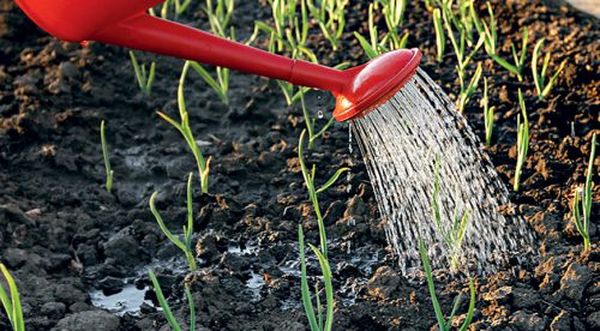
Winter varieties require more watering. In winter, the beds should be covered with snow. To obtain a richer harvest, gardeners recommend picking the stems. The stems should be removed when they reach 5-8 cm.
Garlic grown in the garden must be fertilized. The first feeding is done when the plant has formed several leaves. In this case, dilute a large spoonful of urea in a bucket of water. To fertilize 1 square meter of planting, use 5 liters of the prepared solution. A solution of bird droppings (1:12 ratio) and manure (1:10 ratio) can also be used for the first feeding.
The second feeding is carried out 14 days after the first. For this, prepare a solution consisting of urea (one teaspoon), double superphosphate (one tablespoon), and potassium sulfate (one tablespoon). An ash solution (10 liters of water and 200 g of ash) can also be used.
The final, third feeding is done at the end of June. This is when the garlic bulbs, scapes, and shoots are forming. To feed the plants, dissolve one tablespoon of potassium sulfate and two tablespoons of double superphosphate in a bucket of water.
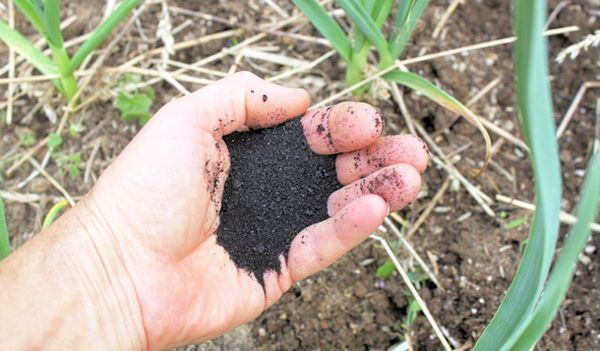
Fertilizer application should be combined with watering. Between fertilizing sessions, sprinkle the plants with wood ash. One cup of fertilizer should be applied per square meter.
Gardeners recommend using straw for mulching. It's applied to the beds when the seedlings reach 10-15 cm. Straw prevents moisture evaporation, so the frequency of watering can be reduced.
Garlic beds need to be weeded periodically. This is done as weeds develop.
Note for summer residents
To grow a bountiful garlic harvest in your garden or dacha, you need to know some of the intricacies of growing and caring for this crop. Mistakes are often made by novice gardeners who haven't yet mastered all the nuances of growing garlic. To achieve the desired results, growing garlic requires the following guidelines:
- the beds should not be covered by shade from neighboring plantings;
- Tomatoes and peppers will be excellent neighbors for this crop;
- When planting seedlings, it is essential to adhere to crop rotation rules;
- Garlic should not be planted in acidic soils. To adjust the soil's acidity, add wood ash or chalk;
- Only high-quality planting material should be used. It's especially important to select it based on the climate conditions in the growing region;
- Loosening the soil will allow the underground portion of the plants to receive oxygen. Without it, the garlic will begin to turn yellow early. Loosening is done as soon as the first shoots appear, to a depth of 1-2 cm. After this, the bed is mulched and fertilized.
- Without mulching, the harvest will be small. Sawdust or peat can serve as mulch;
- Watering is carried out when the soil is dry. Otherwise, the harvest will taste bitter;
- Avoid dense plantings. Maintain a 10 cm gap between plants and a 20 cm gap between rows;
- It is recommended to detach the cloves from the head immediately before planting;
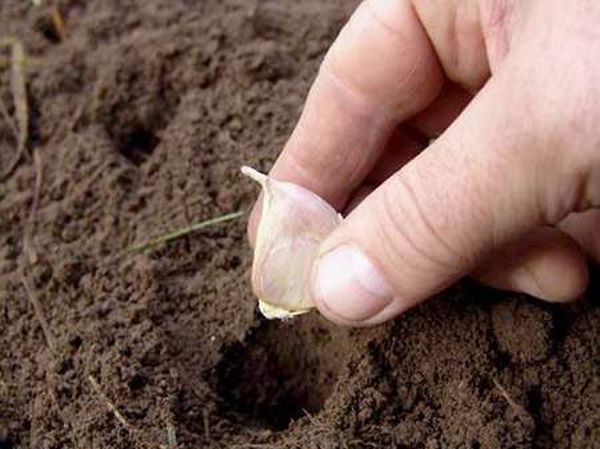
- The garlic cloves are placed in a previously dug hole. Do not press them into the soil.
Now you know how to grow garlic in your garden for a great harvest. By following simple agricultural techniques, any gardener can achieve a high-quality harvest of this crop.
Video: How to Grow a Rich Harvest of Garlic
This video will show you how to grow a bountiful harvest of garlic.