
Rules for caring for garlic in early spring
Content
Fertilizing winter varieties in spring
Winter garlic, planted in the fall, usually emerges very early. Its young shoots easily tolerate cold, so they don't mind temperatures as low as -2 or -3 degrees Celsius. Garlic tolerates cold and drought with remarkable resilience, but to thrive, it requires moisture, which is usually abundant after the snow melts, and nitrogen fertilizer.
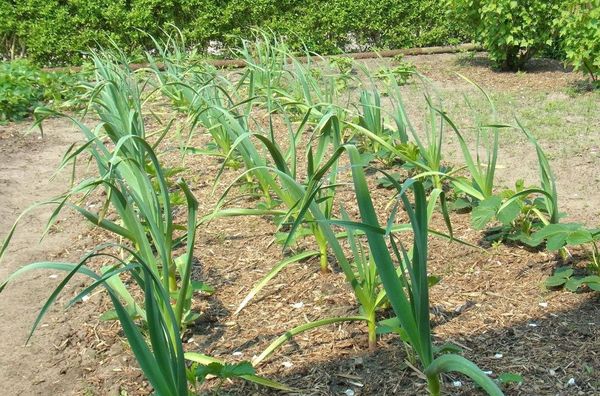
Most often, the soil is prepared for planting by digging it up, adjusting its structure if necessary, and enriching it with nutrients. But even if the plot was fertilized in the fall, garlic requires a lot of nitrogen for vigorous growth, which occurs in early spring. Therefore, most experienced gardeners rush to apply nitrogen fertilizer immediately after the snow melts.
You can take slurry, dilute it tenfold (that is, use one liter of slurry for every ten liters of settled water), and then water the area, even if the ground hasn't completely thawed yet. Chicken manure can also be used, but dilute it even more: mix one liter of fermented manure with 20 liters of settled water. Many gardeners prefer to add compost or rotted manure to the soil.
Urea is a mineral fertilizer used in early spring. It is also added to the soil in two ways: dilute 1 tablespoon in a bucket of water and water the garlic, or sprinkle the dry fertilizer, lightly sprinkling it with soil, and then, with moisture, it gradually dissolves and reaches the roots.
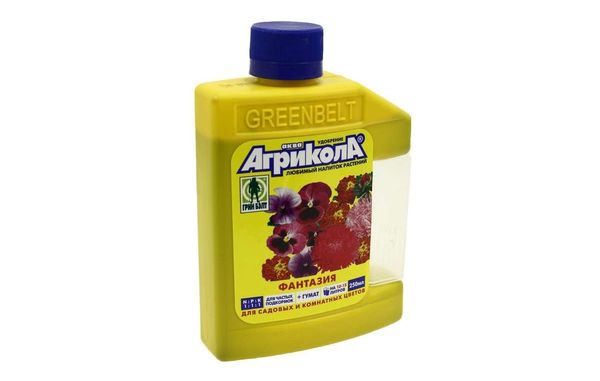
Some people prefer to buy ready-made Agricola fertilizer and dilute it according to the instructions.
The second spring feeding is done two weeks later. Some vegetable growers recommend repeating the same treatments—slurry, urea, or rotted manure. However, others suggest a second spring feeding of winter garlic with nitrophoska or nitroammophoska (dissolve two tablespoons in 10 liters of water). Store-bought products such as "Agricola," "Plodorodie," or "Effekton" can also be used.
Fertilizing spring garlic in spring
Spring garlic is planted in the spring, when the soil has warmed. It's a good idea to fertilize the soil before planting, and many vegetable growers also add mineral fertilizers or at least wood ash to the planting holes at the same time. However, as soon as the garlic begins to sprout, it's important to meet its increased need for nitrogen fertilizers to ensure vigorous growth and rapid green mass development.
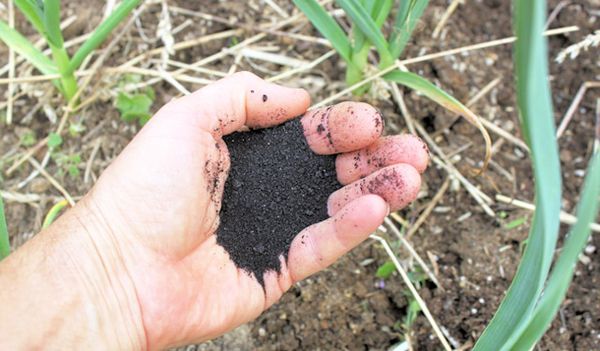
Experienced gardeners dilute 1 tablespoon of urea and 1 liter of liquid manure in 10 liters of settled water and water their beds with this solution. About 3 liters of this fertilizer is enough to water one square meter of garlic bed. Some gardeners spread compost or rotted manure between the rows of emerging leaves to ensure nutrition is released after each rain or watering.
After 10 days, the fertilizer is usually repeated, then wood ash can be sprinkled between the plants – this will be the final nitrogen fertilizer and also a preventative measure against pests and diseases. Later, the garlic will develop a bulb, requiring phosphorus and potassium fertilizers. Nitrogen fertilizers are applied only in the spring to avoid prolonging the growth period of the leaves, which will deplete the energy (and time) needed for bulb formation.
General care rules
Caring for any garlic in spring involves following the same steps as most vegetable crops. Water, fertilize, and weed. Avoid allowing the soil to crust over; timely loosening should allow the roots to get the necessary amount of air.
Watering
Garlic is a drought-resistant crop; it won't die if not watered at all. But only with adequate watering can you reap a bountiful harvest. This vegetable especially needs a lot of moisture during the first few weeks after the start of growth.
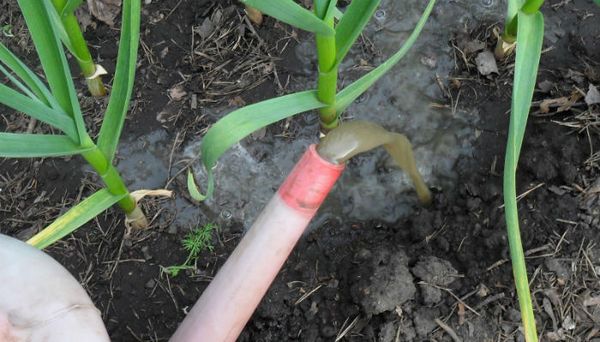
Winter garlic usually receives plenty of moisture after the snowmelt, and its greens begin to emerge very early. However, in the spring, even if there's no rain, it still needs to be watered generously several times. Spring garlic is watered immediately after planting, and then care must be taken to ensure the top layer of soil doesn't dry out. In April and May, if necessary, the growing vegetables are watered in the summer. If there's no rain at all and the temperature is rising, water frequently, 2-3 times a week.
Typically, watering is recommended every 8 to 10 days, combined with fertilizing. Watering should be stopped 2 to 4 weeks before the bulbs are expected to ripen; excessive moisture during this period reduces the shelf life of the future harvest.
To reduce the need for watering, garlic plantings are mulched with hay, compost, humus, mown grass or sawdust, this will help retain moisture.
Caring for seedlings
From the moment the seedlings emerge, you need to loosen the soil between the plants, remove weeds, water, and fertilize. In the spring, as soon as the ground thaws, the bed must be loosened to prevent the damp soil from compacting and the surface from crusting. Loosening to a depth of 3-4 cm from the surface is sufficient. This procedure will need to be repeated after each watering (or rain); if you watered the bed in the evening, loosen it the next day.
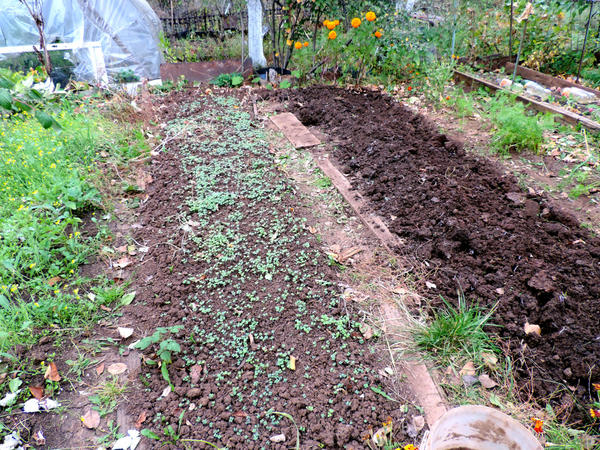
Mulching can save a gardener time – if you mulch a bed after watering, the moisture won't evaporate, a crust won't form on the soil surface, and weeds simply won't have room to grow. Hay or sawdust, and especially compost or humus, will gradually rot with each watering, move deeper, and become fertilizer.
Video: "Caring for Garlic in Spring"
This video will teach you the basics of garlic care in the spring.