
The best productive varieties of winter and spring garlic
Content
Selection criteria
Garlic today is represented by various varieties, which differ from each other in the following parameters:
- type (winter or spring);
- ripening period;
- planting and growing conditions.
Therefore, before purchasing planting material, it's important to know the characteristics of the variety you're interested in to ensure a bountiful harvest. When choosing garlic, consider its intended use. Winter varieties are preferred for cooking, while spring varieties are best for industrial processing.
When choosing which variety to plant, it's important to consider storage methods. Spring varieties can be tied in special bundles and hung in a cool, dry place. The bundles will hang in this manner until spring. Winter garlic, on the other hand, is dried, ground into a powder, or chopped, and refrigerated. Stored this way, the harvest can be stored for up to four months.
When choosing a garlic variety, it's important to consider the weather conditions in the growing area and the soil composition. Some hybrid varieties don't require any special site preparation. For them, simply disinfecting and fertilizing the soil is sufficient. However, for many garlic varieties, the growing site plays a crucial role. Therefore, their beds should be placed in a well-lit area free from stagnant water. Loamy soil with a neutral pH is ideal for growing this crop.
Spring varieties
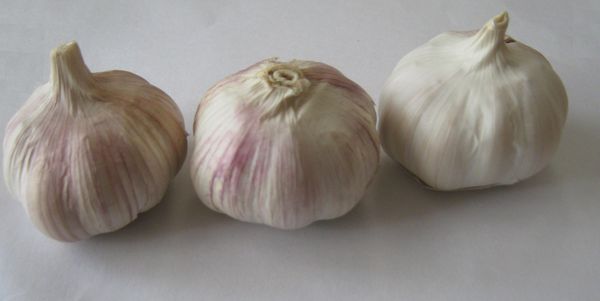
Spring garlic is planted in the ground in the spring. This process usually occurs in early April. These varieties are harvested in late August or early September. Spring varieties have the following descriptions:
- about 15-20 cloves are formed in the head;
- inside the bulb, the cloves are arranged in a spiral - the smallest ones in the center, and the larger ones on the outer axis;
- long-term storage;
- good yield;
- taste – not spicy.
To identify the most profitable and promising varieties of spring garlic, it's important to pay attention to the characteristics of the head. Different varieties produce heads of varying density. They can also mature early, mid-season, or late.
Let's look at the varieties of spring garlic that are considered the best.
Elenovsky
The Elenovsky variety, a relatively recent development, always ranks first. Its description highlights its most advantageous characteristics for growing in gardens and summer cottages.
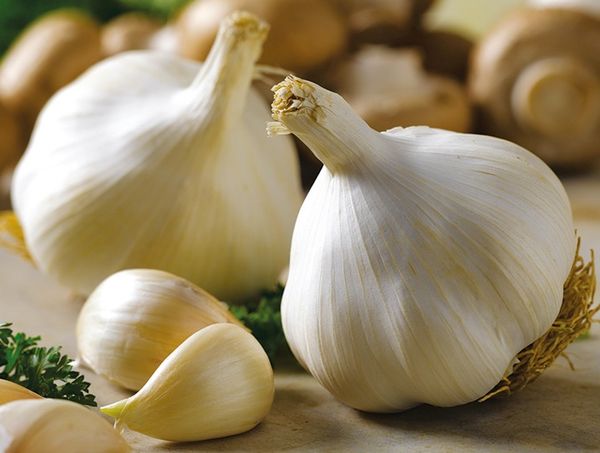
The Yelenovsky variety can be planted in the fall or spring. This is a mid-season variety. The plant does not form a stem. Its growing season lasts 110 days. The bulb contains 7-9 cloves. Its surface is covered with dry scales and is quite dense. The average weight of one bulb is about 25-35 grams. However, there are reports of it weighing up to 50 grams. The aboveground portion of the plant can grow up to 70 cm.
Elenovsky has the following advantages:
- excellent resistance to various diseases;
- frost resistance;
- long storage period (up to two years), during which there is no loss of crops;
- versatility;
- yield up to 1 kg;
- During transportation the harvest retains its quality.
Garlic of this variety is used for canning, cooking and fresh.
Gulliver
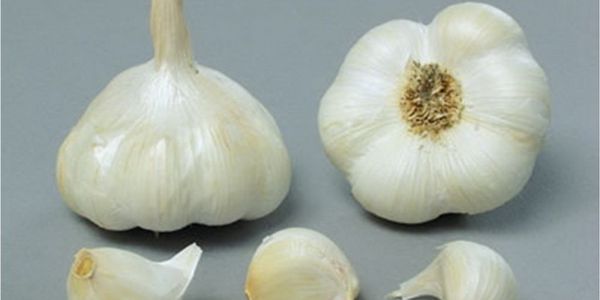
The second most popular variety is Gulliver. It thrives in both the garden and the vegetable patch. It typically ripens late. The growing season lasts approximately 88-98 days. Each bulb contains approximately 4-5 cloves, covered with gray scales on top. Each bulb weighs approximately 110 grams, but there have been cases where a bulb weighed as much as 250 grams. Proper care and favorable weather are essential for such a large harvest.
The advantages of this variety include:
- good fruiting;
- the harvest is stored well;
- High immunity. Plants are not susceptible to various diseases;
- Versatility. Used in cooking and canning.
Gulliver has a rather pungent flavor. Its yield is around 1 kg.
Sail
This spring garlic variety is mid-season. Plants form a stalk. The bulbs ripen after 95-109 days of growth. The bulbs are flattened and rounded with a tapered tip. The cloves are covered with grayish-whitish scales with a purple tint. The cloves themselves are brown. There are 7-10 cloves per bulb. The cloves are tightly pressed together and have a pleasant pungency.
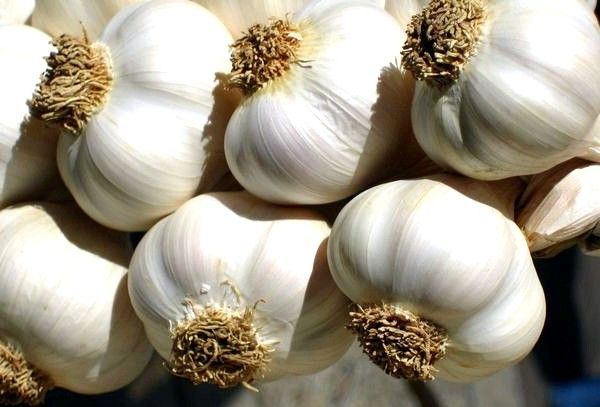
The aboveground portion of the plant is bright green. The waxy coating is virtually invisible. A Parus bulb weighs no more than 50 grams. However, it produces a high yield, reaching 960 kg per 100 square meters. With drip irrigation, the yield can be doubled. The harvested crop stores well.
Another advantage is good immunity to pests and diseases.
Aleysky
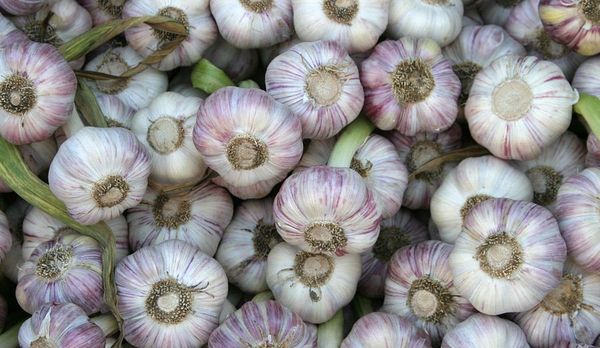
The Aleysky garlic variety is a mid-season variety. It was developed in western Siberia. It is considered a regionalized variety, as it is suitable for cultivation in this region. However, with due diligence, it can be grown in other regions as well.
This variety has a growing season of 112-130 days. It does not form a stem. It produces moderate fruiting—0.6-0.7 kg. However, yields as high as 1.4 kg can be achieved. This requires proper care and adherence to all agricultural practices. The maximum weight of a head is approximately 17-20 grams. The cloves have a pungent flavor. The leaves grow up to 33 cm long.
Among its advantages, it's worth noting the good shelf life of the harvest. Its disadvantages include low resistance to bacterial rot and fusarium.
Abrek
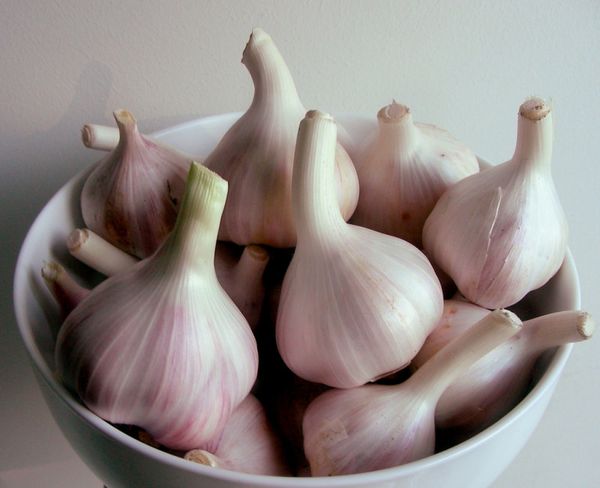
The Azbek variety is a non-bolting, mid-season variety of spring garlic. Its growing season is 118-120 days. Each bulb weighs approximately 25 grams and typically contains 13 cloves. The garlic bulbs are white and fairly firm, with a very pungent flavor. The greens are a rich green. The leaves have a medium waxy coating. The tips can grow up to 58 cm in length.
The yield isn't very high, with a maximum yield of up to 0.8 kg. Once harvested, the crop stores well for seven months.
Winter varieties
Winter garlic varieties include non-bolting and bolting subspecies. Non-bolting subspecies are characterized by multi-clove heads. Based on the number of cloves, these varieties are classified as multi-, medium-, and few-clove.
They tolerate cold winters well. Therefore, they are planted in the fall (September to mid-October). After wintering, the cloves begin to grow vigorously, producing a large, pleasant-tasting harvest. The harvest can be picked from mid-July, although each variety description has its own ripening time. One head contains approximately 7-9 cloves, which are densely packed beneath the scales.
Bolting plants produce bulbs with 2-6 cloves. They also produce stems with aerial heads.
Let's look at the most popular varieties of this subspecies of garlic.
Dubkovsky
The most striking representative of winter garlic is the Dubkovsky variety.
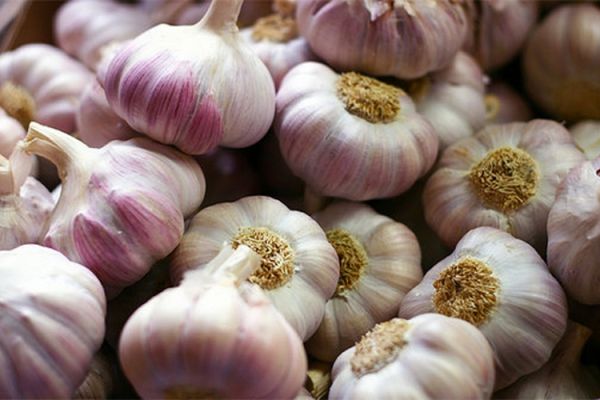
Its characteristics include:
- mid-season variety;
- the leaves are bright green and have a slight waxy coating;
- the shape of the bulbs is round and flat;
- Each head contains approximately 10-12 cloves. They have a pungent flavor and dense flesh.
The growing season lasts 98-114 days.
Lyubasha
Lyubasha is highly sought after in our country due to its many qualities. It's a bolting variety with a mid-season ripening period.
Among the advantages of Lyubasha, the following points should be noted:
- heat resistance;
- frost resistance;
- Versatility. Thanks to its special chemical composition, it can be used for preserving or cooking;
- not affected by fusarium disease.
The head has a simple structure, with 5-6 cloves. They have a pungent flavor. One clove weighs approximately 16-18 grams. The yield is approximately 2.8-3.4 kg.
The variety can be grown in Russia and Ukraine.
Video: "Lyubasha Garlic Variety Review"
In this video, you'll learn more about the Lyubasha garlic variety.
Dobrynya
A mildly pungent but juicy variety of winter garlic. Plantings do not form stalks. Seedlings emerge in mid-April. The growing season lasts 123-129 days. Each bulb weighs approximately 55 grams on average.
Dobrynya is popular due to the following qualities:
- High yield. This parameter is at the level of 2-2.5 kg;
- plants are not susceptible to fusarium disease;
- excellent frost resistance;
- The harvested crop is stored well. The crop does not spoil for six months;
- universal meaning (preservation, pickling, cooking, spices).
One of the downsides of Dobrynya is the drying out of the heads when stored for long periods. In this case, losses can reach around 20%.
Doctor
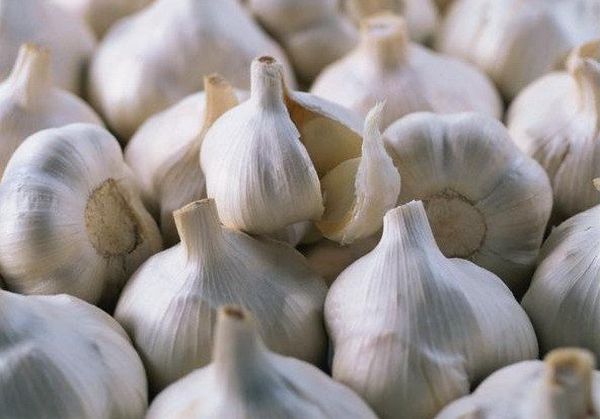
Lekar is a recently introduced variety of winter garlic. It doesn't form stalks. Its cloves are pale pink, covered with white-pink scales on top. A single bulb can weigh around 65 grams. Each bulb contains approximately 11-18 cloves. The bulbs are typically perfectly rounded, but flat bulbs can also be found. Their flesh is dense and their flavor is sub-sharp.
The herb can be grown in garden or vegetable plots, as well as on small farms.
An early-ripening variety that produces a mature crop in 100-108 days. The above-ground portion of the plant consists of light green leaves with a light waxy coating. They are 2.2 cm wide and 42.5 cm long. Each plant produces approximately nine leaflets.
The advantages of this variety include:
- high winter hardiness;
- excellent fruiting;
- the harvest ripens early;
- The heads store well and withstand transportation. However, when stored for seven months, potential yield losses are 40%.
Komsomolets
Komsomolets is an excellent winter variety. It is distinguished by good resistance to low temperatures. The growing season for this subspecies does not exceed 100 days. The plant forms a dense and large bulb, producing approximately 6-13 cloves. One bulb averages 90-110 grams in weight. The cloves have a pungent flavor. The yield is approximately 1-1.4 kg. The stalking process is characteristic.
Above, we discussed the most popular and best varieties of spring and winter garlic. Choosing a variety for planting should be based not only on the required agricultural practices and growing region, but also on taste characteristics and yield.
Video "Overview of Garlic Varieties"
This video will tell you more about the different types and varieties of spring and winter garlic.