
Timing and main rules for planting spring garlic
Content
Planting dates
Many gardeners are accustomed to planting garlic in the fall: it produces high yields, ripens earlier and better, and is juicy and rich in flavor. However, fall-planted garlic doesn't last long; even in a cool place, it quickly begins to turn black, rot, and spoil. So, a perfectly logical question arises: can garlic be planted in the spring? The answer is yes, and even necessary.
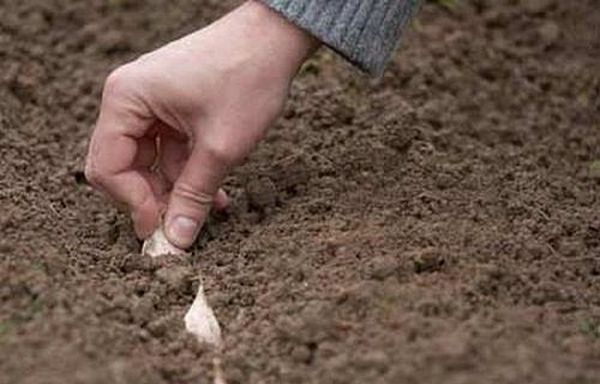
Spring planting is the best option. The vegetable has a long shelf life and is resistant to diseases and pests. If you plant garlic in the spring, it will sprout at the same time, as the soil has already warmed and the risk of frost has passed. Early frosts or excessive rainfall can prevent planting in the fall. Yes, there are some drawbacks: the flavor is less pronounced, the yield is average, and the ripening process takes a long time.
In the spring, it is recommended to plant spring garlic.However, work should begin as early as possible. Spring garlic should be planted in the spring when the soil temperature is above 5°C. The crop is cold-hardy and germinates at minimum above-zero temperatures. Timing varies by region: while in the central part of the country, such temperatures can be as early as April, northern regions won't be ready for gardening until May. Delaying planting is not recommended, as the vegetable requires a long maturation period and may not be ready by the time cold weather arrives.
Formation of beds
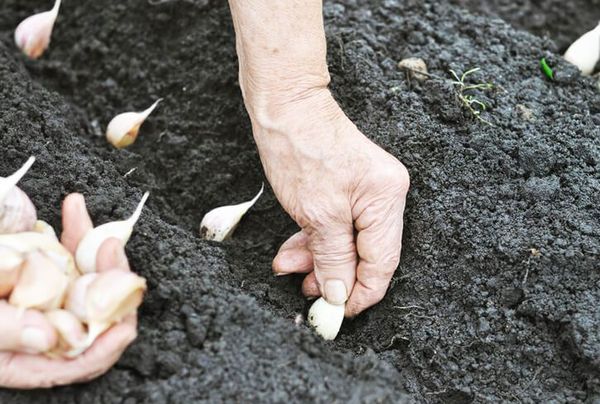
Since spring garlic planting requires early planting, you need to start preparing the bed early. First, choose the right location. Black soil and loamy soil are ideal for this vegetable, with neutral pH levels. Sunlight is essential for this famous spice, so the location should be sunny. You should also consider good neighbors and predecessors. Since the onion family requires constant rotation, be sure to avoid planting garlic in areas where onions, potatoes, or tomatoes are growing. A former cabbage or pea bed makes a good spot.
The soil should be prepared in advance. To do this, about a month before planting, dig and loosen the bed to ensure ventilation and proper air and moisture circulation. To ensure the soil settles, dig the bed for planting in the spring as early as the fall. About two weeks before planting, the prepared soil should be fertilized with organic fertilizer. Humus or compost can be used. A couple of days before planting, it is recommended to water the bed generously with a salt solution. Only after all the agricultural procedures have been completed can the garlic be planted.
Pre-planting treatment of cloves
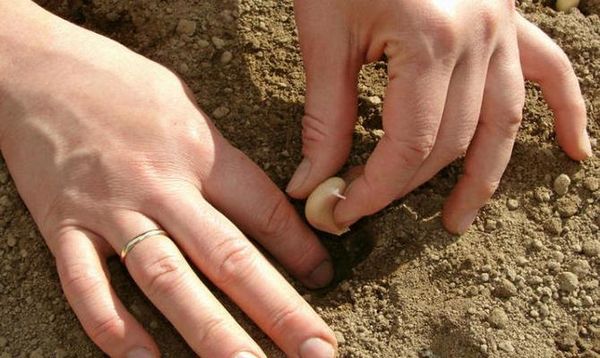
Before preparing garlic for planting, you need to select the appropriate variety. As mentioned earlier, spring garlic, which lacks a central stem and has small cloves containing leaflets, is chosen for spring planting. The optimal variety can be selected based on the climate of the region. The variety available makes this easy.
To get a generous harvest, garlic cloves need to be prepared in advance:
- carefully separate the head into individual cloves, being careful not to damage the shell;
- select large and undamaged teeth;
- Next, wrap the selected cloves in a damp, plain cloth and place them in a cool place. You can store them in the refrigerator to speed up germination.
- then place the planting material in warm water, but for no more than 12 hours;
- If desired, treat the garlic with a growth stimulator.
After preparation, we plant spring garlic in prepared soil.
Landing features
Vegetables are usually planted in prepared furrows in the garden bed. If the soil isn't loose enough, ash and sand are added to the furrows. Rows are spaced at least 20 cm apart.
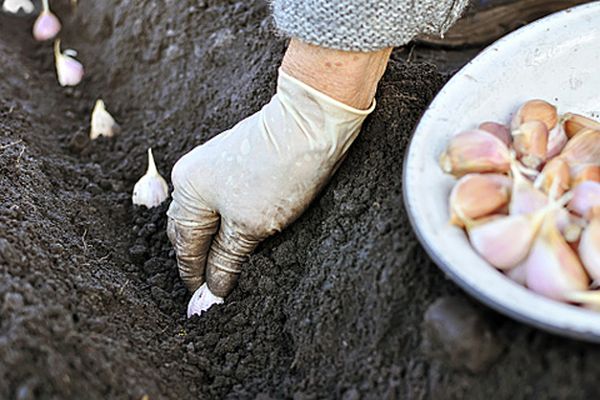
The cloves are planted at a depth of about 3-4 cm, with a spacing of 6 cm. Large-fruited varieties should be planted at greater spacing, and the row spacing should be increased. The cloves are positioned with the bottom facing down. Another planting method is to carefully level the bed and make small holes for each individual clove using a special tube. Once all the planting material is in the ground, the soil is leveled again, thereby filling the holes.
It's important to remember that pressing garlic into the soil with force is not recommended, as the first roots may sprout by the time of planting and can easily be broken. Also, make sure the soil is well-moistened. Avoid overwatering, but don't let the soil dry out either.
These planting methods are time-consuming and quite labor-intensive. Is it possible to plant garlic faster but with better results? Such a method does exist: planting garlic bulbs in the spring. If you're short on space and time, this method will be a real lifesaver.
Further care of seedlings
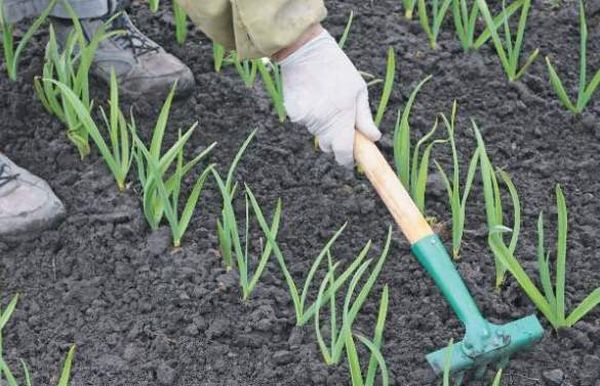
Proper care will help you grow a bountiful harvest with excellent fruit. Garlic is an easy-to-grow crop, but certain guidelines must be followed to avoid exposing the planted cloves to disease or death. Garlic requires periodic weeding, loosening the soil, and watering.
To reduce time costs, the risk of over-watering and the intensity of weed growth, the soil can be mulched with peat or sawdust.
Ensure optimal watering. During the growing season, water frequently and generously; as the garlic begins to ripen, reduce the amount. Stop watering completely a few weeks before harvesting. Fertilize garlic seedlings with potassium and phosphorus fertilizers. Treat with ammonium sulfate to prevent disease. Spring planting won't ensure an early harvest, but it will have a longer shelf life.
Video: Growing Spring Garlic
In this video you will hear useful tips on growing spring garlic.