
How to feed and fertilize garlic in spring
Content
Features of spring feeding
All garlic varieties require spring feeding. However, winter varieties also require autumn fertilization. Typically, nutrients are added to the soil a few weeks before planting, and the bed is then covered with manure. In the fall, it's a good idea to add organic matter and minerals to the soil.
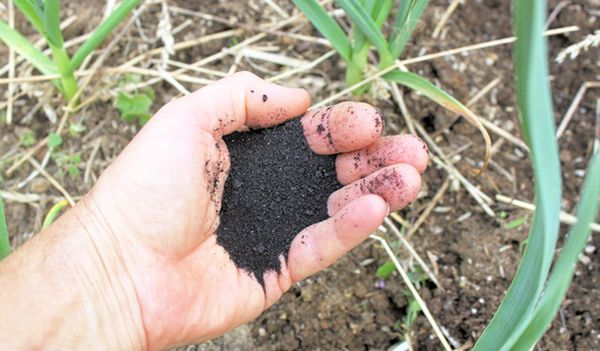
Garlic needs enhanced nutrition during its active growth period. As soon as winter ends, a week after the snow melts, the winter plant should be fed.
Spring crops should be fertilized later, when the plant begins to actively grow and form ovaries. Fertilizer is often added to the soil during watering. When applying this fertilizer, be careful not to overwater the plant, as excess liquid can have unpleasant consequences.
Both spring and winter garlic are fertilized three times. The first application is a week after the snow melts (for winter garlic) or after 3-4 leaves have formed (for spring garlic). A second application is made two weeks after the first application (for all varieties).
The final feeding occurs in the second half of June. During this period, the bulbs typically form, so fertilizing the bulbs is essential. However, winter garlic matures faster than spring garlic. Therefore, the third fertilization depends on the stage of growth and development of the garlic. The key is to not miss the moment when it needs nutrients.
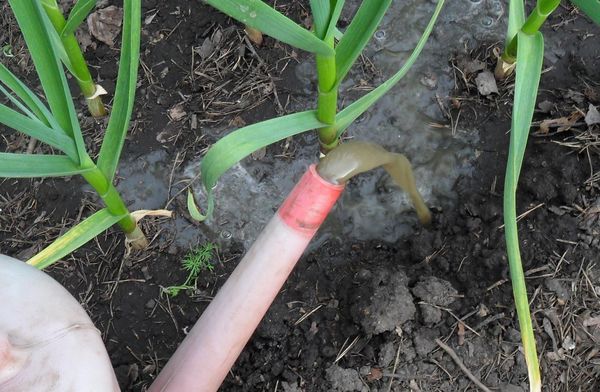
Unlike the first two applications, the third must be done precisely on time. If you feed the plant ahead of time, the nutrients will be used for foliage formation rather than fruit development. If you miss the appropriate time for applying the necessary elements, the fertilization will be pointless.
Mineral fertilizers for garlic
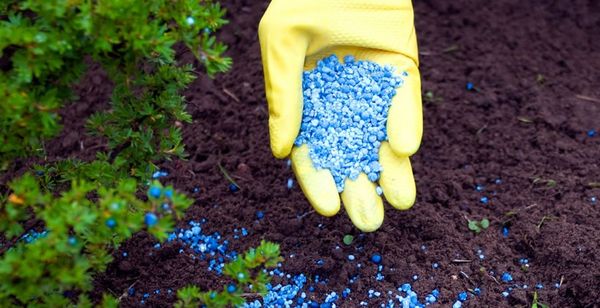
Garlic needs a variety of fertilizers in spring. In particular, the crop also requires minerals at this time, especially when grown commercially. Both gardeners and farmers fertilize the soil with minerals. Minerals can often correct any developmental problems, and organic matter isn't always easy to obtain.
Winter crops are first fertilized in early spring, while spring crops are given additional fertilizer after their leaves (up to 0.07 meters long) appear. Urea and potassium chloride (2 teaspoons each) are diluted in a bucket of water. The resulting solution should be applied to the beds in the evening.
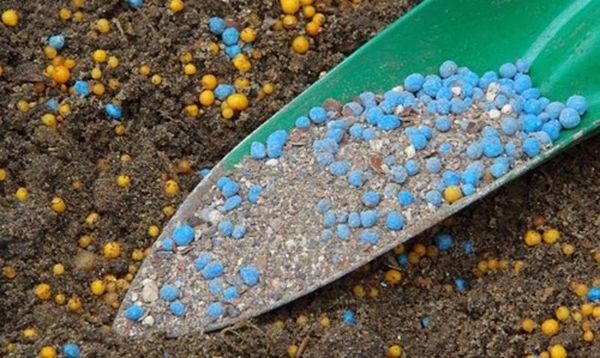
The first stage of fertilizing also involves using pure urea, diluted in a bucket of water. The next fertilizer consists of nitroammophoska (0.06 kilograms per bucket of water). The final stage involves using a superphosphate extract (0.06 kilograms per bucket of water).
Each gardener can calculate the amount of fertilizer to be applied himself. It's important to consider the condition of the plants and the amount of nutrients in the soil. Excessive fertilization can have a significant negative impact. Poor soils require additional minerals, while well-drained and well-loosened soils experience a deficiency of beneficial micronutrients during the garlic growing season.
Nitrogen is especially important for the crop during the active growth of its green parts. Potassium-phosphorus mixtures should be applied during the formation of the head. The condition of the plants during the growing season can be assessed simply by examining them externally. For example, yellowing of leaves in spring is not always due to nutrient deficiency. It can also be caused by pest attacks and rot diseases. Timely care is essential, and then you can enjoy a bountiful garlic harvest.
Fertilizer recipes
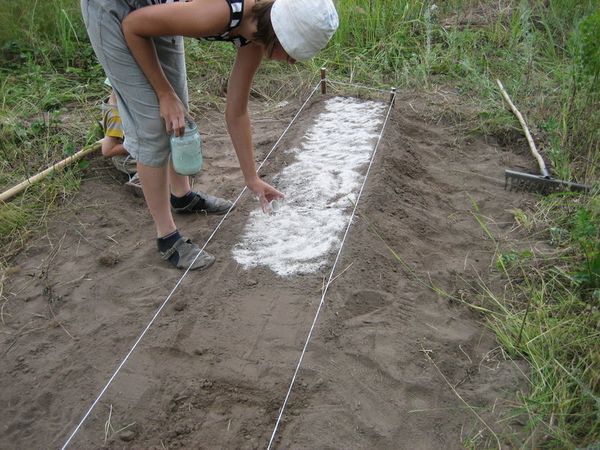
Many gardeners prefer to fertilize garlic in the spring with homemade solutions. The following recipes are commonly used:
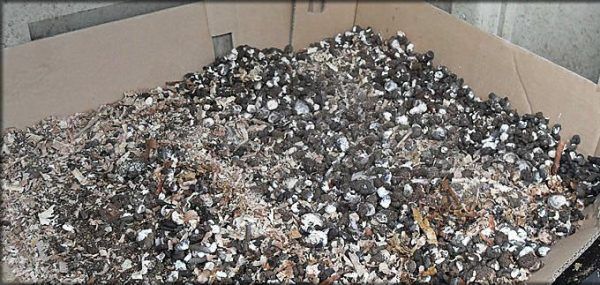
- A mullein solution is prepared at a ratio of 1 part mullein to 7 parts water. This solution contains a complex of beneficial substances necessary for the proper development of the plant.
- Slurry. To make it, dilute one part manure with six parts water. Slurry stimulates crop growth.
- Ash. Like other vegetables, garlic requires ash.
- Bird droppings. They are diluted in water along with manure (1 part bird droppings with manure to 15 parts water).
Number of feedings
In spring, the crop should be fertilized at least three times. For winter plants, the first application of fertilizer is done after the snow melts. For spring plants, the procedure should be carried out when at least four leaves have formed. The second application should be done two weeks after the first. The final application of nutrients is in the second half of June, which allows for the bulb to develop.
The timing of the final application of essential nutrients differs for winter and spring varieties. Therefore, the timing of fertilizing should be determined based on the crop's condition and development.
Foliar feeding
Experienced gardeners often use foliar fertilization. This method involves spraying a nutrient solution onto the leaves and stems of the plant. This application of nutrients helps the plant absorb them more quickly. Therefore, foliar feeding is used when the plant needs to be nourished as quickly as possible.
When using this method, the concentration of active ingredients in the solution should be lower. The beneficial solution should be sprayed in the evening. However, root feeding should not be replaced by foliar feeding; it only serves as a supplement.
So, fertilizing garlic in spring is a necessary part of care. Properly administered fertilizer application is the key to healthy growth and a bountiful harvest.
Video: "Spring Fertilizing of Garlic"
This video will show you how to fertilize garlic in the spring.