
How to grow garlic from seedlings
Content
The benefits of growing bulblets
Garlic bulblets (or aerial bulblets) are not actual seeds; they are full-fledged garlic bulbs that grow on the scapes of the winter vegetable. Typically, newly emerging scapes are broken off to prevent them from draining the developing heads, but each scape can produce 70 to 80 bulblets. If a few bulblets are left to grow and develop further, the heads of these plants will be smaller, but they also provide excellent seeding material.
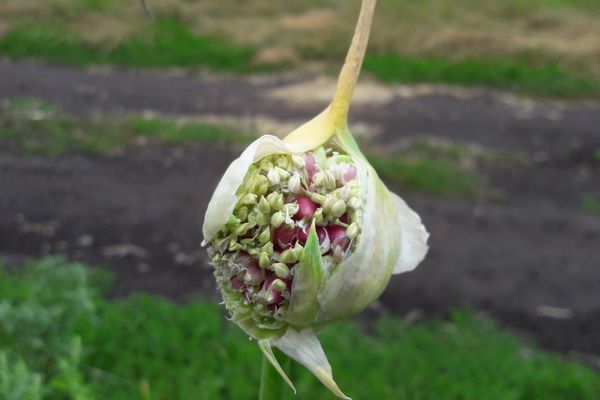
We typically plant garlic cloves grown in our own garden, but each year our garlic becomes smaller and more susceptible to disease. It suffers more frequently from fungal diseases, and stem nematodes often penetrate through the bulb's base. Renewing the seed stock requires investment, but planting cloves not only saves money but also significantly improves the quality of the produce. They are completely clean, free of any infections, and nematodes cannot reach them. Using them as seed material rejuvenates the variety. Thus, growing garlic from cloves improves and improves the health of the planting material.
After sowing the bulblets, it will only take two years before you can get full-fledged garlic heads consisting of cloves. But already in the first year, single-clove cloves grow, which can be used for food if necessary; they are one large juicy clove, and are even easier to peel.
How to grow bulbils
Only winter garlic produces bolts. When dividing the head, we often see a small stem in the very center—the remnant of a bolt that began to grow but was not allowed to fully develop. Around mid-June, bolts appear; they are distinguished from the leaves and are immediately broken off to avoid weakening the plant and diverting energy from the developing bulb. If we want to grow bulblets, we should leave a few of the strongest bolts. The number can be roughly calculated, knowing that each inflorescence will produce over 70 aerial bulblets. It's advisable to harvest them in reserve, as not all of them will necessarily grow.
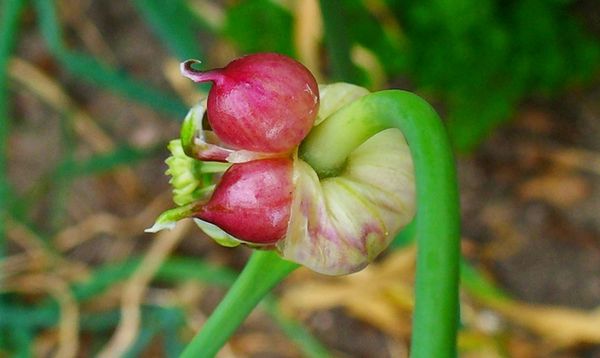
After a month (or a little more), the leaves will begin to dry out, so keep a close eye on the inflorescences. When the film begins to crack, cut off the stems, leaving long "tails." They need to be dried, away from direct sunlight. You can place them in a thin gauze bag and hang them, or spread them out on a flat surface, place them in the shade under an awning, or in a ventilated area. If the bulblets are thoroughly dried, they can be stored for up to two years in a dark, dry place with a temperature not exceeding 20 degrees Celsius.
They are of interest only as seed material, but differ from true seeds in their large size and fleshiness. Therefore, they need to be dried very well if you plan to plant them in the spring or the following year.
Methods of planting with bulblets
You can plant (or rather, sow) the bulblets before winter, which will produce single-clove garlic the following summer. Alternatively, you can plant them in the spring, along with spring garlic.
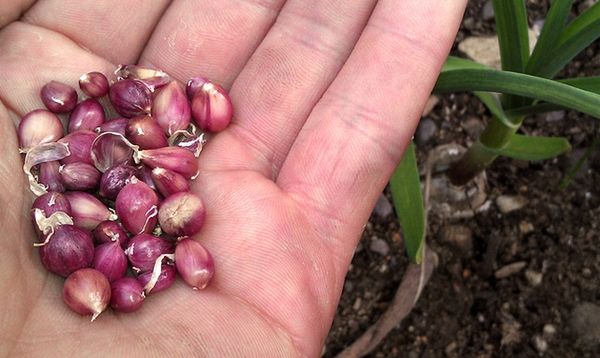
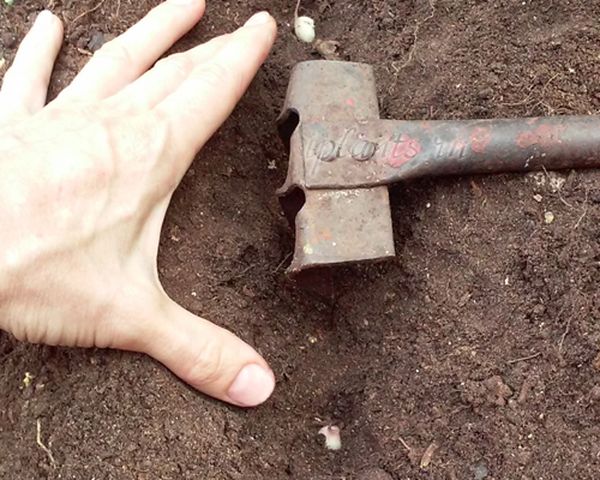
In the fall, they are sown approximately a month before the onset of frost, most often in mid-October, to ensure they have time to root well before the cold weather sets in, but not to begin growing. They are planted 4 cm deep, 2-3 at a time, leaving 6-8 cm between them and about 15 cm between rows. As winter approaches, the bed is mulched with hay, grass, or leaves; if a cold winter is expected, it can be covered with spruce branches. Planting before winter is considered risky, as the planted bulblets can freeze in the absence of snow or simply be pushed upward by the freezing ground. If this doesn't happen (and some will survive the winter even in the most extreme conditions), then in the spring, after the snow melts, a steady stream of seedlings will emerge.
Many believe spring sowing of bulblets is more productive, especially in regions with cold winters. Dried bulblets are stored in a dry, dark room with a moderate temperature until spring, and then removed for preparation about six weeks before sowing. The bulblets must be stratified by placing them in the refrigerator for several weeks. This will allow the garlic to grow excellent single-clove bulbs. If not refrigerated before planting, the garlic will grow until late autumn, its leaves will not dry out, and the bulbs will begin to vitrify. After stratification, plant growth ceases in August, the leaves dry out, and the single-clove bulbs store perfectly until planting the following spring, unaffected by the vitrification process.
Most gardeners consider stratification the only preparation for sowing. Some soak the bulblets in a solution of potassium permanganate or copper sulfate before sowing, trying to prevent possible diseases.
Most likely, this is an unnecessary precaution, since the bulblets themselves are uniquely clean seed material and are not contaminated with anything.
Preparing the garden bed
Sow the bulblets in a prepared bed at a depth of 3-4 cm, leaving 3-5 cm between them. Firm the moist soil and mulch. They are then grown in the same way as spring garlic. Harvest when the leaves droop toward the ground. Delaying harvesting will cause the leaves to dry out, making it difficult to harvest. The garlic is picked from the soil, allowed to dry, and then planted like regular winter garlic. The following year, you'll enjoy excellent, large heads of garlic.
You can speed up the process of growing garlic from bulblets. To do this, dry them slightly after harvesting, so they can be easily separated by hand, and plant them immediately. The single-clove bulblets will ripen by October, which is when it's time to plant for the winter. Therefore, it's best to leave them alone, and the following spring they will grow like regular winter garlic, only with a much better harvest.
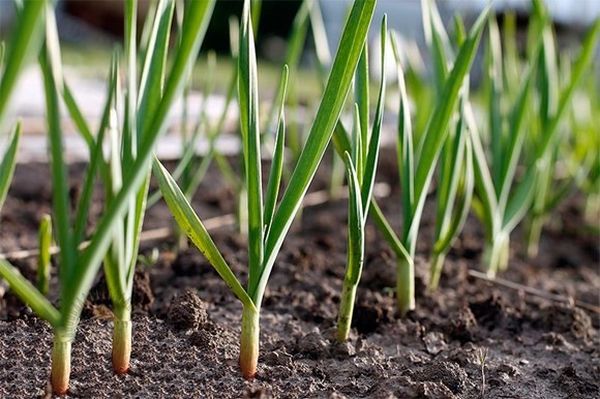
Secrets of growing garlic
Garlic prefers light, nutritious soil; it's a good idea to thoroughly fertilize the bed before planting. In the fall, add humus or compost, superphosphate, and potassium fertilizers; in the spring, you can add urea.
After planting, it would be a good idea to mulch the bed; this will help delay the drying out of the soil and prevent weeds from growing.
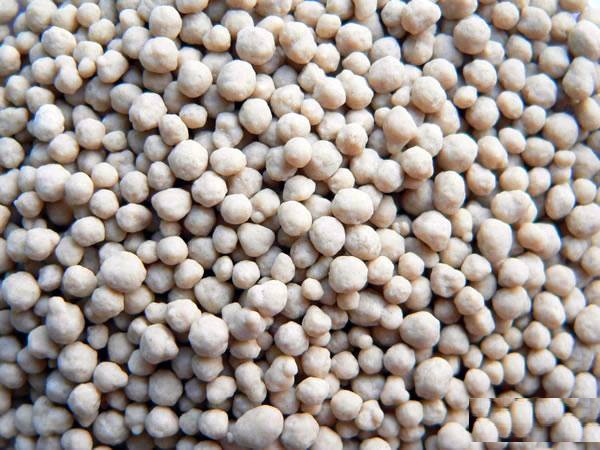
Garlic responds well to feeding with chicken manure infusion during the summer, but the infusion should be diluted more, reducing its concentration. Crop rotation is crucial for garlic. It can be grown in the same spot every 3-4 years. Never plant it after onions, carrots, or cucumbers. It's best to plant garlic as seedlings after tomatoes, beans, cauliflower, or cabbage.
Video: "Propagating Garlic with Bulbs"
This video will teach you how to propagate garlic using bulblets and prepare the seeds for autumn planting.