
How to plant garlic in winter for a good harvest
Content
Planting dates in autumn
The main distinguishing feature of winter garlic varieties is that, unlike spring varieties, they are planted in the fall. However, to ensure the desired results from winter garlic planting, it's important to know the planting timing.

Garlic is typically planted in the fall approximately 35-45 days before the first frost. If you don't plant within this timeframe, the root system won't have time to develop. By the time frost hits, the root system should have grown 10-12 cm.
Winter varieties can be planted starting September 20th. Winter garlic can be planted until mid-October. Experts recommend waiting until the ground freezes overnight and thaws during the day. Therefore, to more accurately determine the planting time, it's best to consult the weather forecast. You can also use the lunar calendar to determine the most favorable days for this procedure.
It's important to know when to plant winter garlic, as planting too early will cause the cloves to sprout. If the gardener misses the planting time, the cloves won't have time to root and will freeze.
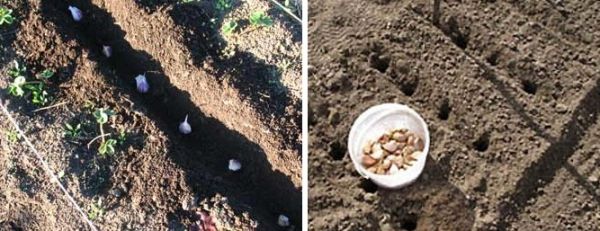
Many beginning gardeners often wonder, "Can I plant winter garlic in the spring?" Yes, it can. But only if I use bulblets, not cloves, as planting material. These bulblets are sown in April. To plant bolting winter garlic in the spring, I need to prepare the planting material in advance.
As we can see, for the future harvest it is very important that the planting material is planted at the right time.
Which crop is best to plant after?
Crop rotation is crucial, directly impacting the quality and quantity of the harvest at the end of the season. After some crops, garlic grows very poorly, producing defective heads. Therefore, winter garlic should be planted in a location previously occupied by excellent crops.
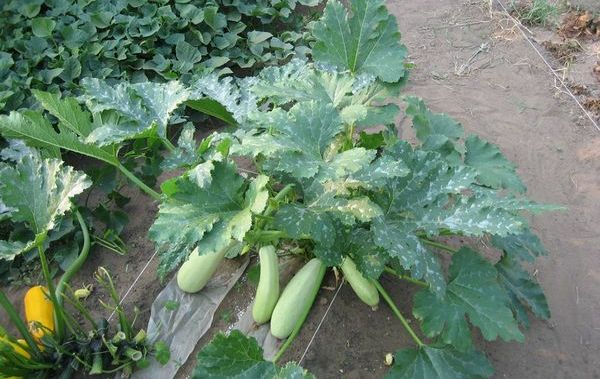
This variety grows best when planted in a location where annual vegetables with a short growing season grow (such as zucchini, pumpkin, peppers, cucumbers, and eggplant). Cloves can also be planted after berry bushes and grain crops.
Garlic should not be planted in the fall after root crops. This is because root crops are harvested later and, as they grow, they significantly deplete the soil, preventing it from sufficiently recovering by the following season.
It is also not recommended to grow this variety in the same location two years in a row. Returning to the same planting site should only be done after 3-4 years.
Selecting soil
To plant garlic before winter, you need to not only determine the timing but also choose a planting location. Garlic is a finicky crop that prefers fertile, light soil.
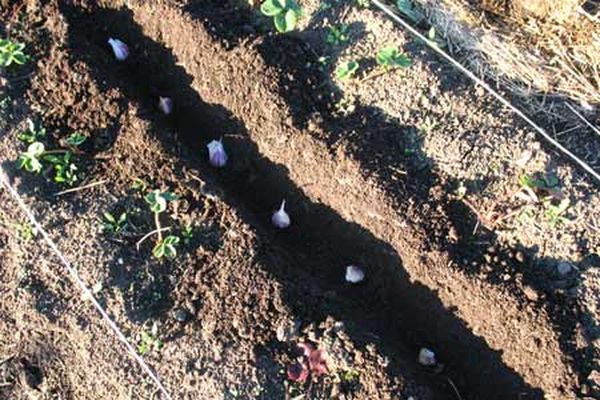
The site selected for growing this crop must meet the following requirements:
- be well fertilized. The soil should be nutritious, light, and accessible to air penetration;
- An elevated location where meltwater stagnation is prevented. If water stagnation occurs in the area, the risk of root rot increases significantly. This will lead to the emergence of diseases and pests. In this case, it's necessary to create raised beds. However, this situation should still be avoided.
- lighting the beds throughout almost the entire day.
To select the optimal site in the spring, when the snow melts, you need to carefully monitor your garden and identify all areas where moisture accumulates. Planting cloves in these areas is definitely not recommended. In the fall, the chosen site should be covered with snow early to prevent the planting material from freezing. Based on your observations, you should prioritize sites where:
- the snow lies for quite a long time;
- people and animals are not walking;
- an ice crust is formed.
When choosing a site for planting winter garlic, it's important to consider that in winters with little snow, the planting material may freeze. This usually occurs when severe frosts leave the garden bed without snow.
To prevent such a negative scenario from developing, you need to know how to properly plant garlic in the fall.

A good location would be near a fence, preferably on the north side. This way, the shade from the fence will allow the ice crust to remain on the ground for as long as possible. At the same time, the fence will protect the beds from blowing snow.
Once the site for planting winter garlic has been determined, it must be properly prepared. Without preparation, it is very difficult to achieve a truly good harvest.
Preparing the beds involves thoroughly digging and fertilizing the area. Humus is an excellent fertilizer for this crop. Complex fertilizers can also be used. Fertilizers can also be applied before planting. In this case, use superphosphate (30 g), potassium salt (20 g), and humus (5-6 kg). Additionally, after applying the fertilizer, it is recommended to water the entire area with a copper sulfate solution.
The amount of fertilizer to be applied is calculated based on the fertile soil in the selected area. If the soil is severely depleted, one bucket of compost should be applied per square meter of the area. Sandy loam and non-acidic soils are the best choice for this variety of garlic.
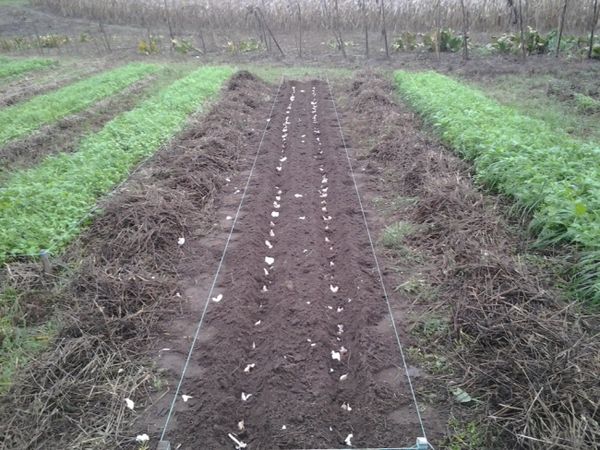
Preparing the planting site should begin in early September. After completing the preparatory work, cover the beds with plastic film, which is removed just before planting.
Planting and care rules
Now that we've determined when and where to plant garlic, we need to understand the planting process itself. It's worth noting that planting winter garlic in spring differs from planting in autumn due to the different types of planting material and the required technique. Garlic planted in spring grows from bulblets, not cloves. When planting in spring, weather conditions must be taken into account.
In the spring, furrows are formed for the planting material. The bulblets are planted at a depth of no more than 3 cm, with a distance of 2 cm between them. A 10 cm gap is left between adjacent furrows.
To understand how to plant different varieties of garlic in winter, you need to know the following rules:
- planting of planting material is carried out in furrows that have a depth of about 15-20 cm;
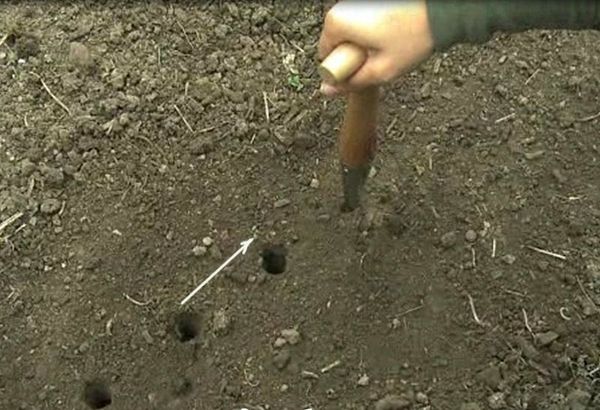
- the distance between the cloves is maintained at 20-25 cm. Although there is information that the distance between large specimens should be 12-15 cm, and between small ones - 8-10 cm;
- Coarse sand is added to the bottom of the furrow. The layer should be 1.5-3 cm thick. This layer will protect the planting material from rotting.
We plant winter garlic in these prepared furrows in the fall. We plant the garlic cloves with the bottom facing down. This will allow the root system to develop quickly. Once the cloves are properly positioned in the furrow, they are covered with soil. Now you know how to plant garlic correctly. However, to grow a good harvest, you need not only proper planting but also proper care.
After planting, the soil is mulched. A layer of dry peat is placed on top of the beds. This can be mixed with sawdust and soil. For protection from the cold, roofing felt can be placed on top. Garlic is stored in this form for the winter. After this, the beds can be tended in the spring.
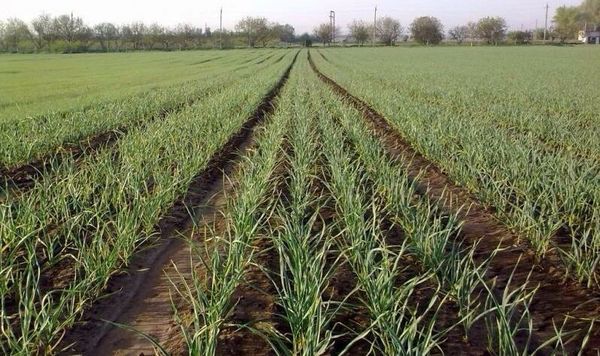
It includes the following steps:
- removing roofing felt and clearing the soil of mulch;
- The shoots that appear at the end of June need to be broken off. They shouldn't grow taller than 10 cm. Otherwise, the head will be small;
- when the first shoots appear, nitrogen fertilizers (mullein, urea, bird droppings) are added to the soil;
- The second feeding is carried out in June/July. Ash is used here;
- abundant watering should occur during the stage of active plant growth and head formation;
- After each watering, the soil is loosened and weeds are removed;
As we can see, planting and caring for winter garlic is simple. That's why it's grown in many regions of our country.
Popular varieties of winter garlic
There are currently a large number of varieties of winter garlic. Therefore, it can often be difficult for gardeners to determine which variety is best for their garden. Let's look at the most popular varieties of garlic for winter planting.
Komsomolets
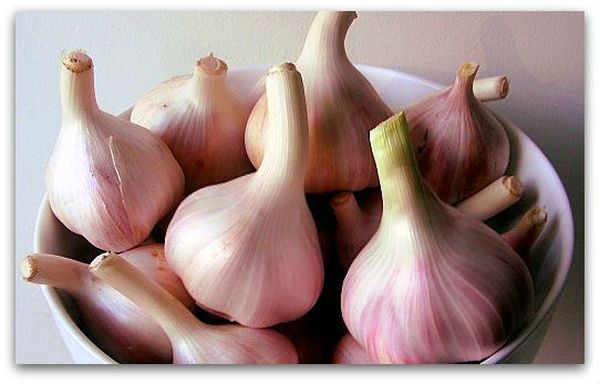
This is a mid-season variety that produces stems. Its growing season is approximately 120 days. However, in southern regions, this period is reduced to 100 days.
The main advantages of the variety are:
- frost resistance;
- spicy good taste;
- easy care;
- unpretentiousness;
- good immunity.
Komsomolets produces a large, flat-round head. With proper care, up to 1.2–1.4 kg of yield can be harvested per square meter.
Petrovsky
A bolting, mid-season variety with a versatile purpose. Garlic bulbs are planted in the fall. The plant forms flattened heads. The top of the head is covered with dirty-white scales, streaked with longitudinal purple stripes. Each head weighs approximately 75 grams on average. It contains eight cloves. They have a pungent flavor and a brown color.
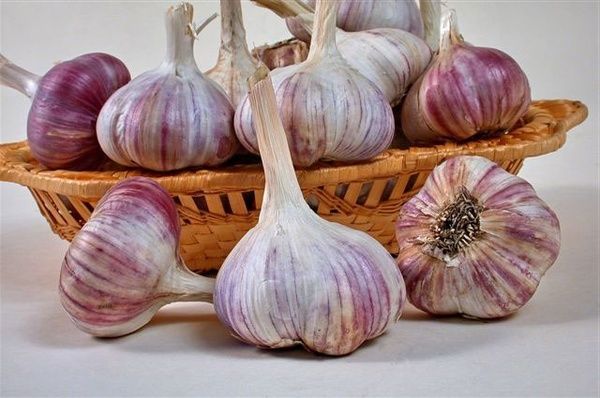
Among the advantages of this variety, the following points should be highlighted:
- stable fruiting;
- universal purpose of garlic;
- high quality of harvest;
- good taste;
- excellent immunity.
Petrovsky is now actively grown in Russia, Moldova, and Ukraine.
Gribovsky 60
Another excellent winter garlic variety is Gribovsky 60. It is planted in winter. This variety produces a stalk. The first shoots appear in early spring. Plantings tolerate even severe frosts well. The flavor is pungent. Each bulb contains approximately 11 cloves.
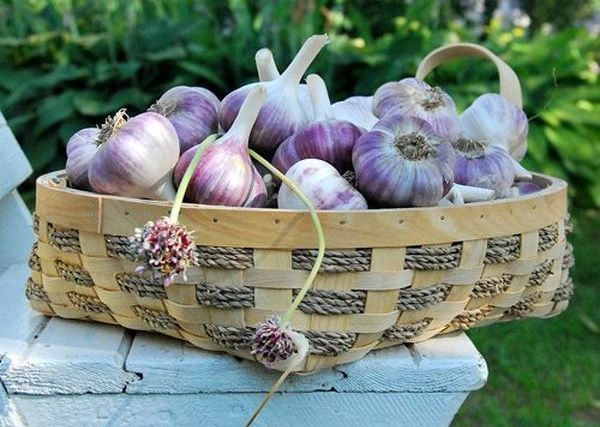
To grow large winter garlic of any variety, you simply need to follow the planting and care guidelines. Even an amateur can easily manage this.
Video “Planting winter garlic”
This video will show you how to properly plant garlic in the winter.