
The Best Eggplant Varieties for Outdoor Growing: Gardener Reviews
Content
Early varieties
Varieties that reach maturity 100-115 days after germination are considered early. This category also includes hybrids with an extremely early ripening period (80-100 days), which are labeled "super-early" or "ultra-early" on seed packages. These are the eggplant seeds that gardeners should choose in regions with late springs and short summers. Both early and ultra-early varieties are suitable for growing in temperate and continental climates.
Negus
This variety is considered very early, as the fruits reach technical maturity in just 70-90 days.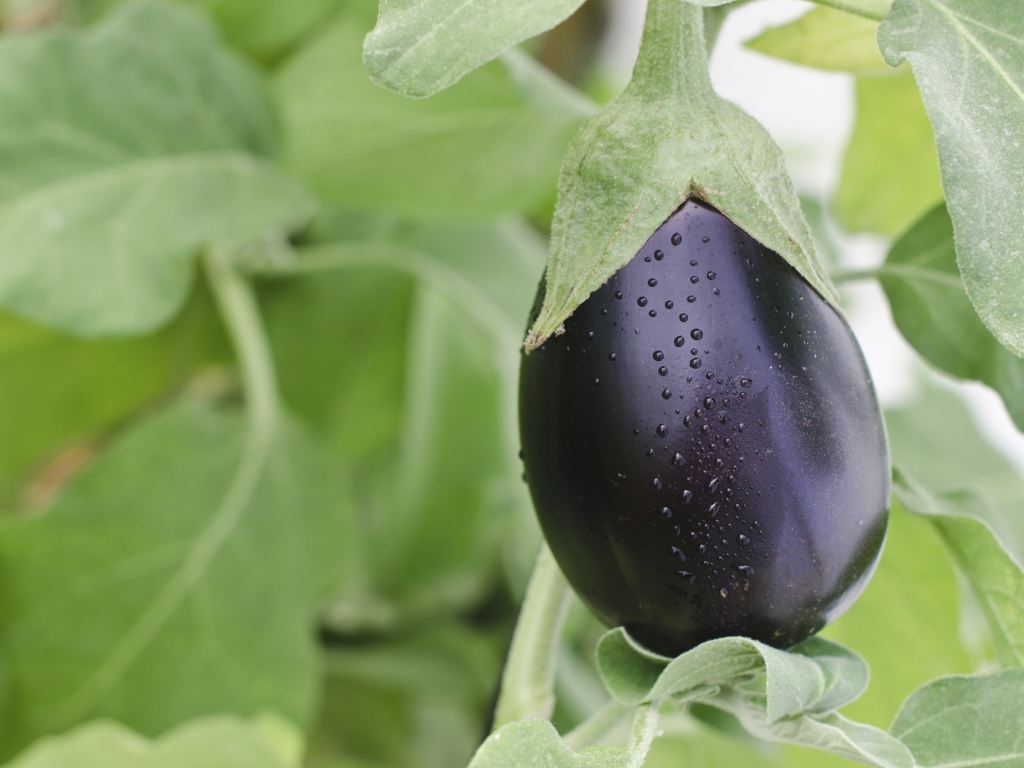
The bushes are compact (up to 60 cm in height), but at the same time they produce a large number of fruits weighing 150-300 g, which on an industrial scale amounts to 40-45 tons/1 ha. The Negus eggplant is round, barrel-shaped, and dark purple, almost black. This variety is cold-hardy, making it suitable for growing in any region.
King of the North
This is also an extremely early hybrid (90-100 days) with exceptional cold tolerance. It is ideal for growing in northern climates with short, cool summers. The bushes are low (about 45 cm), overloaded with fruit, and require staking. The shoots are purple and thornless. The fruits are long (about 30 cm), reaching 300-400 g in weight. The skin is glossy, dark purple. The flesh is greenish, firm, and not bitter. Yield: 12-15 kg/1 m².
Joker
A very early (85-100 days) cluster eggplant. Its distinctive feature is that its fruits are arranged in clusters of 4-6, rather than singly like other varieties. Due to this heavy load, one plant can produce over 50 fruits, equivalent to 6-8 kg. The fruits of this variety are small, weighing 80-130 g and 10-15 cm long. The skin is very thin and bright purple. The flesh is white, dense, and has an excellent, mild flavor. 'Balagur' has good disease resistance; during fruiting, the bushes and ripening clusters require staking.
Vakula
An early variety bred domestically, ripening in 95-100 days. The bushes are large (approximately 1.5 m) and produce numerous fruits, so they become overloaded and require staking. The yield is high, reaching 10-13 kg/m².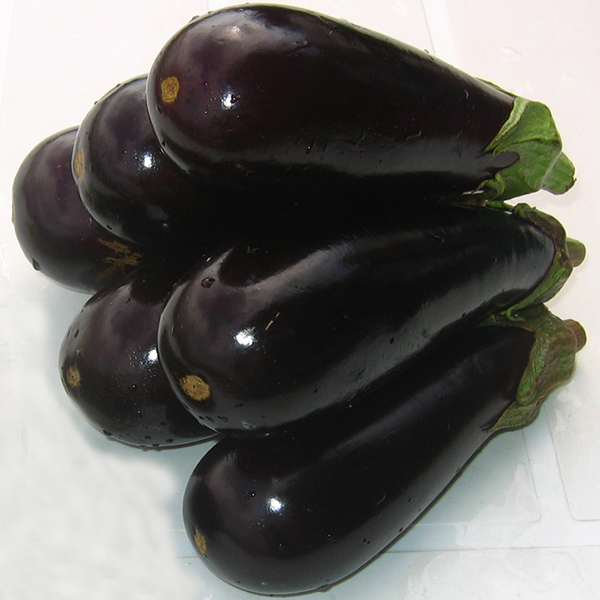
The fruits are large (16-20 cm, weighing 200-400 g), elliptical, wide in diameter, and dark purple in color. A consistent harvest, lack of bitterness in the pulp, and good transportability are the main advantages of this variety.
Purple Miracle
A very productive variety, it takes 100 days to ripen. The fruits are not large (100-150 g), but due to the large number of them per bush, the yield is approximately 14 kg/m². The eggplant skin is blue-black and shiny. The flesh is slightly greenish, without a bitter taste, and becomes very tender and delicious when processed.
Video: "The Best Varieties of Eggplant"
From the video you will learn about the best varieties of eggplant.
Mid-season
Mid-season varieties reach technical maturity in 115-130 days. This makes them suitable for southern regions and temperate climates.
Surprise
A variety with a low yield (3-4 kg/m²), but excellent taste and marketability. It ripens quickly—the harvest is ready in 120 days.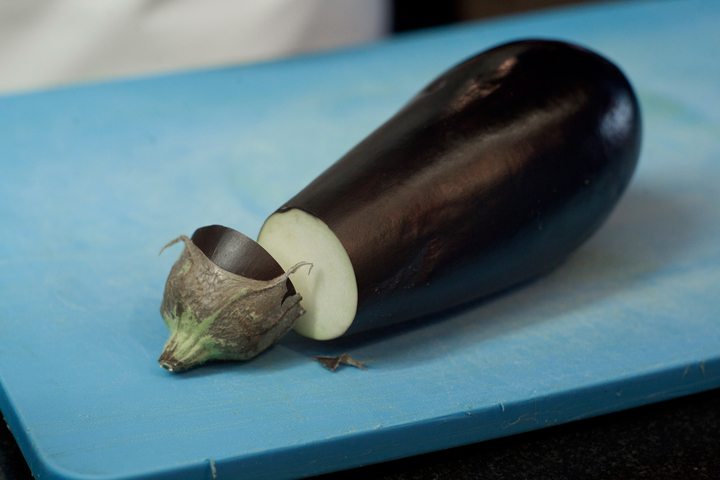
The eggplants are large (20-24 cm long, weighing 400 g), cylindrical, and a traditional dark purple color. The flesh is creamy and does not taste bitter after processing.
Sailor boy
A very productive variety with a distinctive coloring – bright lilac with white stripes. Ripens early and evenly (115 days). The curved, pear-shaped fruits are quite large (weighing 200-400 g and 15-18 cm long), with an excellent, mild flavor, making them highly prized in the culinary arts.
Diamond
A long-known and proven variety, a favorite among eggplants. It reaches technical maturity in 115-125 days and is highly resistant to cold, disease, and drought. The fruits are wide and oblong, 15-18 cm long and weigh 140-250 g, with an intense black-purple color. The flesh is slightly greenish and lacks bitterness.
Albatross
A very productive variety with good storage and transportation qualities. The bushes are low (up to 60 cm) and the foliage is lush.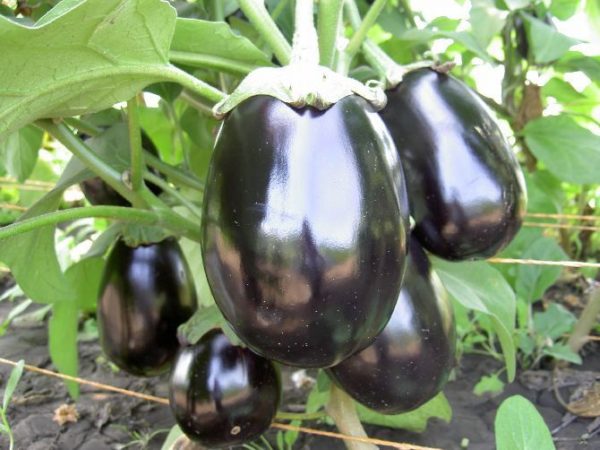
The pear-shaped, shortened fruits are deep purple, turning brownish when ripe, weighing approximately 400 g and ripening in 115-125 days. The skin is thin, and the flesh is not bitter.
Marzipan
Experts have rated this domestic hybrid as the most delicious of the mid-season varieties. The flesh is creamy and very juicy. The fruits are oblong, widening toward the bottom, and dark purple. They ripen in 120-125 days. Suitable for cultivation in northern regions.
Late-ripening
Late-ripening varieties are rarely planted outdoors, as they require 130 to 150 days to mature. Adding the time it takes for seeds to germinate, the harvest can take almost half a year. However, these varieties have an undeniable advantage: they store well and for a long time, so residents of regions where winter comes later can grow the following varieties:
Black beauty
A productive variety that produces majestic, dark purple, uniform fruits weighing 500-600, and sometimes even 900 g. The taste of the pulp is soft, not at all bitter.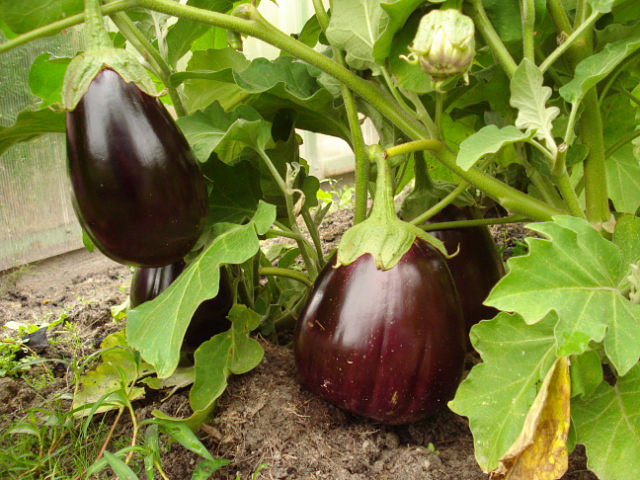
Fruiting occurs on the 130-140th day, resistant to temperature changes and cold.
Bull's forehead
Very attractive, heavy fruits weighing 0.8-1 kg and 16-20 cm long. The skin is glossy, purple-brown. The flesh is light-colored, with an excellent, non-bitter flavor. Ripens in 140-150 days. This is the best variety for storage and processing.
Teddy Bear
The eggplant with such an affectionate name is a very productive variety, highly prized in cooking for its excellent flesh flavor. Ripening is complete in 135-145 days.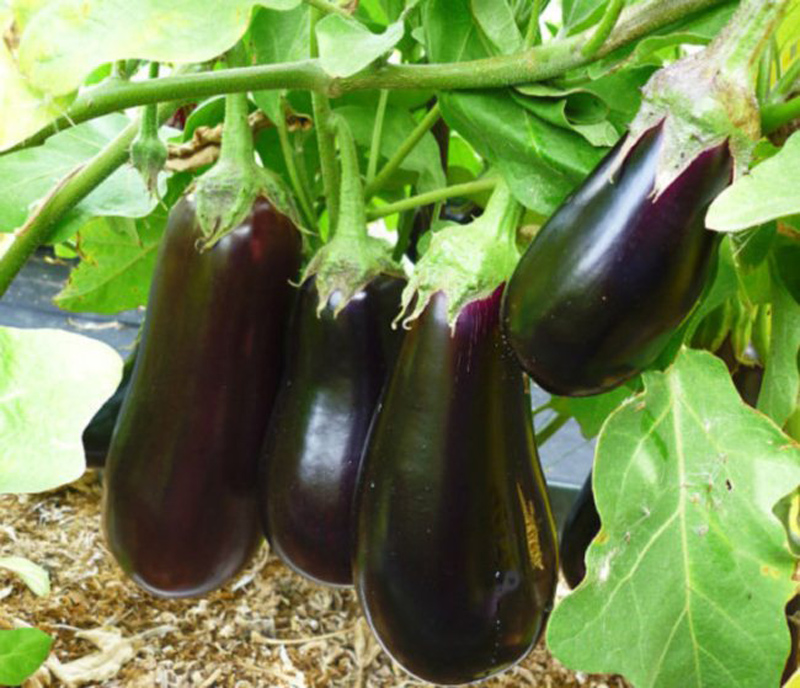
The fruits are elongated, pear-shaped, and a rich purple-black color. They are highly resistant to diseases and extreme weather conditions.
Multicolored varieties
Unusual eggplants with beautiful decorative colors are still a rare sight in our gardens. Many gardeners fear that such hybrids will produce low yields, so they only plant them occasionally as experiments. But it's worth noting that these experiments often end successfully, and the colorful vegetables not only delight with their taste but also delight those around them.
The most common colored eggplant is white. Their popularity is currently growing, and dozens of varieties are available. White hybrids are not bitter and have a milder flavor with hints of mushrooms or chicken, making them ideal for creating true culinary masterpieces.
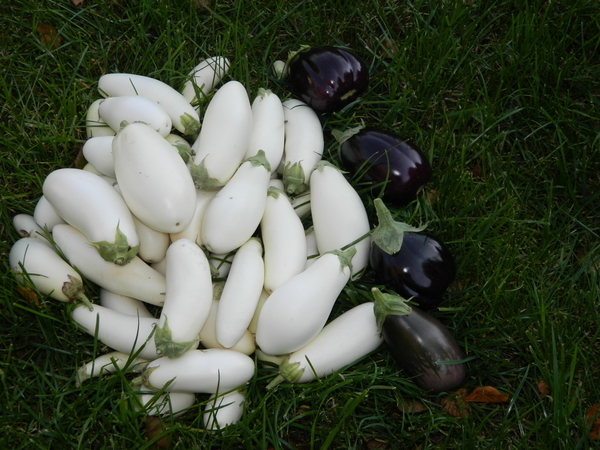
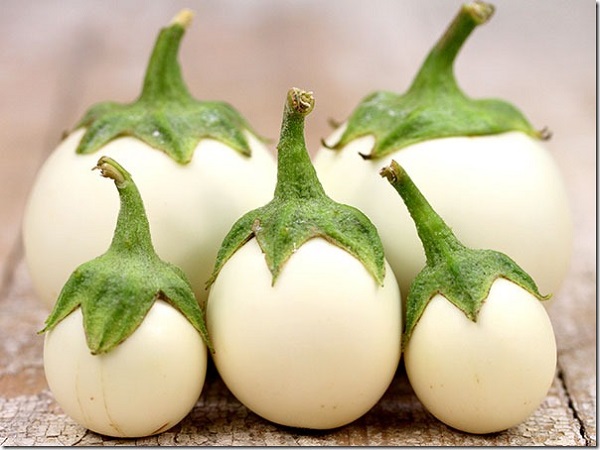
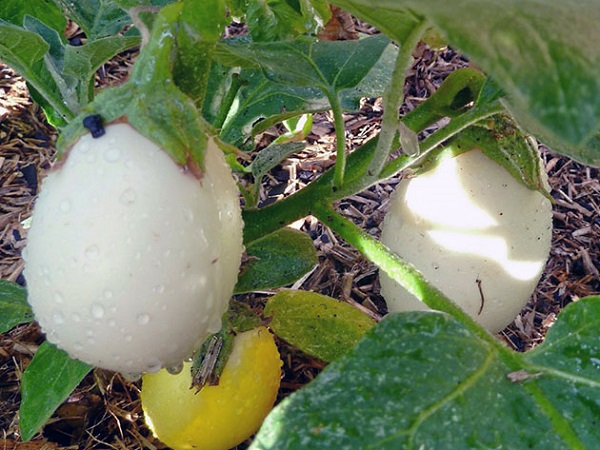
The variety of white eggplants is so great that every gardener can choose the right variety for themselves:
- round or ovoid eggplants (Ping-Pong, White Egg, Iceberg);
- unusual ribbed (Thai);
- long or saber-shaped (Icicle, Pelican);
- classic oblong or cylindrical shapes (Swan, White Night, White Swan, Snow) and many others.
But the most interesting ones are, of course, the multi-colored eggplants: yellow, red, green or striped.
Golden eggs
An ornamental hybrid grown in Holland. Ripens very early—in 90 days. The bush is compact and low-growing (30-50 cm).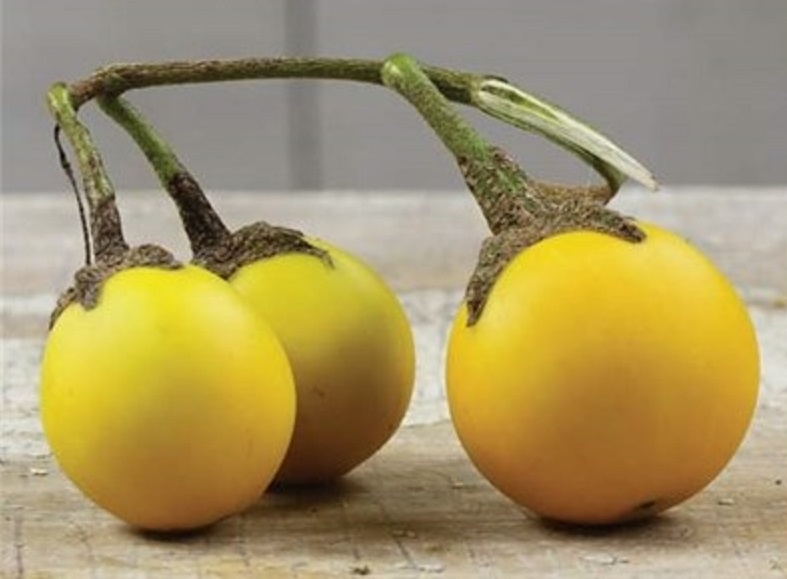
The fruits are oval and small (about the size of a goose egg). They are white when ripe, turning bright yellow as they mature. The flesh is creamy and contains a lot of carotene.
Emerald
A mid-early, high-yielding hybrid for both plastic shelters and open ground. It is cold-resistant and produces fruit even in adverse weather. The fruits are yellowish-green, oval, with glossy skin, weighing approximately 300 g, and have excellent marketability.
Greenie
An early-ripening green-fruited eggplant bred domestically. Resistant to sudden temperature fluctuations, suitable for unprotected soil. The fruits are elliptical, weighing 200-300 g. The skin is shiny, rich green, and the flesh is creamy white and delicately flavored.
Red ruffled
An ornamental mid-season hybrid with edible, delicious, non-bitter fruits. The bushes are low (up to 40 cm), with thornless shoots.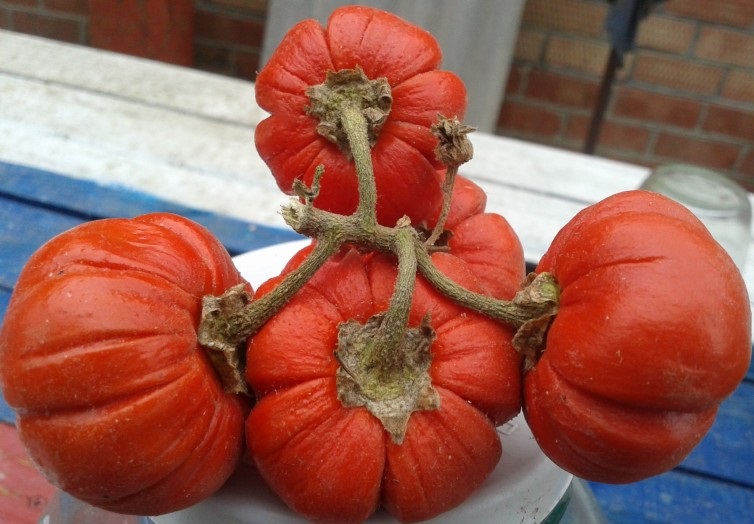
Eggplants are small (about 100 g), round in shape, green with dark stripes when unripe, and as they ripen they first turn orange and then red.
Mantle
A late-ripening hybrid (approximately 140 days). The plant is tall (over 1 m), spreading, and produces multiple clusters of small (4-5 cm long) fruits. Unripe eggplants are milky white, turning orange with vertical dark green stripes as they ripen. The flesh is yellow, slightly sweet, and very nutritious due to its high concentration of carotene.
All the eggplant varieties described above are intended for open ground cultivation, so standard care is sufficient for good fruiting. It's also important to understand that ripening times may vary depending on specific climate conditions.
In southern regions, vegetables may ripen 15-20 days earlier, while in northern latitudes the same variety will yield a harvest 10-15 days later.
Video: Growing Eggplants
From the video you will learn the secrets of growing eggplants.