
White Eggplant: Description of Varieties and Selection of Seeds
Content
Description of varieties
White-skinned eggplants are the result of breeders' persistent desire to improve the taste of traditional blue-purple vegetables. 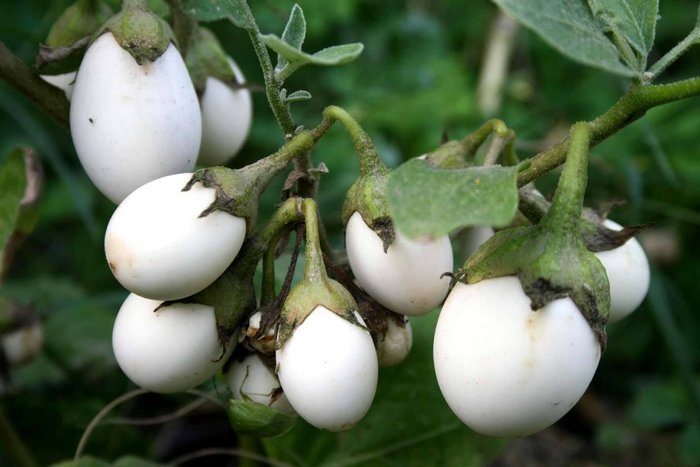 As a result, varieties were developed with white, completely non-bitter skin and surprisingly tender, virtually seedless flesh. Today, there are a couple dozen of these hybrids. They all share a similar taste, but differ in ripening time, fruit shape, and size.
White lily
A very productive variety with a mid-season ripening period (105-120 days). It is extremely popular with gardeners due to its outstanding flavor, reminiscent of champignons. The open, vigorous, and branched bushes produce 6-8 eggplants each weighing 250-400 g. The skin is thin, smooth, and perfectly white. The flesh is firm, uniform, and free of bitterness.
This variety is characterized by its easy cultivation. It is suitable for both greenhouses and open ground. Despite its high nutritional level, it boasts impressive yields – 4-5 kg per plant. It has excellent immunity to fusarium and tomato mosaic virus.
White Night
An early hybrid, ripening in 100-105 days outdoors and 80-95 days in greenhouses. The bushes are tall (up to 80 cm) and spreading, easily supporting 7-9 fruits weighing 200-300 g. The White Night eggplant is highly prized in cooking for its superb sweet flavor, but it also has beneficial effects on the body, lowering cholesterol and acting as a diuretic.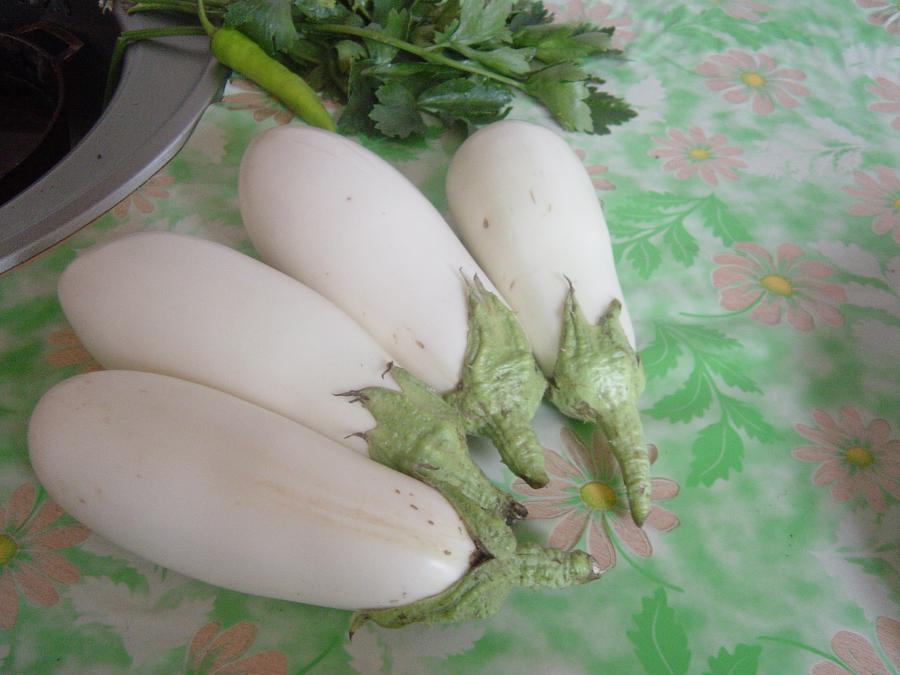
This is one of the best eggplants for open ground cultivation, as it is highly resilient and capable of setting fruit at low temperatures. The variety has a fairly high yield of 6-8 kg/m².
White swan
A mid-season (110-120 days) productive variety with a unique, distinct mushroom flavor. The bushes are compact, reaching 60-80 cm in height. The fruits are small (8-10 cm long and weighing approximately 100 g), but the number of them per bush is impressive – more than 12 can be produced. The skin is smooth and very thin. The dense flesh, highly prized for its distinctive flavor and aroma, is highly prized in cooking.
Eggplants of this variety are frost-intolerant, so they are best grown in greenhouses. Planting in open ground is possible no earlier than June and only with reliable cover at night, as temperature fluctuations negatively affect fruit set.
Swan
The earliest white-fruited variety that can be grown outdoors. With good watering and maintaining a temperature of at least 20°C (which requires covering with plastic at night), the harvest can be completed in 85-100 days. The yield is also impressive – up to 18 kg per 1 m² of area.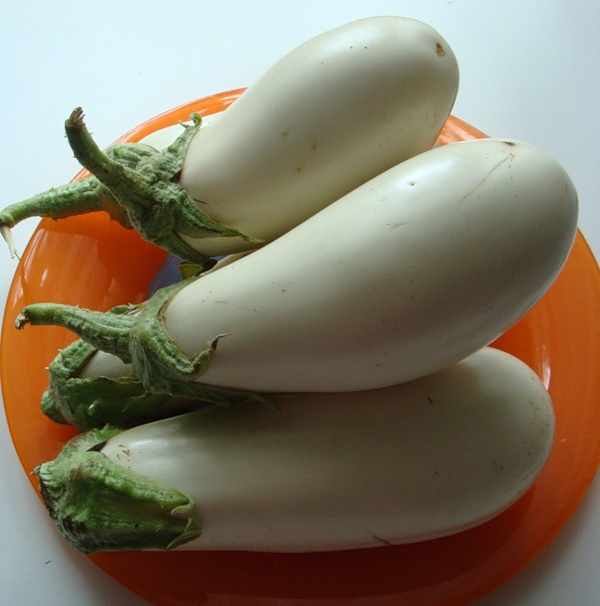
The bushes are low (up to 60 cm), densely foliated, and bear white flowers. The cylindrical fruits, widening toward the base, grow to 18-22 cm with an average weight of 250-300 g. The flesh is tender, uniformly white, and not at all bitter. The skin is creamy and dense. Despite their early ripening, the fruits transport well and have a long shelf life.
Stork
An early-ripening (90-100 days) variety with small, ovoid fruits weighing up to 100 g. It differs from other white-fruited eggplants in that the fruits, which are snow-white when technically ripe, begin to yellow when overripe. This characteristic easily identifies the eggplant's ripeness: as soon as the skin begins to turn creamy, the fruits should be harvested; otherwise, the flesh will become tough and tasteless.
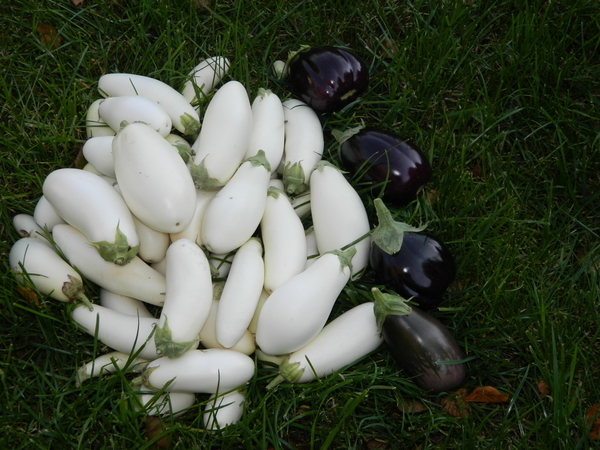
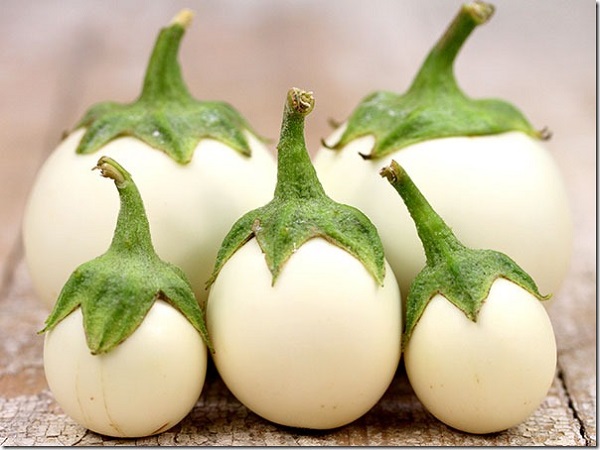
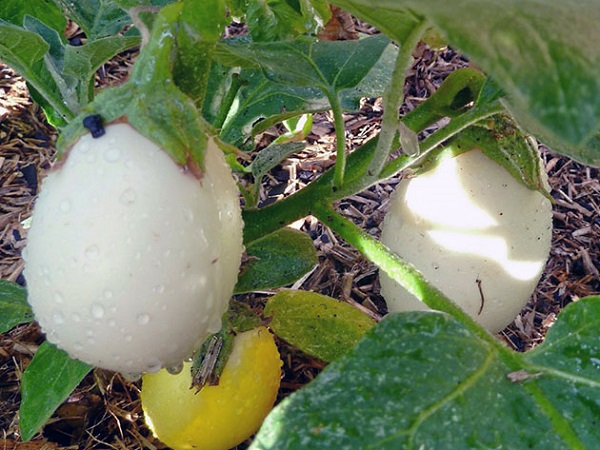
The "Aist" variety is ideal for processing. It can be grown outdoors, as it tolerates temperature fluctuations well.
Bibo
This is perhaps the largest eggplant among white-fruited hybrids. Under favorable conditions (at temperatures between 20 and 25°C), its fruits can reach a weight of 500-600 g, while under normal conditions, they weigh 300-400 g. It ripens early (up to 100 days), but in greenhouses, the crop is ready for harvest in just 70-75 days.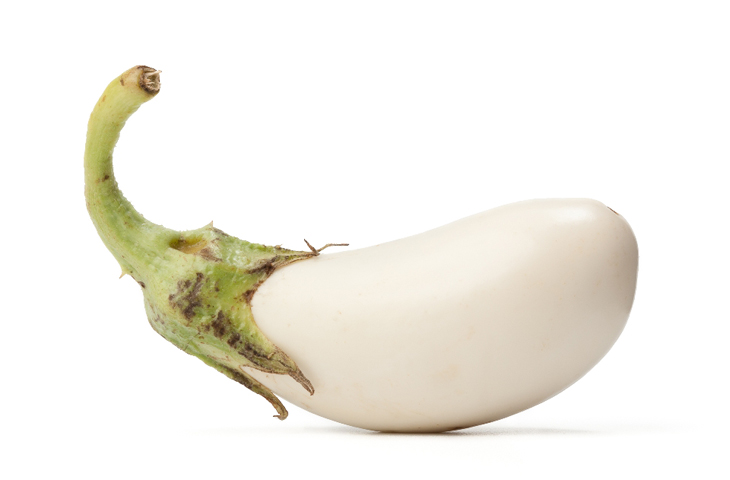
This eggplant grows on a large, stocky bush, producing 2-3 fruits. The skin is smooth, semi-matte, and snow-white. The flesh is white, without bitterness, and has a remarkable meaty flavor, making it ideal for preparing true masterpieces. This variety is resistant to fusarium wilt and can be grown in the ground or in greenhouses.
Pelican
A mid-early (115 days) hybrid with a very interestingly shaped fruit – saber-shaped, curved like a pelican's nose. The bush is medium-height (up to 70 cm), dense, sparsely foliated, and produces 6-8 eggplants weighing approximately 200 g and measuring 14-20 cm in length. The skin is semi-matte, thin, and milky white. The flesh is medium-firm, not bitter, and loses its flavor when overripe, so it is recommended to harvest the fruit immediately upon reaching technical maturity – this way, they store and transport well. The yield is excellent – up to 2 kg per plant.
Video "Description of Varieties"
This video describes the varieties of white eggplants.
Sowing seeds
Given the high heat requirements and early maturity of most hybrids, there's no need to rush into planting seeds for seedlings. The optimal time for sowing is early March, when the seedlings will be just over two months old by the time they're transplanted outdoors in early June. For outdoor cultivation, choose cold-hardy hybrids; any variety can be grown in greenhouses.
Before planting, soak the seeds for several hours in potassium permanganate, then plant them in moistened soil. It's best to plant each seed in a separate pot, cup, or peat pellet—this will eliminate the need to transplant the seedlings.
Planting in the ground or greenhouse
Heat-loving white eggplants grow and bear fruit best in greenhouses or under plastic cover. In the open ground, these varieties can only be grown in a sunny, wind-protected location. Night frosts are fatal for most white eggplants, so seedlings should be planted no earlier than June, and then only under plastic cover at first.
Eggplants should be planted in fertile, humus-rich soil, preferably neutral in pH. Regular garden soil or sod should be supplemented with sand and humus—this mixture will provide the plants with adequate nutrition and prevent waterlogging. Avoid planting white eggplants next to blue ones, as they may cross-pollinate.
Care
While eggplants are in the seedling stage, caring for them consists of regular watering, loosening the soil and fertilizing.
When two true leaves appear, the seedlings should be fed with ash or a mineral mixture containing potassium and nitrogen. The second feeding should be organic (liquid manure, litter), applied shortly before transplanting into the garden bed.
After transplanting into the ground, ensure that nighttime temperatures do not drop below 20°C. Water as needed. During flowering and fruit ripening, fertilize again: the first time, apply a complex mixture or organic fertilizer; during fruiting, apply a potassium fertilizer.
Video: Growing Eggplants
This video will show you how to grow and care for eggplants.