
Main varieties and characteristics of yellow watermelon hybrids
Content
Difference from red
These striped fruits with different-colored flesh are very similar in appearance and taste. However, there are some differences between them.
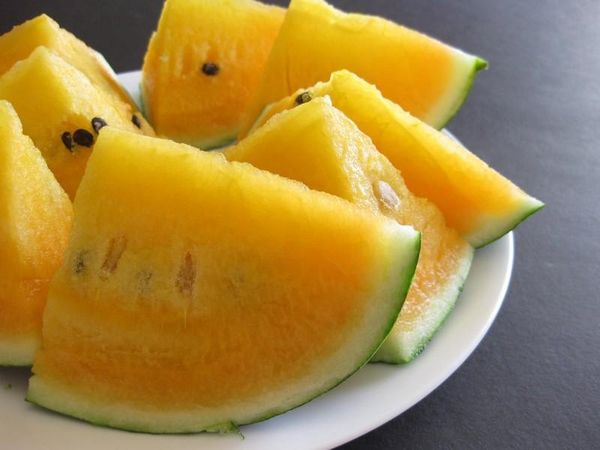
The main difference between watermelons is color. The unusual coloring of the inside of the fruit is completely uncharacteristic of this plant. However, the color of the flesh does not detract from its nutritional value. The yellow watermelon is very juicy and has a pleasant sugary flavor. A distinctive feature of this unusually colored berry is the complete absence of seeds.
Regarding the differences in the growth habits of plants of different colors, yellow berries ripen faster than red ones. They are considered early. Otherwise, the development of both plants is identical. To reap a bountiful harvest of juicy, unusually colored fruits, you need to know how to grow the plant. The plant bush is anchored in the soil by a strong root system. However, the outer part of the roots should be handled with care.
The yellow watermelon is a hybrid created by foreign breeders through crossbreeding. The first harvest of this unusual melon was collected in the Mediterranean region. Today, this unusual crop is also grown in our country. Although varieties of this sunny berry were originally intended for cultivation in southern regions, they are now widely cultivated in temperate latitudes.
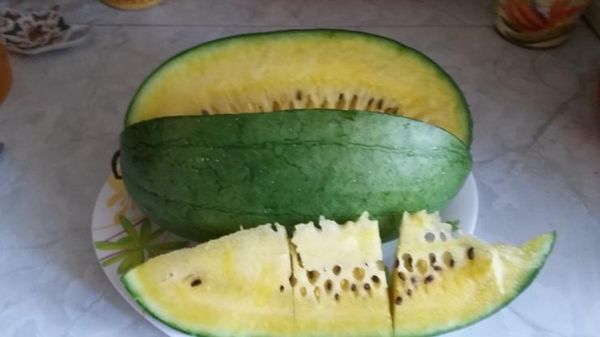
What did the familiar scarlet fruit have to be crossed with to produce a sunny one? Many mistakenly believe that this unusual crop was created by crossing the plant with a melon. In fact, the yellow watermelon is a hybrid of a wild and domesticated melon.
This striped berry hybrid has an attractive appearance and a pleasant flavor, although its price is not affordable. Seeds of this exotic plant are readily available both at markets and online. It doesn't require any special growing conditions, so it can be successfully cultivated in many regions.
Main varieties and hybrids
Today, gardeners have a wide selection of yellow berry varieties. About a dozen were developed in the former Soviet Union. For example, Kavbuz was developed by Ukrainian breeders. However, this variety was not widely distributed because it tasted like pumpkin.
Dutch-bred varieties offer a number of advantages and grow successfully in black soil. Gift of the Sun has orange skin, but its flesh can be light, pumpkin-colored, or even classic scarlet.
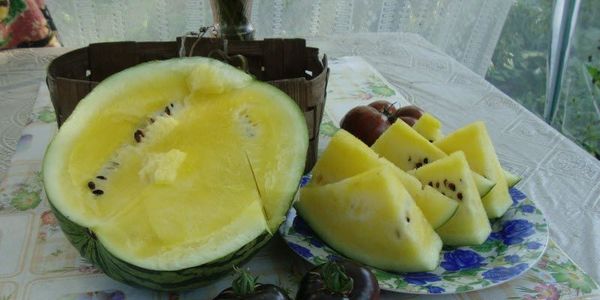
Varieties of Russian origin also have their fans worldwide. Prince Hamlet is now widely cultivated abroad. This variety is often called "pineapple" due to its rich flavor and flesh color. Its ripe fruits can be enjoyed within two months of planting.
The Golden Grace watermelon, with its yellow, juicy flesh, produces 8-kilogram fruits with a rich interior. A significant advantage of this variety is its cold resistance. This variety, like many others, originated in Holland and has been warmly welcomed by Russian, Ukrainian, and Belarusian gardeners.
The Lunar watermelon is popular among gardeners. This variety ripens early, with a flavor reminiscent of mango. It's mid-season, ripening in 2.5 months. The Lunar variety is cold-tolerant. Its fruits are rich in fructose and other beneficial nutrients.
Characteristics of yellow watermelons
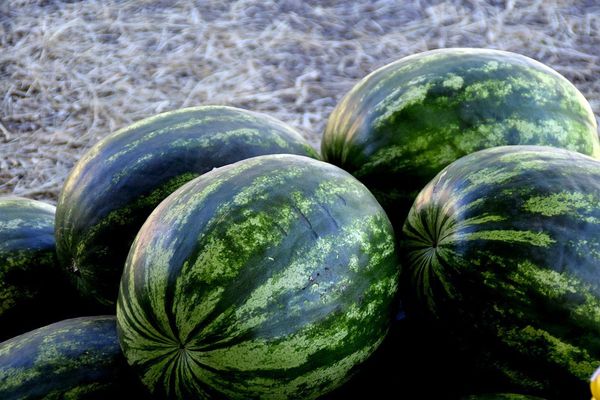
This exotic berry resembles a red watermelon in appearance. Its fruit is covered with dark green skin with light spots and stripes that form a pattern. The yellow plant's stripes are smaller than the scarlet one's. The berries of most varieties weigh 3 kg, but some can reach 10 kg.
Many people talk about the varying sugar content of fruits of different colors. In temperate climates, scarlet berries have higher sugar levels. However, those who have tried the plant in its native habitat note its rich aroma. In addition to its distinctive flavor and aroma, the pulp can reveal notes of pumpkin, lemon, or mango. However, much depends on the characteristics of the particular variety, the level of ripeness, and the sensory perceptions of the individual.
The crop has virtually no seeds, and those that are still present in the pulp remain soft after the fruits ripen.
The calorie content and chemical composition of the yellow and red fruits are virtually identical, making both berries very healthy. They contain glucose, fructose, vitamins, microelements, antioxidants, and dietary fiber.
The peel of yellow fruits is unsuitable for making candied fruit and jam. Why? Because it is thinner and harder.
So, the yellow watermelon is an unusual fruit, distinct from the scarlet berry. Reviews of varieties with unusually colored flesh are mixed, sometimes even contradictory. Some appreciate the unusual taste and appearance. Others, on the contrary, prefer the familiar red fruit. In any case, this exotic, "sunny" berry is worthy of attention.
Video "Yellow Watermelon"
This video will give you details about hybrid varieties of the popular fruit.