
Secrets to Successfully Growing Watermelons in a Greenhouse
Content
How to choose and prepare a greenhouse
Before planting in a greenhouse, it must be prepared. The optimal height is 2 meters. Preparation should be done in early spring. The structure must be cleared of snow. Any damage must also be repaired.
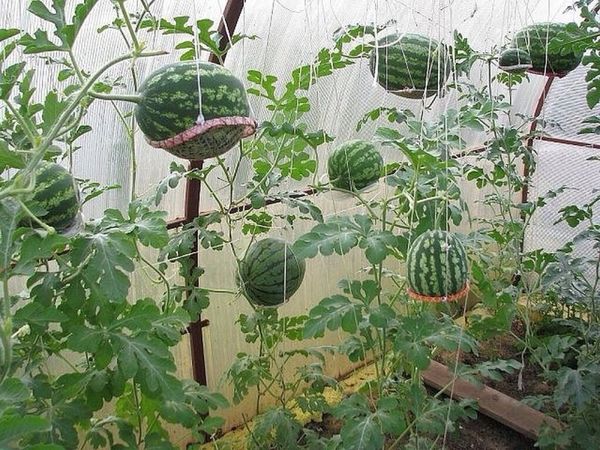
A heating system can be installed to minimize the risk of freezing early plantings. To grow watermelons in a greenhouse, the soil must be prepared. It should include the following components:
- fine-grained sand;
- garden soil;
- humus;
- the ratio is taken as 4:3:3.
Watermelons can be planted alongside other crops here. For example, tomatoes are often grown alongside them. Watermelons planted in a greenhouse with tomatoes give excellent results.
Choosing the right variety and seeds
To ensure easy greenhouse watermelon care, it's important to choose the right varieties. Seeds must be high-quality and healthy, as confirmed by quality certificates. The following varieties are recommended for greenhouse cultivation:
- Fire;
- Pannonia;
- Crisby F1;
- Sugar Baby.
When choosing watermelons for growing in a greenhouse, it is necessary to consider the following points:
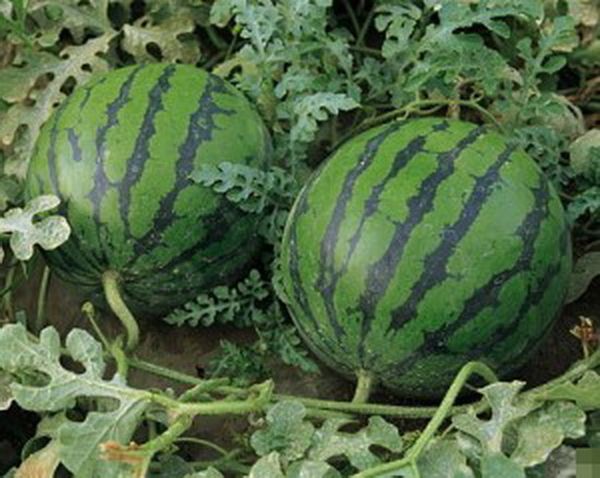
- ripening periods;
- agricultural technology;
- fruit parameters.
Once the watermelon greenhouse is ready and the seeds have been selected, you can begin growing them.
How to grow seedlings
Watermelons are often grown in a polycarbonate greenhouse using seedlings. This is because watermelon seedlings produce stronger sprouts than those planted in soil. In this case, the seeds are sown in late April. The seedlings are sown in plastic cups. Before sowing, the seeds are soaked in warm water. They can also be treated with a growth stimulant (be sure to follow the instructions carefully). After sowing, they are fertilized with mineral fertilizers and compost.
Sprouts will appear when the air temperature reaches 23 degrees Celsius. After the first shoots emerge, the temperature should be maintained between 22 and 24 degrees Celsius. If this temperature drops, the seedlings' quality will deteriorate. It's also necessary to provide lighting for 13 to 15 hours.
Peculiarities of planting seedlings
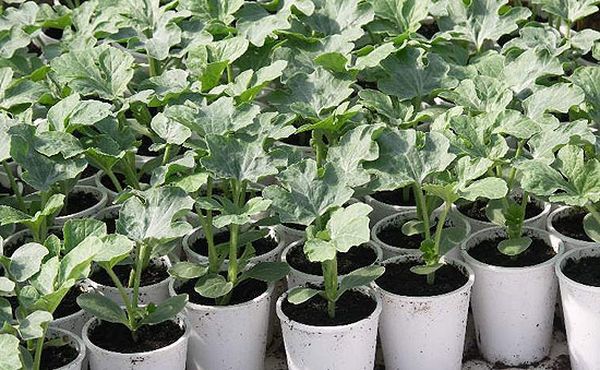
Planting of seedlings into greenhouse soil is carried out when the daytime temperature reaches +19–25 degrees.
These conditions typically appear in early June. If weather conditions worsen after planting, the beds are covered with covering material.
Watermelon plants are planted in a greenhouse using a 60x40 cm pattern. The depth of the holes, dug by hand, is the same as the height of the plastic cup. Compost is placed at the bottom of the hole and watered thoroughly. Two seedlings can be planted per hole. The plants are transferred to the soil along with the root ball. This is essential, as otherwise the root system can be severely damaged.
Greenhouse care
To understand how to grow this crop in a greenhouse, you need to know what care it requires. Plants require specific care depending on the growing conditions. With proper care, the berries will be juicy and delicious. Here are a few key points:
- ventilation is necessary when the temperature inside the structure becomes higher than +31 degrees;
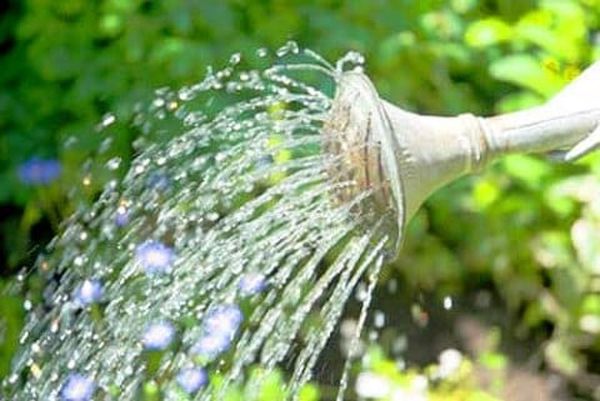
- Watering. How often the greenhouse soil needs to be moistened depends on the variety, temperature, and humidity. Avoid overwatering the plants, as this can encourage disease. Watering should begin 10 days after planting. Watering in a greenhouse should be done with warm water. Avoid getting water on the leaves and stems of the plant.
- Fertilizing. The first feeding (chicken manure) is done when the plants reach 30 cm in height. The second time, we use mineral fertilizer. Subsequently, fertilizer is used as needed.
These steps should be performed after all the young plants have been planted. Staking is also necessary. This is done in the same way as with tomatoes. Therefore, to understand how to tie up watermelons in a greenhouse, you need to use these plants as a reference. They should be tied to a trellis. When tying the vines, be very careful not to damage them.
To produce fruit, flowering bushes need to be pollinated. Naturally, watermelon pollination is done by hand. There are no pollinating insects. Therefore, this procedure is carried out manually with a brush. More experienced gardeners can teach you how to do this correctly.
How to care for the plants is clear. The only thing left to decide is how to shape the bushes. Proper pinching helps shape the bush. How do you pinch watermelons? You need to cut off the top of the main stem and leave a couple of side shoots. You can also remove side shoots to increase yield. Pinching and side shoot removal should be done very carefully to avoid damaging the plant.
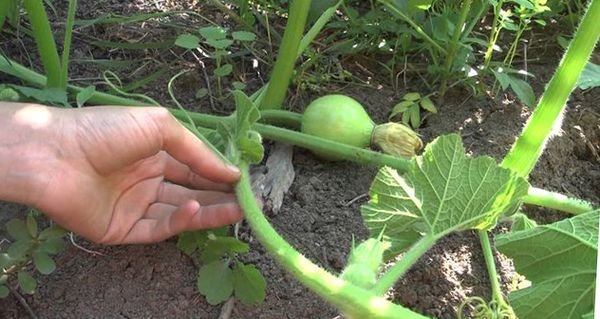
Now it's clear how to train a watermelon in a greenhouse. If you follow these guidelines, growing watermelons in a greenhouse is very easy. Knowing how to grow watermelons in a greenhouse will help you achieve abundant fruit production.
Diseases and pests
It's not enough to simply plant a watermelon; you need to protect it from pests and diseases. To achieve this, meticulous care is essential. Periodically, the plants should be sprayed with special solutions to prevent mites and aphids.
Harvesting
This crop typically grows better in a greenhouse, producing a tastier and earlier harvest, as it's much easier to maintain the required conditions. Each variety has its own ripeness indicators. Avoid damaging the fruits during harvesting, otherwise they will rot. Now you understand how to grow different varieties of watermelons in a greenhouse.
Video: Growing Watermelons in a Greenhouse
This video will show you how to grow watermelons in a greenhouse.