
Why do watermelon fruits and leaves turn yellow?
Content
Possible causes of yellowing
Many years of experience by farmers who regularly grow melons have allowed us to identify several key factors that lead to yellowing of watermelon seedlings.
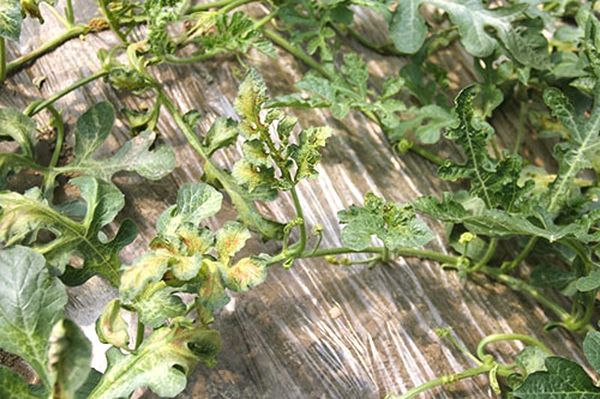
Leaves
- insufficient watering. Despite their drought resistance, melons do not like a lack of moisture, because of this the crop dries out, the leaves of watermelons initially wilt, and soon they curl up, turn yellow, and fall off.;
- Leaves of greenhouse melons may dry out and curl if the plants are too hot;
- Watermelons in a greenhouse are very cold—this is also far from the most favorable option. If the temperature is low, the plants simply stop growing, and naturally, there can be no talk of a harvest;
- Lack of nutrients - if the soil in the melon bed is depleted, the plants will not receive all the necessary microelements, and therefore may begin to lose their leaves first, and then their ovaries;
- Necrosis is another reason why young watermelons turn yellow. It's an unpleasant infectious disease carried by insects;
- Fusarium is a type of fungal disease that occurs at low temperatures and high humidity;
- anthracnose – manifests itself as yellowish-brown spots on the leaves, which gradually turn into ulcers;
- powdery mildew;
- Perhaps pests have taken up residence in your watermelon patch. For example, as soon as you notice ants, take immediate action to combat them, as melon aphids will be your next "guest." Yellowing leaves can also be caused by mole crickets or wireworms.
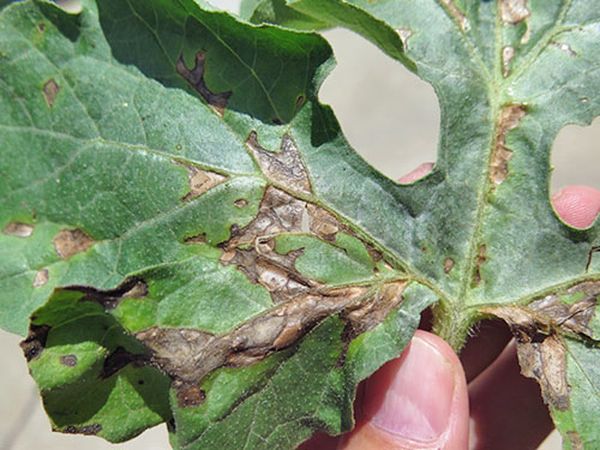
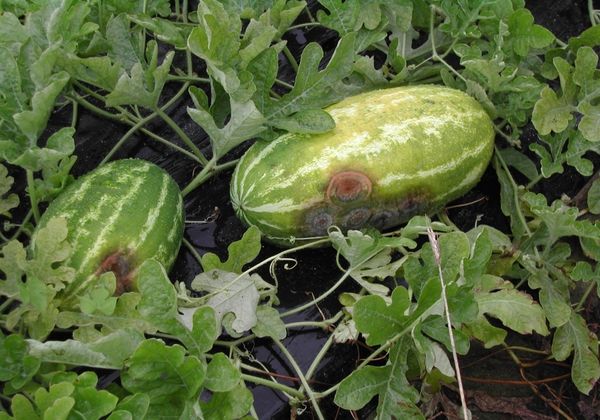
fruits
Fruit yellowing is often caused by the same reasons as leaf yellowing. Typically, fruit damage occurs when no corrective action is taken over a long period of time. If a plant is weakened, subject to pest attacks for a long time, or forced to grow in unfavorable conditions, it will shed both its leaves and fruits.
How to prevent yellowing
Leaves
To prevent the leaves of your melons from turning yellow, try to provide your melon patch with the necessary conditions:
- regular and sufficient, but not excessive, watering;
- timely prevention of the development of diseases and pests;
- immediate destruction of diseased plants.
The most dangerous problem is viral diseases. They are extremely difficult to combat, so it's best to prevent them from developing. Treat plants promptly with protective agents, implement a range of measures to control insect vectors, and thoroughly disinfect all tools used in gardening.
When growing in a greenhouse, ventilate the room regularly and avoid leaving weeds inside after weeding. Another rule is crop rotation. Melons can only be replanted in the same location after seven years, otherwise the risk of disease is too great.
fruits
As with the reasons for yellowing of leaves or fruits, the measures for preventing such a problem are identical.
Video "Secrets of Growing Watermelons"
This video will teach you some secrets about growing watermelons.