
How to choose a variety and grow watermelons in Siberia
Content
Which variety is suitable for growing in Siberia?
It's important to know that growing watermelons in Siberia always begins with choosing a variety. When choosing a variety of this garden crop, consider the following criteria:
- cold resistance;
- The size and weight of the fruit. For cold regions, watermelons should weigh no more than 5 kg, otherwise they will not have time to ripen;
- Early maturity. Early ripening varieties should be selected.
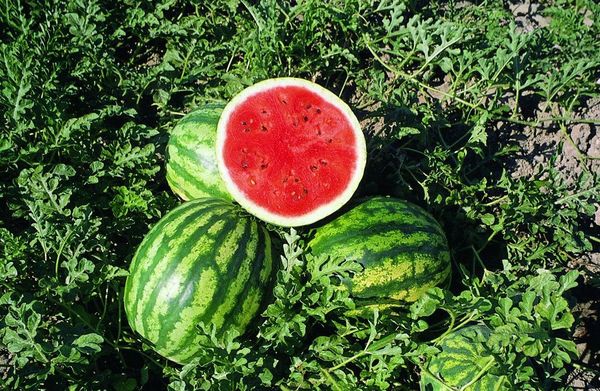
Experienced gardeners recommend choosing locally bred varieties. In this case, hybrids should be avoided. This is because artificially created seeds do not retain the parent's qualities. They may also simply fail to germinate.
The best varieties for growing in Siberian conditions are ‘Siberian Lights’, ‘Ultra Early’, ‘Crimson Sweet’, ‘Northern Lights’, ‘Ogonyok’ and ‘Sibiryak’. All these varieties are early maturing and possess all the necessary qualities for producing a harvest in Siberia.
Preparing and growing seedlings
Watermelons in this region are planted using seedlings. Seedlings can be used to grow watermelons in a greenhouse or in an open garden bed.
Successful cultivation requires strong seedlings that can be planted outdoors immediately after the spring frosts have passed. With proper planting, the bushes will produce a harvest before the cold weather sets in.
Seedlings are sown at the end of April. This will prevent the young shoots from becoming overgrown. It's worth noting that the seeds are sown only after special preparation. To do this, soak them in a potassium permanganate solution for 30 minutes. After this, they are treated with a growth stimulant. The seeds are then stored on the bottom shelf of the refrigerator for one week. Before sowing watermelon seeds for seedlings, a piece of the rind is broken off.
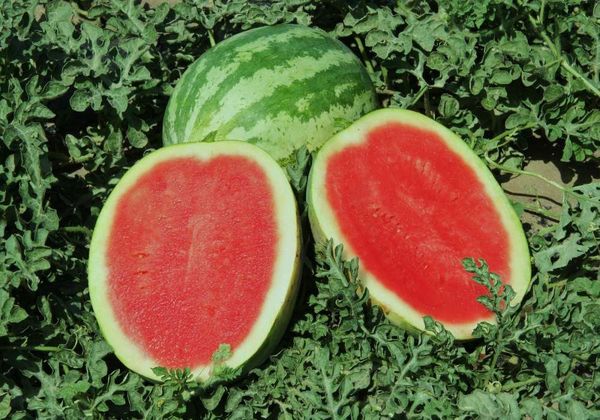
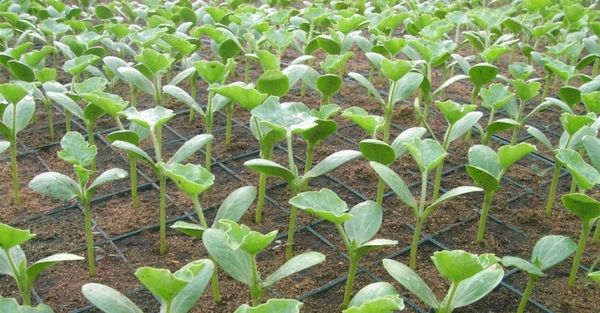
Watermelon seedlings are grown in plastic cups. Two seeds are sown per container, planted at a depth of 3 cm.
During the growing process, avoid allowing the seedlings to stretch. Therefore, sprouted seeds are placed in a cool place (temperature 17 degrees Celsius). The roots of young plants, however, need to be kept warm. Therefore, the containers are placed on a windowsill above the radiator. As the temperature rises, the seedlings accelerate their growth.
Young plants need to be watered moderately and also fertilized with complex fertilizers.
When to plant the resulting seedlings? They are usually ready for planting at 30–35 days old. The sown seeds should have developed several true leaves.
Transplanting
When asking the question "how to grow watermelons in Siberia," it's important to understand that seedlings can be planted in either a greenhouse or in regular soil. Let's look at each option in more detail.
Into open ground
Planting watermelon seedlings in the ground outside a greenhouse follows the same pattern as planting cucumbers. However, growing watermelons outdoors in Siberia or the Urals requires more attention.
Here, seedlings are planted in the ground after July 10th. A 3-meter-wide bed is formed for this purpose. A 1.5-meter-wide strip is dug in the center. Humus and compost are added to this strip, along with mineral fertilizers.
Instead of holes, a raised platform is created in the center of the prepared strip. After this, the seedlings are planted according to the standard pattern.
Knowing how to properly plant watermelon seedlings in the ground, you can effectively grow this crop even without a greenhouse.
Into the greenhouse
Once the young seedlings have grown properly, they are transferred to greenhouse soil. In greenhouse conditions, this procedure is performed in early June. When planting seedlings in a greenhouse, remember that spring frosts should have passed.
In the greenhouse, seedlings are planted in holes spaced 1-1.5 m apart. The soil in the holes should be approximately 0.5 cm above ground level.
It's worth noting that the seedlings are transplanted along with the soil they were grown in. After planting, the young plants are covered with soil.
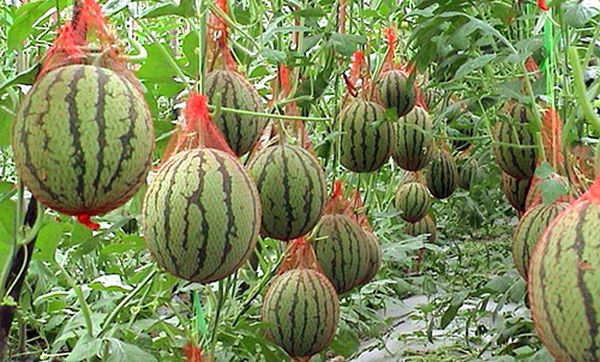
After this, they are observed for the first 2–3 days. During these days, it is determined whether the sprouts will take root. The plants can be covered with plastic at night.
Further care
To ensure a good harvest when growing watermelons in Siberia, proper care is essential for both greenhouse and open-ground plants. Moreover, depending on the growing conditions, plant care will vary slightly.
In open ground
Siberian summer weather is difficult to predict. Therefore, watermelons need to be carefully monitored in such extreme conditions. In this case, the bed is covered with black plastic. This allows for better sun exposure. This growing method keeps the bed free of weeds. Care must be taken to ensure the plants grow properly.
Water as needed. Fertilizer is added to the bed during flowering.
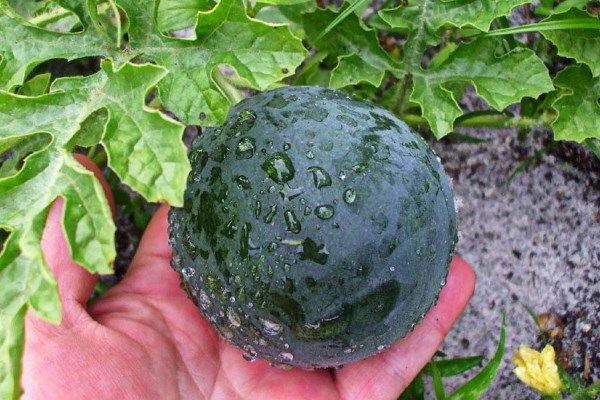
In the greenhouse
For normal growth and development of watermelons, a greenhouse requires specific conditions. Humidity should be at least 65%. Daytime temperatures should be 30°C (86°F) and nighttime temperatures should be 18°C (64°F). Frequent ventilation is also essential.
When grown both in open ground and in a greenhouse, watermelons require watering, hilling, weeding, pinching, and loosening the soil. It's important to remember that the water should be at room temperature. In a greenhouse, watering should be done once a week, and twice a week during the flowering period.
Tips and Mistakes When Growing
Beginners often make mistakes when growing watermelons in this region. For example, it's essential to line an open garden bed with black material only. Transparent film will be ineffective in this case. To encourage the growth of watermelon bushes, cross-shaped slits are made in the material, into which the seedlings are planted.
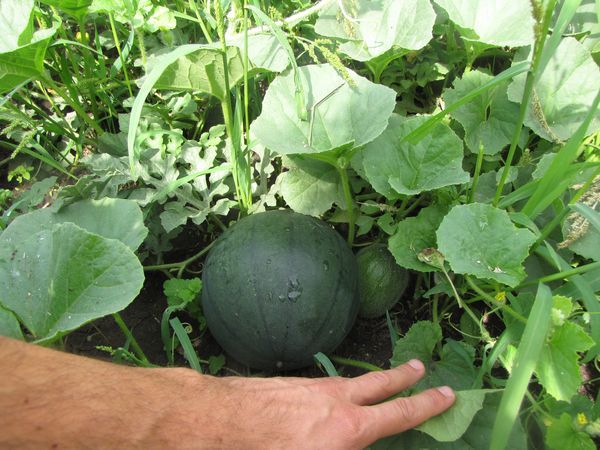
Watermelon seeds for growing in Siberian conditions should always be treated with growth stimulants before planting. When planting in a greenhouse or open ground, seedlings should be taken with a clod of soil. Peat pots are best, but cups with a raised bottom are also suitable. When planting, care should be taken not to damage the root system.
It is not recommended to overwater the plantings, as excess moisture can lead to root rot.
Using the recommendations given above, you can safely grow watermelons of certain varieties in the North.
Video: Growing Watermelons in Siberia
This video will teach you how to properly grow watermelons in Siberia.