
How to grow watermelon outdoors in Belarus
Content
Which variety to choose?
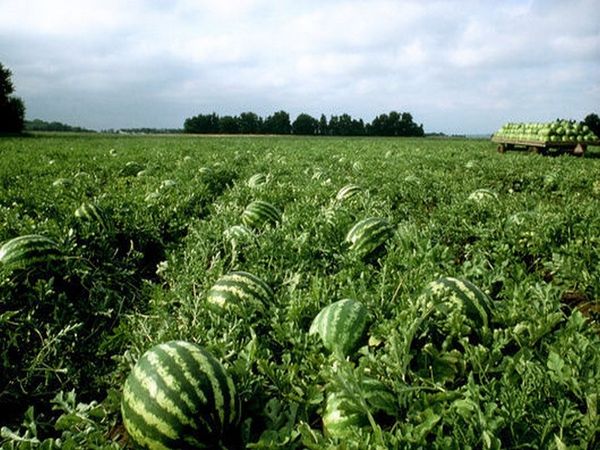
First, of course, you need to choose the optimal variety, which will increase the chances of growing large and tasty watermelons.For cultivation in Belarus, early-ripening varieties are the best choice: the time between fruit set and ripening should be as short as possible, which increases the chances of success.When choosing a variety, you can check the information on the seed packaging—it specifies the growing season. For growing watermelons in Belarus, this should be no more than 80 days, otherwise the fruits simply won't have time to ripen.
Recommended watermelon varieties include "Podarok Severu," "Legin," and "Zoryany." "Borchansky," "Knyazhich," "Rozovoye Champagne," and "Garny" also perform well in this climate. Hybrid varieties such as "Trophy F1," "Top Gun F1," and "Eureka F1" are also well suited for Belarus. Hybrids such as "Pharaoh F1" and "Romanza F1" can also yield a good harvest. It's also permissible to plant seeds from previous harvests. The flavor will be preserved, but the fruits may be smaller. For larger watermelons, use branded seeds.
Necessary conditions
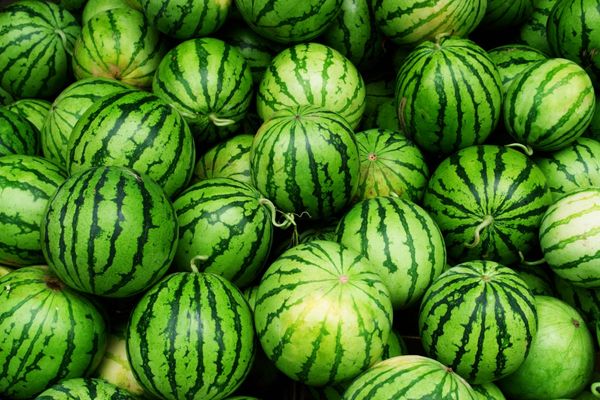
Watermelons are a very warm- and light-loving crop, so the question of "how to grow watermelons in Belarus" may seem difficult due to the climate. Greenhouses and hotbeds, which are easily built at home, may be a solution. Furthermore, various technologies, such as covering the plantings, can help in producing a full harvest. Using these techniques, watermelons can even be grown in the Vitebsk region.
So, watermelon needs warmth: the temperature should not fall below 15 °C at any stage, and during the ripening of the fruit it should be 25–28 °C.
The watermelon plot should be protected from cold north and northeast winds. Sandy, sandy loam, and humus-rich loam soil are ideal. Watermelon will not grow well in waterlogged, clayey, or heavy soil. Suitable predecessors for watermelon include annual legumes (such as beans and peas), winter wheat, corn, and perennial grasses. However, watermelon should not be grown after cucumbers, pumpkins, or squash. Crop rotation is also essential: watermelon should not be grown in the same location for seven years.
Growing seedlings
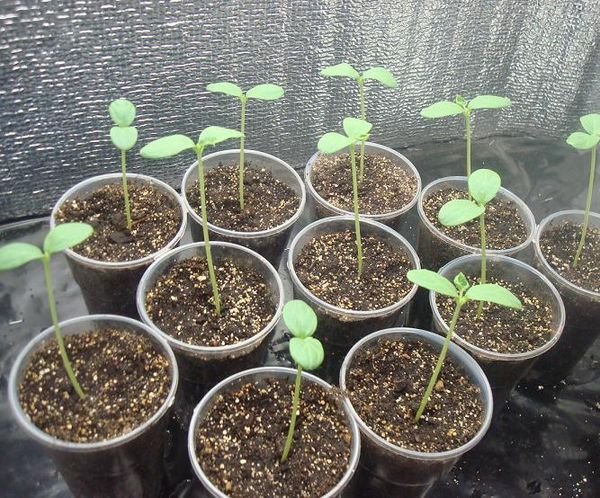
Using seedlings is essential for a good watermelon harvest in Belarus. Pots or special trays (8-10 cm in diameter and 3-4 cm deep) are suitable for germinating watermelon seedlings. Before sowing, it is recommended to soak the seeds in a 1-2% salt solution. Empty seeds will float to the surface and can be discarded. Rinse any that have settled, then soak them in warm water for about 24 hours. Once the seeds have swollen, place them in a damp cloth until they sprout (usually 4-5 days).
When the first sprouts appear, I plant the seeds 4–6 cm deep and water them. For the next ten days, it's best to keep the seedlings in a dark place at a temperature of 25–30°C. You can also cover them with plastic wrap.
Then, for another 20 days, the seedlings are moved to a bright, sunny spot. The optimal temperature for the first 10 days is 16–18°C, and for the second 10 days, 20–25°C. Before planting outdoors, it is recommended to harden the seedlings. To do this, place them in a greenhouse for 10 days. During the first half of the period, open the greenhouse for 1–2 hours per day, then for 5–6 hours per day after 5 days, and then leave the greenhouse open for 24 hours before planting.
Planting in the ground and care
Beforethe wayplant seedlingsatinto the ground,To minimize damage to the roots, they should be thoroughly watered and the root ball dipped in a thick mixture consisting of 2 parts mullein, 1 part clay and water - this will protect the roots, including from pests.The root collar should rise above the ground by at least 1 cm.
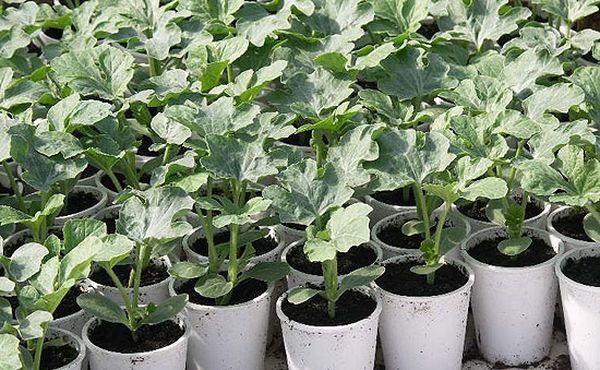
Planting is recommended in beds 8–10 cm high and about 20 cm wide, which ensures both aerated root system and warm soil. Ideally, rows should be arranged north to south to ensure good light. Drought during the flowering and fruiting periods can significantly reduce yields. Therefore, from germination until fruit set, it is recommended to water the watermelon with warm water every 10–12 days, and from fruit set until ripening, every seven days. During flowering, this should be done in the afternoon, otherwise the natural pollination process may be disrupted. Watering should be stopped 8–10 days before harvest.
Male flowers bloom first and last only a few hours, while female flowers last for 2-3 weeks. In some cases, artificial pollination may be necessary. The best time for this is between 5 and 11 a.m. at a temperature of 18-20°C (64-68°F). After picking a male flower, remove its petals and attach the anthers to the stigma of a female flower. Remember to loosen the soil occasionally to ensure better plant growth. Fertilizing at least twice is also necessary: after the fourth leaf appears and when the ovary sets.
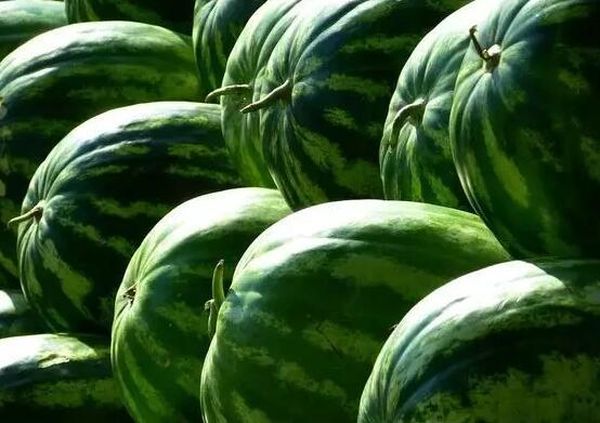
Ripening typically occurs approximately 30 days after fruit set. Watermelon ripeness can be determined by the dry tendrils and stem. When tapped, a ripe fruit produces a dull sound.
Video "Watermelon in Belarus"
In this video, you'll learn which watermelons can be grown in Belarus.