
How to properly water watermelons in open ground
Content
How often should I water a watermelon?
Melons are very heat-loving and demanding of sunlight. They thrive only in high temperatures: 22–25°C in the air and at least 20°C in the soil. Therefore, one can only imagine how their root system copes with such temperatures. A watermelon grown without irrigation is unable to form large, juicy fruits because it lacks the necessary moisture. While most watermelons have fairly deep roots, they nevertheless require watering throughout their growing season.
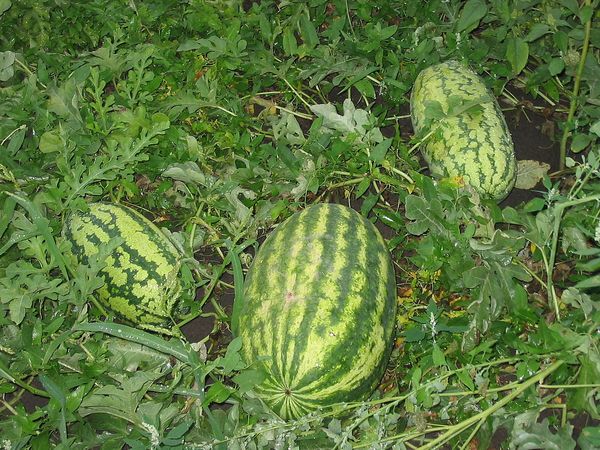
Watering is especially important for emerging seedlings and young plants, as their roots haven't yet had time to develop deep roots. At this stage, watering should be done daily until the plants begin to unravel and bloom. Later, when the vines have covered the soil and it doesn't dry out so quickly, water the watermelons as the top layer of soil dries out. After flowering, watermelons in open ground only need to be watered once a week at the rate of 7-8 liters per bush - this amount of water is enough to moisten the soil to a depth of 60 cm.
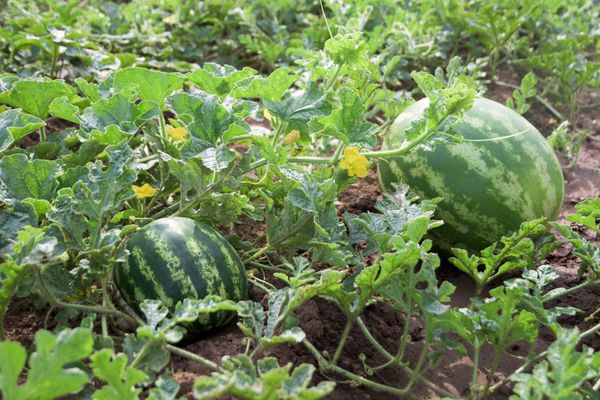
If melons are grown on a large scale and regular watering is not possible, the plants should be given at least three heavy irrigations at different stages of the growing season: after thinning, during active flowering, and at the very beginning of fruit ripening. To retain moisture longer in the soil, it is recommended to cover the spaces between the rows with straw.
Once the fruits reach their full weight and begin to ripen, they are no longer watered, as excess moisture leads to a decrease in sugar content.
Features and rules of watering
To get a good harvest of sweet, large fruits, you need to know how to properly water watermelons and melons. Here are a few rules for watering melons:
- only warm water (heated to the ambient or soil temperature) is used for irrigating watermelons and melons;
- If watering is done daily or 3-4 times a week, 3 liters of water per plant is sufficient. If watering is done once a week or less frequently, the amount of water per plant should be approximately 7 liters;
- During flowering, watering should be frequent, but not abundant; after flowering, the bed should be watered less often, but more abundantly;
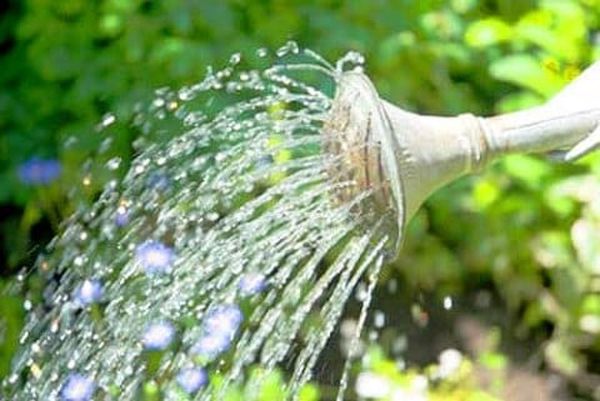
- It is better to water in the evening so that the water evaporates more slowly;
- You need to pour water under the root, trying not to wet the root collar - this condition is especially important when caring for melons;
- Melons do not like sprinkling and high air humidity, so you should avoid getting water on the leaves;
- Drip irrigation is considered ideal because it supplies plants with moisture evenly and exclusively in the root zone.
There are differences in how to water watermelons and melons. Watermelons have deeper root systems than cantaloupes, so they require infrequent but generous watering. Melons have weaker, shallower roots, so they require more frequent watering, but use less water. Sometimes, during extreme heat, melons require two waterings a day—one in the morning and one in the evening. Before flowering, melons are irrigated at the roots. Afterward, it's best to apply water into small furrows dug between the rows.
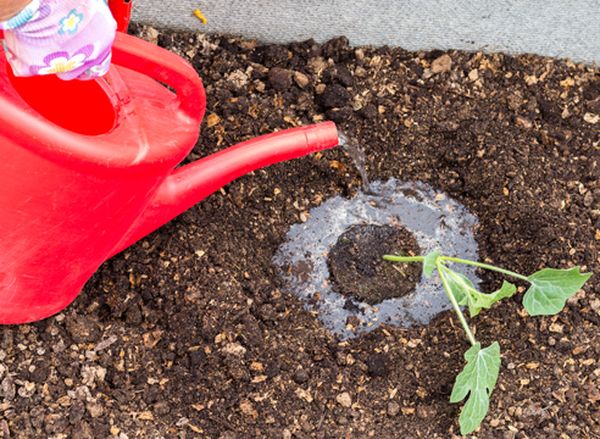
After each watering, be sure to loosen the top layer of soil to prevent the soil from becoming crusty. The same should be done after rain. Since liquid fertilizers are preferred for melons, it's convenient to combine them with watering. Now that you know how often and how to water watermelons, you'll have no trouble growing these capricious crops, and you'll be able to enjoy the juicy berries of your own harvest.
Video: How to Water Watermelons
This video will show you how to properly water watermelons.