
How and why to properly shape watermelons in open ground
Content
Why shape a watermelon?
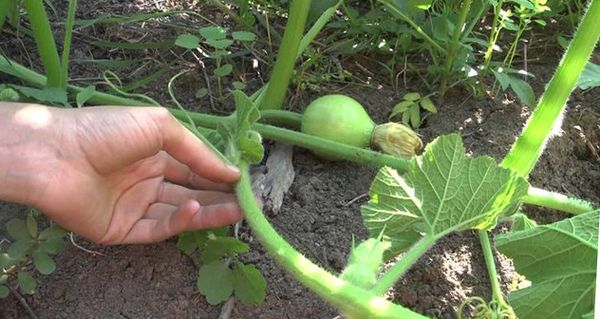
Do watermelons need to be pinched? Absolutely yes! For melons, this procedure is almost identical to pinching out other crops. Pinching allows future watermelons to grow larger and sweeter. It is noteworthy that shaping watermelons is not at all a mandatory procedure if you grow watermelons in a greenhouse.It is necessary if the crop is grown in open beds, and especially in cold northern regions.
How to pinch a crop
Some farmers believe that removing side shoots from watermelons is a procedure that only harms the harvest. This is not true. Proper pruning can actually improve the quality of the future harvest. For example, it's important to remember that berries form only on the main stem, and any secondary side shoots can be safely removed. Furthermore, no more than four ovaries should be left on the plant, otherwise all the berries will be small.
Once a sufficient number of fruits have formed, trim the vine so that only a few leaves remain above the ovary. But that's not all. The main shoot will produce new side shoots weekly, and removing them is essential to ensure the fruits grow to the proper size.
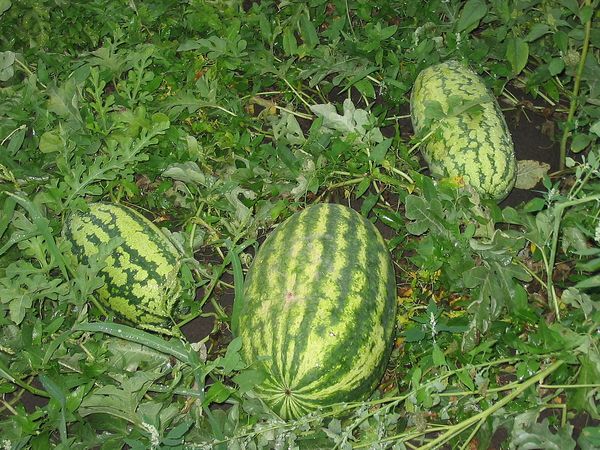
Peculiarities of stem pinching
To avoid harming the future harvest, it is important to know how to properly pinch watermelons:
- It is extremely important not to damage the main stem, removing only the side shoots and lateral tendrils from watermelons - the overall condition of the entire bush depends on it;
- do not leave too many ovaries on one bush - each plant can form from 4 to 6 fruits, depending on the variety;
- Watermelon shoots in open ground that do not bear fruit must be pinched immediately;
- It is no longer acceptable to pinch watermelons once the bushes have started to actively produce fruit.
Pinching watermelon ovaries
When talking about how to pinch a watermelon, it is worth considering all the possible methods often used by gardeners:
- In the first case, the plant's side shoots need to be pinched off. This method is applicable to all melon varieties. Several ovaries should be left on the main shoot, and the side shoots should be devoid of ovaries. Each of these shoots is pinched off so that only a few leaves remain.
- The next method for shaping the bush involves removing lateral shoots. Ovaries should be left every five leaves, and any excess should be ruthlessly torn off.
- The third, most common method involves leaving the side shoots unharvested. You need to wait until the side shoots produce fruit, while simultaneously removing all shoots from the main stem, leaving no more than six fruits on the entire plant. No more than two ovaries should be left on each shoot, and the top should be pinched off at the height of three leaves.
Watermelon pruning should be done on a dry, sunny day – then the cut will dry quickly and the plant will not be damaged in any way.
If the weather is damp, rot may develop at the cut site, which will certainly have an adverse effect on the condition of the bush.
Gardener's tips
To know how to pinch a watermelon correctly, you need to familiarize yourself with some of the process's features:
- When shaping a watermelon bush, you need to preserve the main stem to prevent the plant from dying. How many leaves should you leave? No more than 7;
- Before shaping your watermelons growing in open ground, check the size of the berries - as soon as they reach a diameter of 10 cm, the plants must be pinched;
- as the plant develops, the shoots should be tied up, otherwise they may break off;
- Many farmers debate whether it's necessary to continue watering and shaping the bush after the berries have formed and grown. The answer is clear: once the fruit has formed, neither pinching nor watering the soil around the berries is recommended, otherwise their marketability will deteriorate.
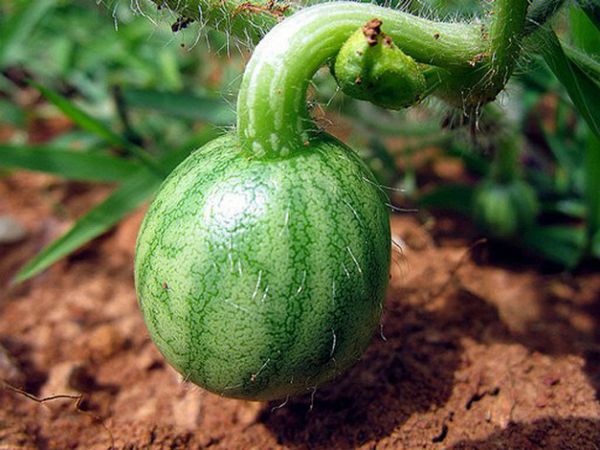
So, the watermelon pruning process is quite simple; the main thing is to follow the generally accepted rules and prevent the bush from growing uncontrollably. We hope we've fully answered the question of "how to properly prun watermelons," and now growing this melon won't be a difficult task for you. Good luck in the challenging business of growing melons—it's challenging, but very enjoyable and rewarding! With just a little effort, you'll be treating your neighbors to your own sweet, crunchy watermelons, earning well-deserved compliments on your farming talent. Or perhaps you prefer salted berries? The choice is yours!
Video: "Watermelon Formation"
In this video you will hear useful tips on shaping watermelons.