
Growing and varieties of seedless watermelon
Content
Seedless varieties
Seedless watermelons are the result of effective and targeted scientific breeding. Therefore, the question "Are there seedless watermelons?" can be answered with a confident affirmative. For example, Japanese breeders, who conducted similar research in the 1940s and 1950s, made a significant contribution to the development of this subspecies. It was the Japanese who were the first to develop a seedless watermelon. After Japan, the United States, Russia, Israel, Bulgaria, and Venezuela followed suit.
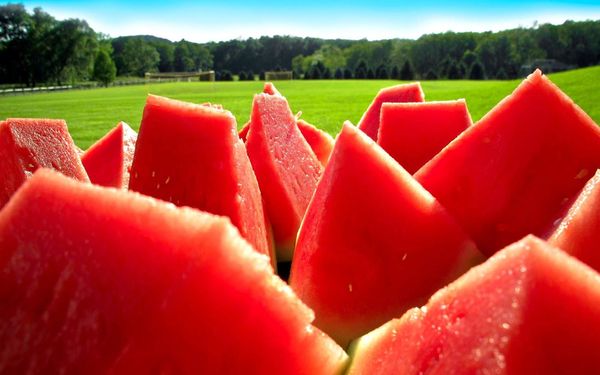
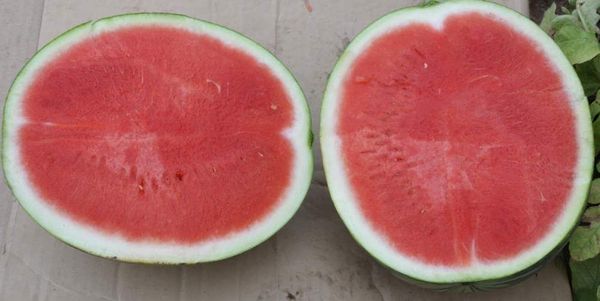
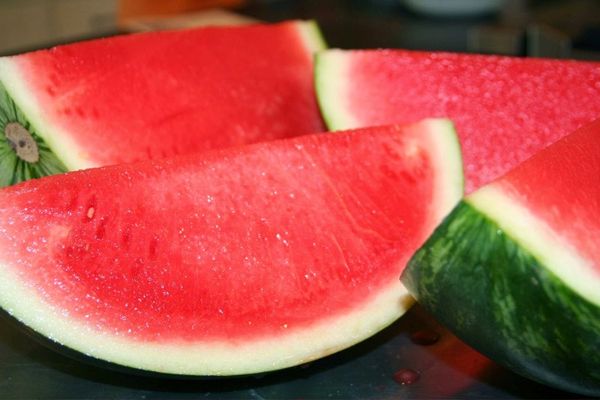
These varieties have a significantly lower seed content in the pulp than other varieties of this crop. However, these seeds are completely safe to eat, as they are edible due to their underdevelopment.
It's worth noting that all seedless or poorly developed varieties are hybrids. This explains the cost of such seed, which is higher than that of traditional varieties.
Seedless watermelons have a more watery and crumbly flesh, but they also contain significantly more sugar.
The most popular and sought-after varieties of seedless watermelons include:
- Ortal F1. This plant produces round fruits weighing 5–8 kg. The watermelons have bright red, fairly dense flesh, which is high in sugar. The fruits have good transportability;
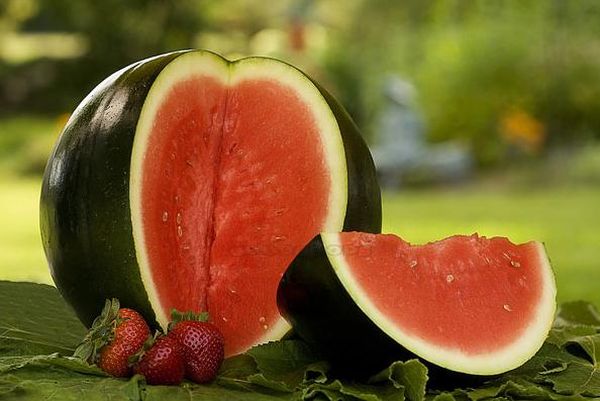
- Ecstasy F1. Unlike the previous variety, Ecstasy F1 produces perfectly spherical fruits of small size. They weigh 2.5–4 kg. The berries have a very sweet flavor due to their high sugar content. The flesh is crisp and firm, dark red. The skin is dark green with stripes of lighter shades. Its thick thickness allows for long-distance transportation of the harvested crop and for long-term storage.
- Sagi F1. This variety is characterized by high yields and large fruits. The berries are oval-shaped. The rind is rich green, punctuated by dark green stripes. One watermelon weighs 8–12 kg. The flesh is dark red, juicy, and firm. It has a crunchy texture and is high in sugar.
The Stabolit F1 and Aramis F1 hybrids are also popular. In addition, there are many varieties of this crop available worldwide that are completely or partially seedless. They are primarily grown in countries such as Israel and the United States (California). Domestic varieties are often planted in Russia (for example, the "Lunar" variety).
Planting and care features
To grow seedless watermelons, you need to know the specifics of planting and care. Almost any seedless watermelon variety should be planted in sandy-clay soil with good drainage. For the seeds to germinate, the soil must warm to 13 degrees Celsius.
Experienced gardeners recommend first sprouting the seeds in a special tray. Add a 3-5 cm layer of substrate. Water the seeds sparingly during the germination process. The resulting seedlings can be planted in the soil after 3-4 weeks.
It's also important to ensure pollinating insects have access to flowering plants. Therefore, it's best to plant seedlings in an open bed. The seedlings should be planted so that every third plant in a row acts as a pollinator. It's important to note that pollinators should not have access to diploid varieties, otherwise they will not be able to set fruit.
To ensure proper reproduction and development of seedless watermelons, they require specific growing conditions. These plants should be grown in a well-lit area. To ensure their development, various fertilizers must be added to the soil periodically.
Using polyethylene film as mulch can effectively retain soil moisture, prevent weed growth, and keep plants growing clean. This approach will also protect plants from pathogenic microflora and insect attacks.
It is best to use drip irrigation for this type of varieties.
Problems in growing
The most challenging aspect of growing seedless watermelons is their propagation. These plants are propagated by crossing previously pollinated watermelon varieties. This process produces seeds, which are then used to grow the crop in the garden.
It's important to understand that seeds obtained this way do not possess the characteristics of the parent plant. This is due to the suppression of their development due to the interaction of chromosomes taken from the parents. Such varieties are not the result of genetic modification, as they were obtained through selective breeding using varieties with specific traits.

In addition, they are quite sensitive to low temperatures. Therefore, during sudden weather changes, it is recommended to cover the beds with warm cloth.
If plantings grow without dark covering material, they may be attacked by parasites (for example, spider mites, cucumber beetles and aphids). Plants can also become infected with anthracnose or fusarium wilt.
As we can see, any seedless watermelon variety represents another unique variety of this crop, which can be easily grown in your own garden.
Video: "How to Cut a Watermelon"
This video shows 9 ways to cut watermelons.