
Description of the amazing white watermelon
Content
White-rinded watermelon
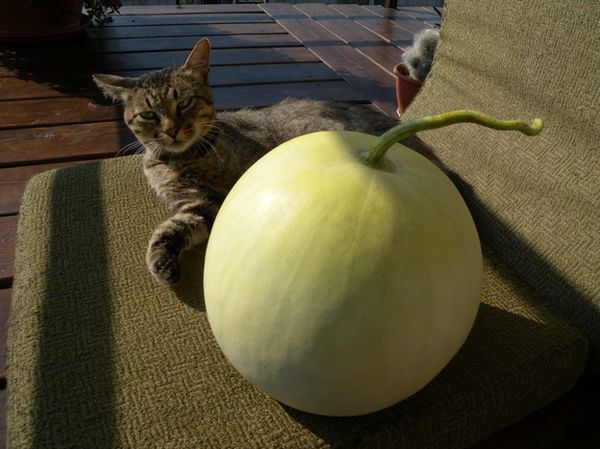
Away with the trivial! From now on, sweet watermelons don't have to be green, but completely white. If you're suddenly offered a completely white watermelon, don't immediately turn it down. This is the American Navajo Winter variety, whose rind is almost entirely white. But this doesn't stop it from possessing excellent taste and winning the hearts of consumers around the world.
Description
This variety, bred by American breeders, is characterized by its moderate size and snow-white skin. Contrary to expectations, its interior contains juicy, crisp flesh, a vibrant pink color. Occasionally, the flesh can be quite pale, but this variation is acceptable for this variety.
This variety is exceptionally drought-resistant, ensuring excellent yields even during dry summers and high temperatures. Furthermore, the berries themselves are easy to transport and can be stored for up to four months after harvest (under good storage conditions).
How to choose a sweet
The very first rule is not to buy these berries before they're ripe. The optimal time to buy them starts in mid-August. Early fruits are usually unripe or filled with nitrates, which have a negative impact on the human body. In addition, there are some more tips regarding choosing good fruits.
Firstly, you should avoid very large specimens, as their pulp will likely contain a lot of substances that are harmful to humans.
Secondly, based on external differences, the berries are usually divided into male and female varieties (although watermelons, of course, cannot be differentiated by gender). "Boy" varieties have an elongated shape, while the female fruits are rounder and even slightly flattened. It is the "female" varieties that have a sweeter taste.
Thirdly, you can determine a watermelon's ripeness by sound. If you hear a ringing sound when you tap it, everything is fine. It's also worth paying attention to the condition of the stem – it should be completely dry (this is irrefutable proof that the berry has ripened on its own and separated from the main branch).
Fourth, pay attention to the skin itself – it should be very firm and dense. If it's soft, then you have a raw berry.
White-fleshed watermelon
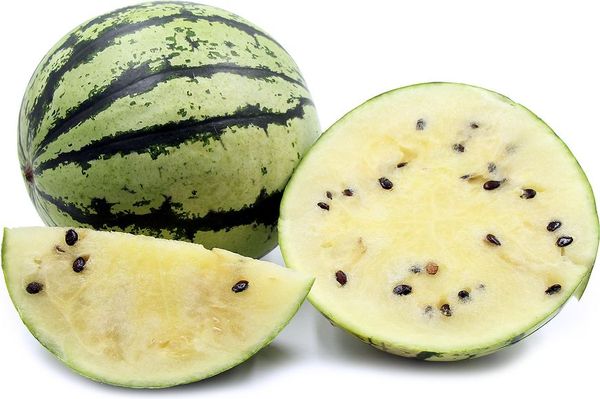
In addition to varieties with snow-white rinds, there are also watermelons with white flesh. This is more complicated, as flesh of this color can indicate unripe berries rather than a delicious exotic variety. To avoid any unpleasant surprises, let's take a closer look at this variety, also known as the White Miracle.
Description
White Miracle is an exotic variety whose "ancestors" lived in distant South Africa. Of course, the wild watermelons that grew in the arid deserts weren't particularly pleasant, but for thirsty travelers, they were a real treat.
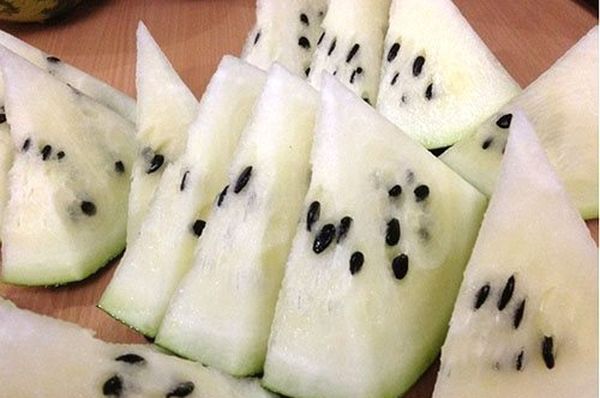
This variety is now considered very juicy and sweet. The White Miracle's coloring is virtually identical to that of a regular watermelon, but the flesh is quite distinct. The skin is quite thin, and inside lies snow-white flesh with a refreshing aroma of strawberry and cucumber. The White Miracle's flesh acquires its unusual white color because this variety lacks lycopene, a substance that gives the flesh of these berries their bright pink color.
Overall, the White Miracle is in no way inferior to its peers in terms of quality, so if you really have this variety in front of you, and not a spoiled fruit of one of the common varieties, you can buy it with confidence.
What are the criteria for choosing?
Why does such an unusual flesh color raise suspicions? It's not surprising, as such a color suggests the fruit is unripe. Therefore, there are some signs that can help you identify such unripe fruits and avoid wasting money.
The very first sign that the fruit is unripe is unevenly colored flesh. The White Miracle's flesh is entirely pure white, while unripe berries may have pinkish patches.
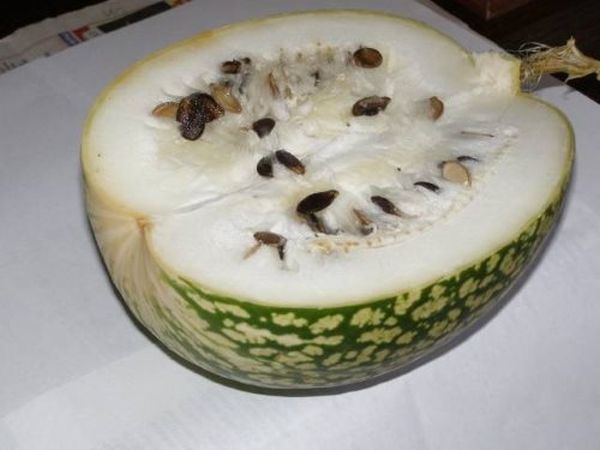
In addition, the fibers that are inside the pulp are colored an unattractive yellowish color (while they should be white).
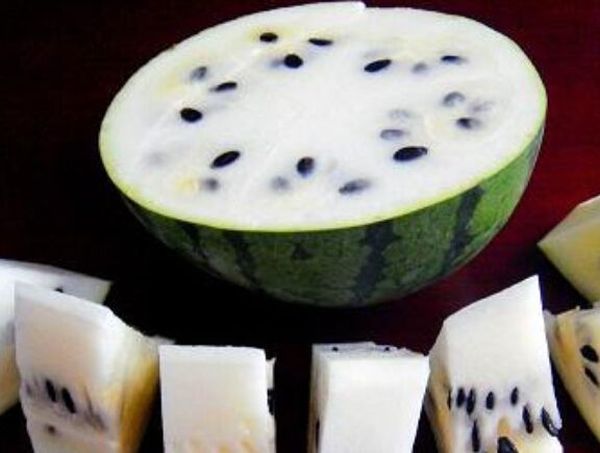
The flesh of spoiled specimens is very loose, and may even show cracks. The flesh of the White Miracle should be moderately grainy and whole. The seeds should definitely be black. If they are not black, but white, and surrounded by an unidentifiable slime, it's best to avoid purchasing them immediately.
On the skin of an unripe specimen, rotten spots can easily be found, while healthy berries do not have such an element.
Be extremely careful when choosing exotic varieties and pay attention to the nuances. This will help you avoid unnecessary waste and enjoy the excellent taste.
Video: How to Choose a Watermelon
This video will show you how to choose a ripe and sweet watermelon.