
Features of growing the ultra-early cherry plum variety Zlato Skifov
Content
History of selection and description
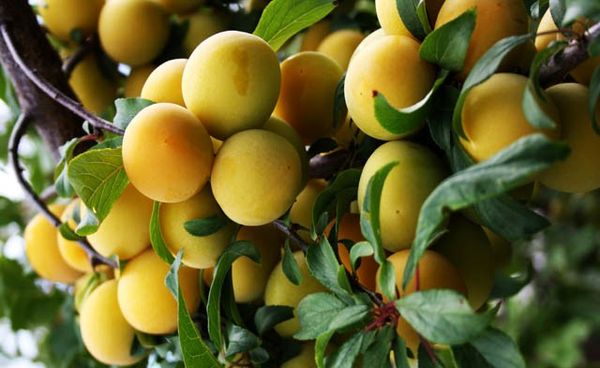
The "Scythian Gold" cherry plum, as this fruit plant is often called, is the result of breeding efforts by a group of scientists from the K. A. Timiryaev Moscow Agricultural Academy. The hybrid was obtained by artificial pollination of the "Kubanskaya Mechta" variety. Mutagens were used in the process. Twelve years ago, this ultra-early ripening hybrid was added to the state register for eight regions of Central Russia.
Video: How to Plant Cherry Plum
In this video, an expert will explain how to properly plant a cherry plum tree.
Characteristics of the tree and fruits
This is a popular hybrid cherry plum variety. What's most interesting is that this name isn't found in reference books. This group of frost-resistant varieties can be grown in risk zones—the Urals, the Far East, and Siberia. To create this hybrid, genes from Ussuri and Chinese plums, felt cherry, and cherry plum were combined. The result was a resounding success: large fruits, excellent flavor, and incredible frost resistance.
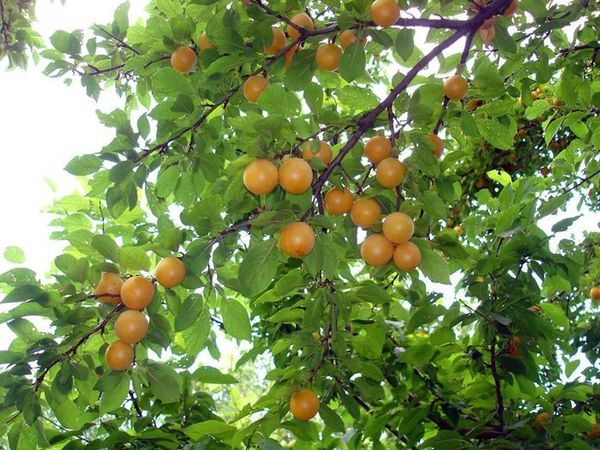
Now let's move on to the variety's description. The tree isn't considered tall (it grows up to 3 m). The crown is spreading but sparse. After proper pruning, the tree resembles more of a shrub. It blooms beautifully and abundantly with medium-sized white flowers. The Scythian Gold cherry plum is so stunning in bloom that it is used as a decorative feature in landscape design.
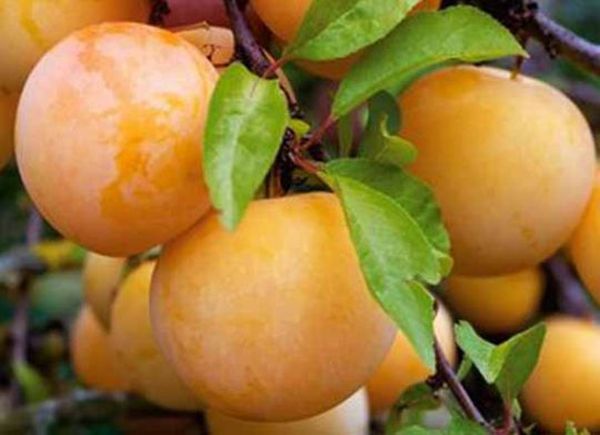
The fruits are large, flattened and vertically elongated. Each fruit is almost identical, with a sunny, amber-hued color and a virtually invisible lateral seam. The skin, although firm, is not rough and easy to chew. The flesh is light yellow.
The fruits are very juicy, with a sweet taste and fruity aroma. They practically melt in the mouth, leaving a pleasant aftertaste with a subtle tartness. The pit is small, and the flesh separates easily from the pit. This variety is a favorite among children, which means the hybrid's flavor is impeccable.
Ripening time and harvest
When planting cherry plums, choose seedlings grown locally. Seedlings brought from other regions are highly unlikely to thrive. Choose a sunny, wind-free site. Almost any soil will do, but loamy soil is ideal. Dig a hole 70 cm deep.
If you plan to plant more trees of this variety in your garden, consider the spreading crown and space them 2.5 meters apart. To ensure rooting, add compost and potassium supplements to the hole. Chalk and ash will help regulate the acidity. It's best to plant the seedlings in early spring. In areas with mild winters, they can be planted in the fall.
The tree begins bearing fruit four years after planting. The fruit ripens early—late June to early July. The yield is up to 30 kg per tree.
The fruits are harvested in dry weather, taking care not to separate them from the stem. Cherry plums should be stored in well-ventilated containers.
Ripening occurs unevenly, so you can enjoy fresh fruit for several weeks. If the fruit needs to be transported, it should be picked unripe. Cherry plums don't bear fruit every year. The plant spends 1-2 years resting for 5-6 years. Determining the regularity of this process is quite difficult.
Care and pollination
The variety is self-sterile and therefore requires pollinators. The best varieties are Chinese plums, cherry plums "Podarok Sankt-Peterburgu," "Rubinovaya," and "Pavlovskaya Zheltaya." Important: when choosing a pollinator, make sure the flowering times coincide. Three trees are best. Hand pollination is also possible, as the flowering occurs early. You can use a brush with cotton wool wrapped around it.
Scythian Gold only requires additional watering during extremely dry weather. In arid regions, 3-4 waterings per season are required. It's crucial to keep the soil moist after flowering and during fruit ripening. Six buckets of room-temperature water are sufficient for each tree. After each watering, loosen the soil around the trunk, remove weeds, and apply mulch.
A good option is to plant honey plants between the trees or seed the soil with a lawn mixture. This will create artificial turf. You can also plant clover or lupine to enrich the soil with nitrogen.
Pruning is done in the fall or early spring before buds appear. Pruning should be avoided during frosts, as this can lead to milky shine. The crown is shaped in the second year. It is generally pruned to form a bush. If the owner wishes to grow the cherry plum as a tree, a vase-shaped or tiered arrangement is used.
The Zlato Scythian cherry plum is propagated by budding, grafting it onto a blackthorn or plum tree. If you've planted it correctly and filled the hole with a nutrient mixture, you won't need to fertilize the tree until the first fruits appear. After that, fertilize regularly. In the fall, cover the tree with manure supplemented with superphosphate, potassium salts, or ash.
In April, it's a good idea to feed the roots with ammonium nitrate and potassium salts. During flowering, a urea solution is beneficial. After the cherry plum finishes blooming, feed the roots with a mullein solution with added superphosphate.
Advantages and disadvantages
This popular variety has undeniable advantages:
- ultra-early ripening (harvesting can be done at the beginning of July);
- incredible cold resistance;
- You can harvest fruits just 4 years after planting;
- excellent flowering;
- the fruits are universal (they can be eaten fresh, preserved for the winter, added to sauces);
- source of vitamins and microelements.
Even such a popular and beloved variety has its drawbacks:
- low yields (no more than 30 kg per tree), fruiting does not occur every year;
- poor disease resistance;
- needs pollinators;
- does not tolerate transportation well.
Despite its shortcomings, the Zlato Scythian cherry plum is successfully grown in many regions of central Russia.