
Planting and caring for cherry plums for beginners and professional gardeners
Content
Timing of tree planting
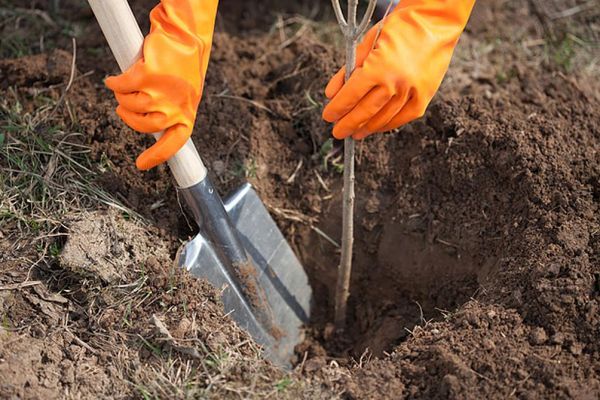
The ideal time to plant cherry plum is spring, but you should purchase a seedling in the fall. The purchased tree can be dug into a hole up to half a meter deep. The seedling should be positioned at an angle facing south. The tree should be buried up to the middle of the trunk and then covered with soil. It can be planted in the ground as early as the second half of April.
Autumn planting is also possible, but there is always a risk that the tree will not have time to take root before the first frost, given that frosts come early in the middle zone. If you decide to plant cherry plum in the fall, you need to do it before mid-September.
Video: How to Plant Cherry Plum
In this video, an expert will share tips on how to properly plant a cherry plum tree.
Selecting a seedling and planting rules
Before planting cherry plum in your garden, you need to select a good seedling. It's best to choose planting material propagated by cuttings. Such trees recover quickly if damaged by frost—this is especially true in central Russia and the Urals.
The seedling should be kept in a bag or container so you can see if the roots have sprouted. If this hasn't happened yet, it's best to hold off on planting it in the garden. It's worth noting that you can plant a tree with a closed root system in special containers even in summer.
Cherry plums should be planted in the sunniest spots of the garden (south/southwest). A location sheltered from the wind is preferable.
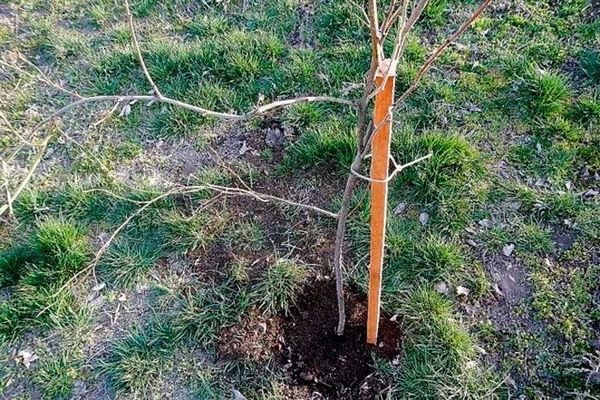
This plant isn't particularly picky about soil, but it doesn't thrive in overly wet conditions. The distance between trees should be at least 2.5 m, and between rows, 3.5 m. While the seedlings are establishing themselves, it's best to tie them to a stake.
The planting hole should be 60 x 60 x 60 cm. It should be filled with a nutritious soil mixture beforehand. Seedlings in special boxes can be planted simply by placing them in the desired location on the plot and generously covering the roots with soil.
After planting the tree in the hole, prune it and water it thoroughly. It's a good idea to add some garden lime to the soil underneath the seedling.
Peculiarities of care at different times of the year
Spring
Cherry plum care varies depending on the season. The first spring, the seedling doesn't require additional feeding; the fertilizer applied at planting will be sufficient. For trees that have already begun bearing fruit (over two years old), ammonium nitrate should be applied in the spring, before the first flowers appear.
Also, in the first months of spring, special drainage diversions are installed to prevent the roots from becoming waterlogged. At this time, pruning is also carried out: branches are left spaced up to 20 cm apart. At this time, old bark is removed, the trunk is treated with a copper sulfate solution, and insecticides are sprayed.
Summer
During the summer months, water the tree every 10 days with 3-4 buckets of water. Be sure to loosen the soil around the trunk. If the ovary is heavy, support it with stakes. In August, you can feed the plant with organic fertilizer.
Autumn
At this time, all care is limited to preparations for a normal winter. Organic matter is added to the soil once again. Before the leaves fall, a depression is dug around the trunk and watered right at the root.
It's also necessary to remove dead bark from the tree, whitewash it, and spray it with pest control. Next, collect and burn fallen leaves and remove any root suckers. Any holes or wounds that appear should be sealed.
Watering and fertilizing
It's important to water cherry plums during drought, flowering, and fruit ripening. Pour three buckets of room-temperature water under the tree (a must). Cold water is contraindicated. Rainwater is a good option if available. Avoid pouring standing water around the tree. After watering, loosen the surface soil. Naturally, watering is not necessary in rainy weather. Watering is combined with fertilizing. First, loosen the soil, then fertilize, then water, and finally, mulch.
If the planting procedure was performed correctly and nutrients were added to the hole, the tree will not require fertilizing during the first year. Fertilizer should be added as it grows, especially during fruiting. Nitrogen fertilizers are applied in the spring.
Autumn is the time to apply potassium and phosphorus fertilizers.
Compost and manure are suitable as fertilizers both in spring and fall. Cherry plum grows well in neutral soil, so it's important to monitor the soil's condition. If acidity increases, liming every five years is beneficial. Ash can be added. If the soil is alkaline, gypsum can be added to the soil.
Rules of reproduction
The most effective method of propagation is grafting with cuttings. If you plant seeds in the fall, you can obtain rootstock this way. Grafting is done in early spring. To do this, pinch off a shoot from an annual growth with two buds and graft it onto the rootstock using improved copulation. Budding is also possible. In this case, a bud, rather than a cutting, is grafted. This procedure is best performed in summer, when the second wave of sap flow begins. However, grafted plants are less winter-hardy.
What can be grafted onto cherry plums is a question for beginning gardeners. Wild cherry plums are a good rootstock for apricots, plums, and peaches. Breeders have concluded that seedling rootstocks are the primary rootstocks for cherry plums. The most common of these are European plum and bitter almond seedlings. Peach seedlings and plum-cherry hybrids are also used. Grafting cherry plums onto cherry plums is also possible, as they have excellent intervarietal compatibility.
To grow cultivar trees in your garden, you can grow your own seedlings using green cuttings. To do this, you need to prepare cuttings from shoots of a tree that has its own root system. Propagating cherry plums using green cuttings guarantees the preservation of the cultivar.
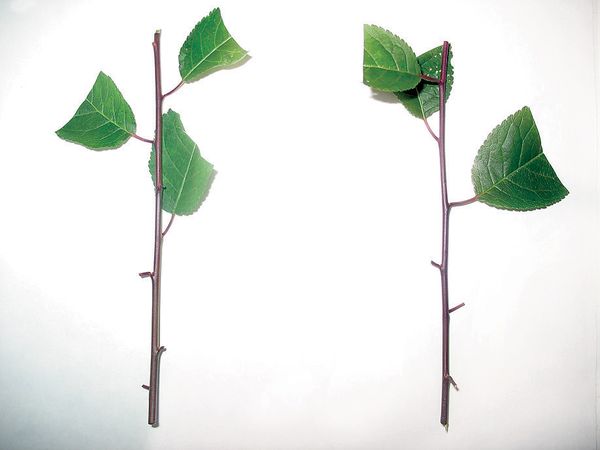
For this, cuttings are taken in July. They should be in the growing stage, and the upper part may already be woody. Forty-centimeter-long shoots are placed in a bucket of water. Cuttings are taken from them throughout the day. The lower part should have three leaves, and the upper part four. Then, two green leaves are left on each side, gathered into a bunch of 20, and soaked for 20 hours in a heteroauxin solution.
Then they are planted, watered, fertilized, and hardened off. In the fall, they are dug up and stored in a trench covered with leaves. In the spring, they are planted in the ground, and over the next two years, high-quality planting material is grown.
Pruning and shaping
The best time for pruning is spring (before the sap begins to flow). This procedure is contraindicated in winter, as the cherry plum will not have time to prepare for the winter. Only sanitary pruning can be performed to remove all dry and diseased branches. Plums are generally trained into a bush-like shape. This applies to non-winter-hardy varieties. In this state, wrapped in snow, they survive the winter well. To perform this procedure, the branches are shortened to a length of 0.5 m. Then, six branches are spread apart using weights.
The bowl-shaped crown begins to be formed in the first year of pruning. Initially, about three branches are left at a 60° angle. In subsequent years, three more skeletal branches are left so that the crown is circular. Upper branches are pruned to the level of the third skeletal branch. The cut areas are treated with garden pitch. Regular sanitary pruning of the crown is necessary. To prevent overcrowding, very thin shoots and root suckers are removed.
Disease and pest control
Although cherry plum is not very susceptible to various diseases and visits from "uninvited" guests, there are a number of pests that pose a danger to the tree:
- plum codling moth;
- apple scale insect;
- sawfly;
- black and copper goldfish.
Therefore, it is very important to monitor the condition of the tree and spray it with appropriate preparations in a timely manner.
As you can see, cherry plum can be grown even in the northeastern regions, provided you select the right varieties and follow all the care guidelines. Growing this crop isn't particularly difficult if you know the basic rules.