
Characteristics of the Lama cherry plum with unique red leaves
Content
Breeding history
The hybrid's history began in Russia in the mid-20th century. Breeders working on it aimed to develop a frost- and pest-resistant plant suitable for cultivation in northern regions. Attention was also paid to improving flavor, yield, and early maturity.
The resulting cherry plum variety with striking red leaves was named Lama. It's also known as the Russian plum. The hybrid met all the criteria and was also very attractive.
The llama has become widespread not only in the central zone, but also in the Far Eastern region.
Video: Growing Cherry Plums in the Country
This video will show you how to properly care for cherry plums in your garden.
Appearance and fruiting
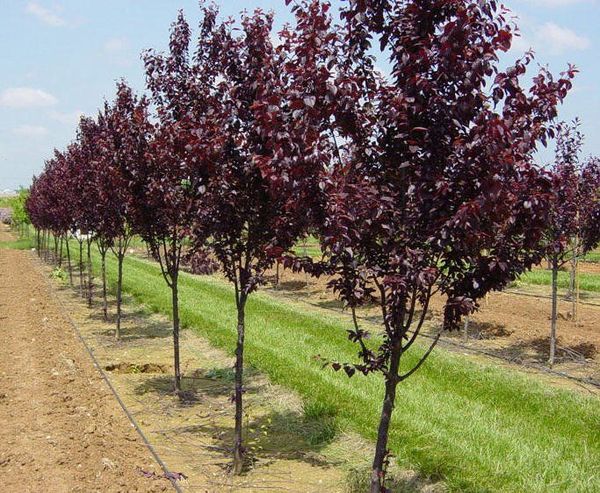
The Lama variety is a low-growing variety: the tree height ranges from 1.3 to 2 meters, making both care and harvesting much easier. The crown is flat and rounded, prone to becoming dense, but easily shaped. The bark is brownish-red, becoming darker and rougher in mature trees.
The leaves are lanceolate with a serrated edge, slightly tapering at the base, and up to 18 cm long. The front surface is burgundy-green, while the back is dark red. As the tree matures, the leaves acquire a chocolate hue. Because of this unusual characteristic, red-leaved cherry plum is often used in landscape design. The leaves turn yellow in autumn.
Flowering occurs in late April to early May. The flowers are light pink, about 3.5 cm in diameter. They form on one-year-old shoots and form clusters of 4–5. The blooms are abundant and lush, giving the tree a particularly beautiful appearance. Suitable pollinators include the Vitba, Asaloda, and Mara varieties.
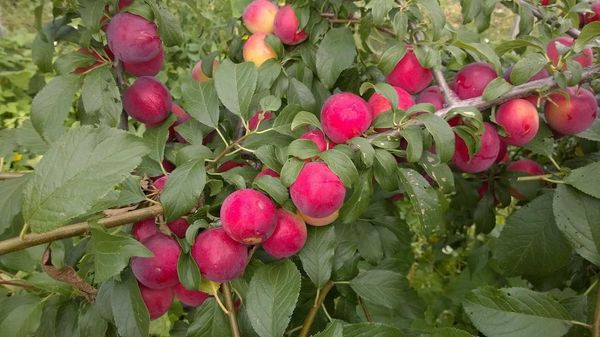
This hybrid is mid-late, with the harvest ripening in mid-August. The fruits weigh an average of 30 g. When fully ripe, the skin is purple or burgundy, with gray spots and a distinct waxy coating. By early September, it may turn almost black.
The pulp is fibrous, juicy, and dark red. The flavor is pleasantly sweet, with a harmonious tartness and almond aftertaste. The aroma is light and pleasant, with hints of almond. The fruits of this variety contain organic acids (malic and citric), vitamins A, C, PP, and B, potassium, iron, and pectin. The stone is small and separates easily.
Due to the tendency of the fruits to fall off, it is recommended to pick them slightly unripe.
In this state, they transport well. Llama fruits are suitable for fresh consumption and canning, making jams, marmalade, pastilles, and more. They are also added to spicy sauces for meat and fish. They can also be used to make homemade wine.
Pros and cons
Let's start by looking at the advantages of a hybrid:
- Hardiness. This cherry plum can withstand winter temperatures down to -35°C. Buds and ovaries can survive spring cold snaps down to -7°C, even if only for a few days. The tree is also heat-resistant (up to +40°C).
- Resistance to harmful insects and major infectious diseases. According to reviews, birds rarely touch the ripe fruit.
- High productivity. The plant begins bearing fruit as early as 2–3 years after planting. In the first few years, yields reach up to 40 kg. This gradually increases, and by the age of 10, the tree produces up to 300 kg of delicious fruit per season.
- The tree's compact size makes it easy to care for. Its flexible crown lends itself well to shaping.
- Its attractive and unusual appearance makes the red-leaved cherry plum a real decoration for the garden.
However, the hybrid also has some disadvantages:
- The crown tends to become dense and requires annual formative pruning.
- This variety requires pollinators to produce fruit. According to reviews, self-pollination is possible, but yields are low.
- Fruits form on thin, one-year-old shoots, which can break under the weight of the harvest. Therefore, it is necessary to thin the ovaries or support the branches.
- Ripe fruits tend to fall off, especially during wind or rain.
As we can see, this variety's shortcomings are few and far between, and they are more than offset by its advantages. Its productivity, vigor, and beauty make the Lama cherry plum an excellent choice for the garden.