
The most dangerous diseases and pests of cherry plum
Diseases
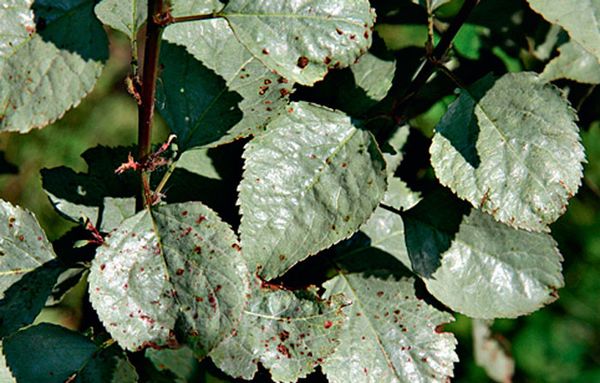
Since cherry plums are closely related to plums, they share similar diseases. In mid-June, the fruit can be susceptible to coccomycosis. Let's discuss this in more detail, and you'll learn why cherry plum leaves turn yellow.
Reddish-brown spots appear on the upper surface of leaf blades. At first, they are scattered and small. After some time, a pinkish, powdery coating appears on the underside, causing the leaves to turn yellow and fall to the ground.
To prevent disease, be sure to collect leaves and fruits and then burn them. In the spring after flowering and in the fall after harvesting the fruits, treat the plants with Bordeaux mixture.
Milky shine and false milky shine are diseases that produce virtually identical external symptoms: a silvery coating on leaf blades. However, these diseases have different origins. False milky shine is a consequence of frost damage to stone fruit.
If you provide the tree with good care (water and fertilize it on time), then it will take 1–3 years for the cherry plum to fully recover.
A true milky sheen is a fungal infection that penetrates the trunk and causes rot. Detecting this fungal disease can shed light on why the cherry plum has dried out. To combat the disease, affected shoots are immediately pruned and destroyed. The cut is treated with a 1% copper sulfate solution, followed by garden pitch.
When leaves become covered in red spots, it's reasonable to wonder why cherry plums are dropping their fruit. Your plant may be infected with polystigmosis, also known as fungal blight. Leaves dry out en masse. The trees are weakened, and their green leaves are covered with bright red spots. The spots are slightly convex on the upper side of the leaf, and concave on the underside.
The fungus grows, and under its weight, the leaves curl. As a result, the ovary falls off, and now we understand why. Heavy rainfall exacerbates the situation. And even a small ovary, which has managed to reach the size of a bean and, one would think, should bear fruit, ends up on the ground. The dried leaves should be removed and burned.
Video: How to Plant Cherry Plum
This video will show you how to properly plant a cherry plum tree in your garden.
Pests
Cherry plums have their fair share of enemies. Let's take a closer look at each one.
The plum moth penetrates the berry, "barricading" the entrance with a web mixed with pieces of fruit pulp. The plum infested by the moth turns purple and falls from the tree.
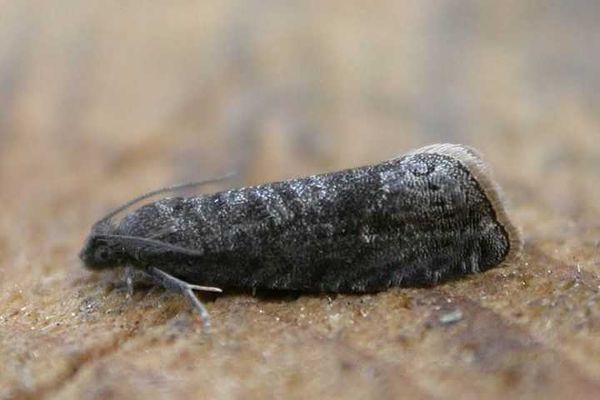
The pest eats the soft flesh and pit of young fruits. It eats mature fruits from the inside out, moving through the flesh and filling its passages with its excrement, causing the cherry plum to drop its fruit. To effectively control the pest, it's essential to remove and burn fallen leaves and berries. Dead bark on the tree is protected and the cherry plum is treated with insecticides.
Brown fruit mites slow down bud formation. Leaves affected by the pest turn brown and fall off. To prevent this, remove old and dead bark from the trunk before buds appear. Before the tree begins to bloom, treat it with Fufanon during bud formation.
The yellow plum sawfly feeds on the pulp and pits. Adult caterpillars are collected by hand. For prevention, treat with Fufanon before and during flowering.
The oriental codling moth chews young shoots from the inside, and once it reaches a woody area, it changes location, choosing the next one. The shoot visited by the codling moth begins to dry out and break. Trees are treated with a salt solution immediately after flowering and berry harvesting.
Among the cherry plum pests is the downy silkworm. This large, brown-leaved moth damages cherry plum leaves by covering them in webbing and "building" a nest.
The fruit bark beetle creates holes and tunnels in tree wood, which leads to the death of shoots; often, even the tree cannot be saved. Affected fruit should be pruned promptly in early spring and burned.
Sometimes gardeners, especially beginners, wonder why cherry plum leaves curl and turn yellow. Aphids are the culprit in such plum infestations. Insecticide treatments during the budding stage (ensuring the solution is applied to the underside of the leaves) are one way to combat the problem.
Next we will talk about why the cherry plum does not bloom.
This is due to the stone fruit crop's poor frost resistance. If flower buds are completely frozen, neither flowering nor fruiting can be expected. Severe frosts aren't the only ones that can cause frostbite. Thaws and subsequent cold snaps pose the greatest danger to seedlings.
Prevention methods
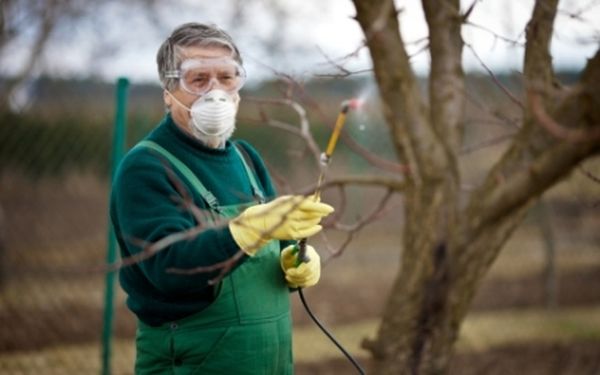
To protect the fruit tree from diseases and pests, the first steps begin before the sap begins to flow. To do this, spray the tree with a urea solution. This will kill all pests that have spent the winter on and under the tree. It's important to follow the timing precisely, as treating the cherry plum a little late, when the buds have already begun to swell, can cause bud burn.
Once a month, you can treat the garden with chemicals such as Avangard-Aurum-S, Fitoverm, and Akarin. These will help control pests that migrate from tree to tree. A good result can be achieved by combining protective products with products that increase fruit crop resistance to diseases and weather extremes (such as Ecoberin and Zircon).
During the summer, spraying with Bordeaux mixture is used. However, care must be taken to avoid burning the leaves. It's a good idea to conduct a test: treat a control branch with the solution. If no spots appear indicating burn, you can safely proceed with spraying the entire crown.
Hairy caterpillar pests are easily carried by the wind. Special traps made of corrugated paper or pieces of fabric soaked in glue, which remains sticky, are hung on fruit trees. This prevents the insects from climbing the trunk and makes it easy to collect them from the lower part of the trunk.
To prevent the tree from becoming infected with milky sheen, cherry plums are sprayed with copper-containing preparations in the spring and fall. During pruning, the cuts are treated with garden pitch, and the tree trunk is treated with lime.
During the flowering period, the tree is left alone, and then a universal preventative treatment is carried out with a mixture of "Kuprozan", "Chlorophos" and "Copper Chloride".