
What can an apricot be grafted onto and how to do it?
Content
What to vaccinate on
Many fruit trees can be propagated by grafting. It is recommended to use a rootstock no more than 5 years old. The average trunk thickness ranges from 3 to 10 cm. The tree you plan to cross with your apricot must be healthy. Only then can you hope to successfully produce delicious fruit in a few years. The rootstock for an apricot should be from the fruit family. Stone fruit trees, such as apples or plums, are preferred. This is the most accurate answer to the question of what to graft an apricot onto. Let's look at the main options.
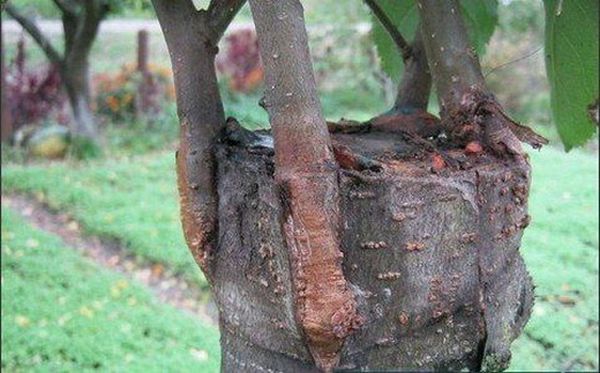
On apricot
This is the most suitable method. The grafted cutting takes root better. Another important factor is the absence of excess shoots, which is why apricot grafting is done primarily on apricot. Gardeners have been following this principle for many years.
The trees have the same pedigree, so they will not “argue”. Budding causes the new plant to become more winter-hardy and drought-resistant. The fruits will grow juicy and incredibly sweet. The effect will be doubly positive if the collocation is done using rootstock.
On the plum
Grafting apricots onto plums is much less common. It's recommended to use semi-wild trees. Plants that thrive in the wild, independent of humans, have a unique immunity. However, the desired result can be achieved by following certain guidelines.
The area where you plan to graft should be free of growths. This is an indicator of variety compatibility. Delicate seedlings require a strong root system on the stump. If you decide to graft an apricot onto a plum tree, be sure to follow the recommendations above.
For cherry plum
Recently, gardeners have increasingly adopted the idea of grafting trees onto cherry plum. Cherry plum is one of the strongest rootstocks for grafting stone fruits. However, it rarely survives unattended. Its pollination process is slightly different from the usual.
On the turn
Blackthorn, also known as prickly plum, is a common rootstock. It's considered the best choice for our climate. It's used to graft not only apricots but also peach and nectarine cuttings. A unique feature of this tree is its roots, which are able to find soil rich in elements that promote fertility. This is unique in floristry. The system can even capture such small particles as organic waste washed away by rainwater.
Blackthorn is quite common in the wild. It grows quickly, and this is perhaps its only drawback. The tree's undergrowth hinders the development of new shoots, and subsequently makes access to the fruit difficult. Hybrid varieties accept apricot cuttings better and are distinguished by the presence of a universal pollinator. Regarding the dwarf type of tree, the issue is debatable. They become a tasty treat for farm animals. It's worth considering whether it's possible to protect young apricots from being eaten, for example, by goats.
To the cherry
When choosing a rootstock for an apricot, don't settle on cherry. Experience shows that branches will begin to break after a few years. This is due to incompatibility of the components. If you consider cherry as a rootstock, use an intermediate rootstock. First, attach a plum scion to it. Once it's ready, approximately the following year, you can attempt the apricot graft.
On a peach
In southern regions, there's another option often used for grafting fruit trees: peach. Carrying out the procedure in areas with low temperatures carries a high risk of killing both plants. In central Eurasia, the opposite trend is observed: grafting peach onto apricot. These trees thrive together, sharing virtually identical plant components.
When to vaccinate
Once you've chosen a site, figure out when to graft the apricot tree. The optimal time for grafting is spring. This is when sap actively moves within the bark, increasing the chances of a successful outcome. Choose a day with dry, sunny weather, preferably with no rain for the next few weeks. Experienced specialists recommend starting in May, when the weather is approaching summer.
Incidentally, some practice grafting apricot trees directly in the summer, arguing that young shoots adapt better to their new home when exposed to sunlight. Don't despair if your attempt fails. You can try again in the fall.
The chances are significantly reduced by sudden temperature fluctuations. However, the weather often still blesses us with sunny days in September. If it was warm during grafting and then the temperature dropped a week later, the cuttings will likely fail to take root. Winter is absolutely not suitable for this; the seedling will not attach to anything.
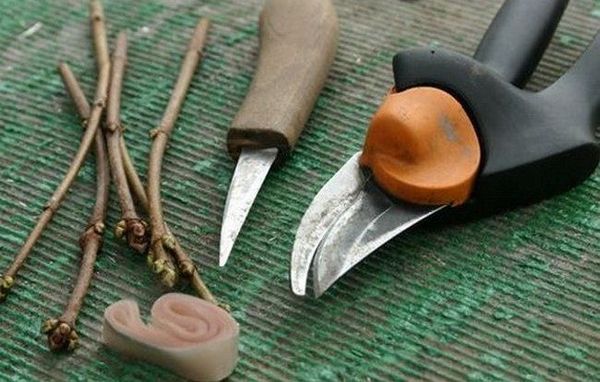
Methods of grafting
Whatever grafting method you choose, cleanliness is essential. The tree must grow healthy, and this is only possible in absolutely sterile conditions. It's no wonder the procedure is considered a surgical procedure, and the site is wrapped with cloth or special tape to secure the scion. Grafting takes a short time compared to the time it takes for the scion to take root. This period is monitored by the emergence of new leaves. The main grafting methods include:
- cuttings;
- for the bark;
- bridge;
- in the side cut;
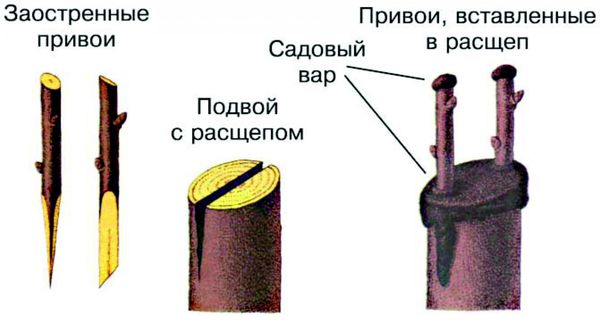
- into the cleft;
- budding.
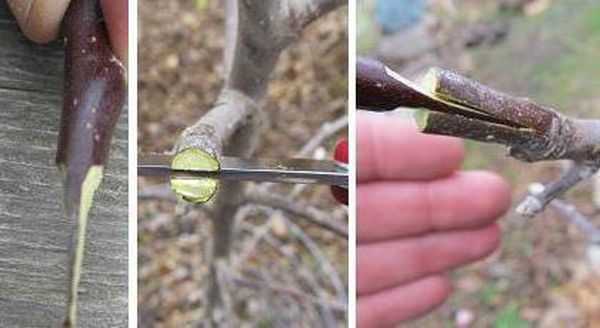
The first method involves joining identically young plants together in a single strip. The second method involves several steps. First, make a shallow cut in the rootstock and trim the scion into a spear shape. Then, connect the two elements with electrical tape. Bridge grafting is most often performed after winter, carefully trimming the bark around the trunk.
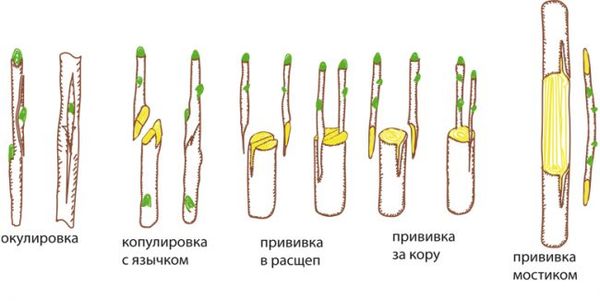
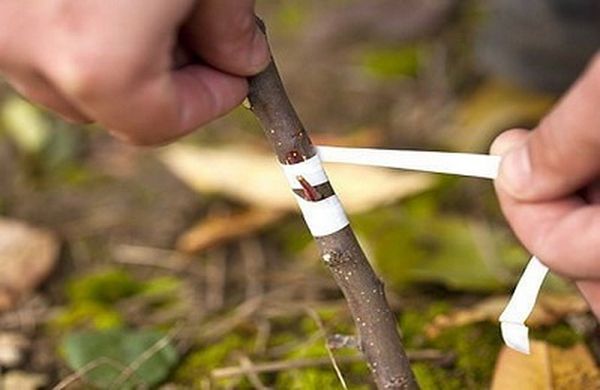
The cuts and joints are sealed with garden pitch, drying oil, or oil paint and wrapped with budding film, tape cut from plastic bags, or electrical tape. Side grafting differs from cleft grafting in the depth of the hole.
The final and simplest method is budding. To do this, you need a special budding knife. If you have a sharp utility knife handy, that will also work. Budding is the transfer of a bud from one tree to another, preserving all its characteristics. The bud is taken from a branch that has produced growth this year, cutting it in the morning. Remove all leaves and transfer it to the rootstock branch. First, make a 45-degree indentation, avoiding the wood.
Due to the versatility of all methods, there are dozens of practical proofs that it is possible to graft a young apricot onto a stone fruit tree.
Video: "Methods for grafting apricot onto plum"
This video will show you how to graft an apricot onto a plum tree.