
How to prune apricot trees at different times of the year
Content
Why is pruning necessary?
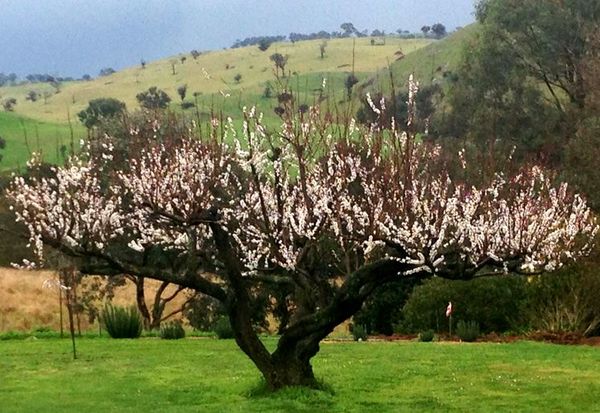
Before discussing when and how to prune excess branches, it's important to understand the purpose of this procedure. To achieve a neat tree crown, it must be properly shaped. Otherwise, branches will grow in a manner unrelated to their natural growth patterns.
Pruning is also necessary to ensure the tree continues to bear fruit normally over time. However, a dense and robust crown does not guarantee abundant fruiting. If it is not pruned, the branches within will quickly become bald and brittle. An unpruned tree will produce fewer fruiting buds, and the harvested fruit will be small.
If the crown of the apricot tree is not pruned in the very first years, its branches will begin to break due to the load. Such a tree will not produce new shoots. Heavy fruiting can even cause the apricot tree to die. Regular pruning of apricot trees growing in your own garden helps give them a well-groomed appearance. It also helps extend the tree's lifespan and ensure large, tasty fruits for many years to come.
Types of apricot pruning
There are five main types of pruning performed each season for apricot seedlings and mature fruit trees. For novice gardeners with minimal practical experience, we'll explain: there are formative, regulatory, restorative, and sanitary pruning, as well as rejuvenation pruning. Each method is important for the tree and has its own characteristics.
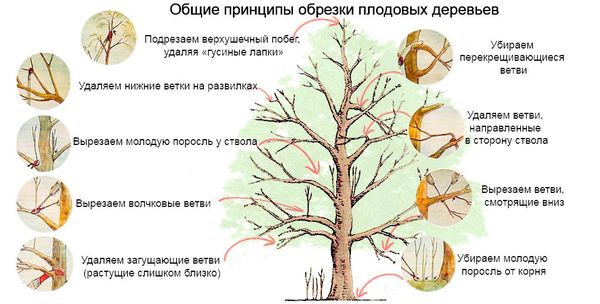
Without the first pruning, normal branching and the formation of first-tier branches on the seedling are impossible. Subsequent pruning techniques shape the tree for better sunlight exposure and prevent the crown from becoming overgrown. Pruning that regulates the number of branches ensures the safety of the future harvest without weakening the tree.
If the tree successfully withstands low winter temperatures, it may not require any rejuvenation treatment in the spring. Sanitary measures are carried out in the fall if diseases or pests are present. Rejuvenation is important to stimulate the emergence of new shoots.
Features of pruning
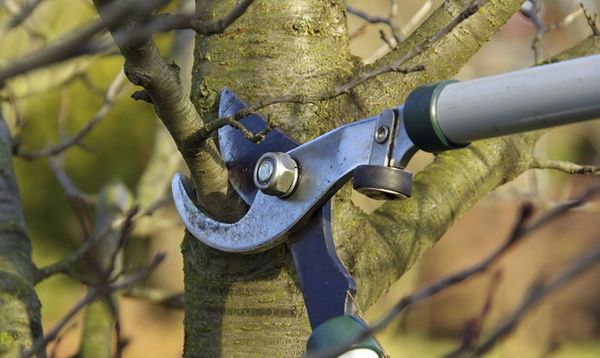
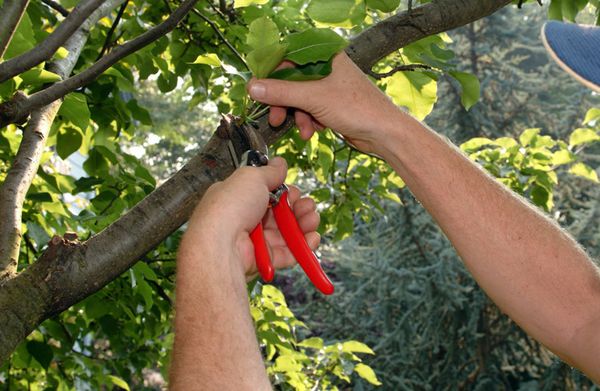
When to prune an apricot tree? Comprehensive pruning is always carried out in the spring, fall, and summer. Use well-sharpened and pre-disinfected tools. You'll need a garden knife, a hacksaw, pruning shears, and a lopper. To know how to properly remove unwanted branches, you need to familiarize yourself with the specifics of the procedure at different times of the year.
In the spring
In spring, it's recommended to do this in late March or early April. This means ensuring comfortable ambient temperatures and before the sap begins to actively flow. It's important to properly shape the crown of your tree, planning sanitation and maintenance procedures. How do you prune an apricot tree? At this time, remove any frozen or broken branches from the mature tree. Otherwise, all the plant's energy will be devoted to regenerating diseased shoots. This always risks a reduced harvest and a diminished flavor.
In summer
In June, aiming to complete the harvest before the 15th, gardeners should prune the apricots. Pinching begins in mid-May. All shoots from this year must be pinched. It's important to pinch shoots, but no more than 20-25 cm. Apricots are pruned in the summer to give their beloved plant a second youth. Young shoots that appeared this year are pruned to a length of 20-30 cm. Of the new shoots that appear after a couple of weeks, only 3-4 viable shoots are left; the rest should be cut off.
By autumn, all cuts should have healed and the foliage should have recovered. Additional buds should be expected. Summer pruning of apricots is usually performed no more than once every 3-4 years. Scheduled pruning may be postponed due to insufficient moisture.
In the fall
In the fall, the tree is cleared of diseased shoots. Fruiting branches, except for scaffold branches, should be shortened by a third of their total length. It is recommended to prune apricot trees in the fall in mid-October. If it rains or frosts occur too early, this procedure is not performed. This helps restore the balance between branches covered with leaves and those bearing fruit.
Crown formation
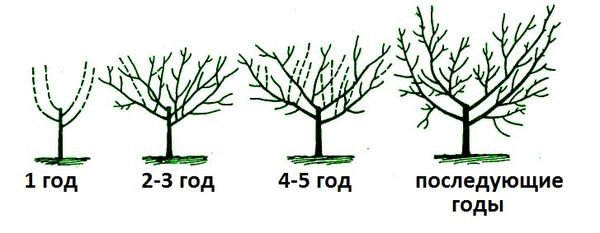
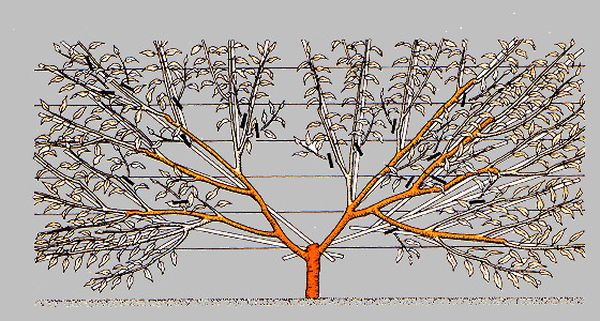
Experienced gardeners recommend using well-known techniques to create a sparse, tiered crown. To achieve this, no more than seven main branches of the first row should be spaced 40 cm apart. This pattern will change annually. To ensure the apricot tree develops correctly, this procedure should be carried out from the first year, taking into account the specific characteristics of each period.
First year
When shaping your apricot tree's crown yourself, during its first year, branches can be trimmed so that their length below the ground doesn't exceed 90 cm. If the young tree has shoots, the main shoot is usually trimmed so that it's 20-30 cm higher than the other branches. Viable branches are shortened by half. They are placed along the tree's row. This procedure is performed "on the ring," making sure to remove any remaining shoots.
Second year
Work necessary to establish new central branches continues. Viable shoots are traditionally pruned using the subordination method. Branches located in the upper tier should be shorter than those located lower down. The length of the guide branch is typically 40 cm from the last branch growing laterally. The shoots themselves should be spaced 30 cm from the previous year's shoots and from each other. Shoots that appeared on the tree last year are also subject to shortening. Those that grew on the main branches during this season are typically shortened by half (for fast-growing varieties) or by a third (for moderate-growing varieties).
Third year
During this period, the cuttings, now future full-grown trees, begin to develop their last skeletal branches. The main work is the same as in the second year. However, the guide branches are removed rather than shortened. To prevent overgrowth, non-skeletal branches that also grow from the trunk should be pruned.
Fourth year
By this time, most varieties begin to actively bear fruit. The crown is now considered fully formed, as the branches removed in previous periods are no longer present. Within three years, the tree will require sanitary and health-improving treatments.
Mature tree
An old apricot tree, more than four years old, desperately needs rejuvenation, as its branches are no longer capable of producing fruit. How can this be done? The skeletal branches should be shortened to a length of 20–30 cm. If fruit on your garden tree is appearing on distant branches, it is recommended to completely remove the wood from the existing skeletal branches in the spring. By summer, numerous young, healthy shoots will surely emerge from them.
If you learn all the rules and master the intricacies of the procedures, you will be able to enjoy well-groomed and abundantly fruiting trees growing in your garden.
Video: "Proper Pruning of Apricots in Spring"
This video will show you how to properly prune apricot trees in spring.