
Common diseases and pests of apricot trees and how to treat them
Diseases
Apricot diseases are divided into viral, bacterial and fungal.
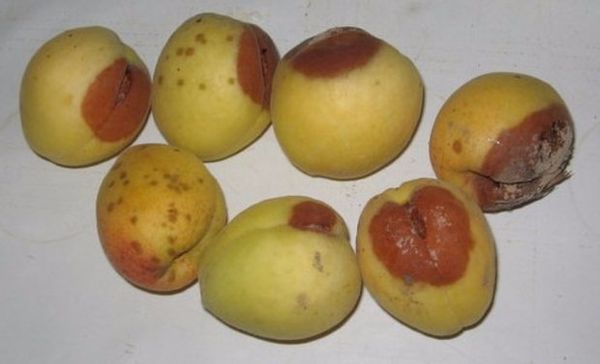
Bacteria and viruses attack the tree from within. These apricot diseases cause leaf discoloration, drying out, and fruit rot. Phytopathogenic fungi feed on the organic matter of the affected plant, causing it to wither. The mycelium grows inside the leaves or other parts of the tree, causing a fluffy coating to appear on their surface.
Let's look at common diseases of apricot trees and their treatment.
Moniliosis
The disease has two forms.
Monilial blight occurs during the flowering period. It is triggered by a warm winter and a damp spring. The flowers rot, then the wood turns brown and dies. Eventually, all the flowering branches dry up. As part of the control, infected parts of the plant are removed, and the tree is treated with Bordeaux mixture (3%) or copper oxychloride (0.9%).
In summer, fruit rot causes brown spots with a white coating to appear on apricots. These spots expand, covering the entire fruit. Eventually, the apricots wilt and rot. Treatment includes spraying with Bordeaux mixture, Nitrafen, Confidor, and Horus. A 5% iodine solution is also used: 10 ml per 10 liters of water. Iodine solution is most effective as a preventative measure.
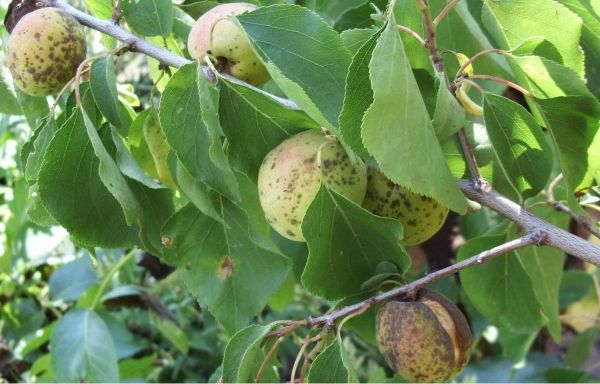
As a preventative measure, timely pruning and fertilizing (boric acid, manganese solution, etc.) are necessary.
Fusarium
Slightly sunken, brownish-gray spots appear on the leaves, and then on the fruit. The skin of the apricots wrinkles, and the flesh dries out. The disease affects weakened or damaged trees, so it's important to follow proper agricultural practices and apply fertilizers, such as boric acid. What treatment should you use to save the tree? Use Fitosporin-M, Mikosan-V, or Trichodermin.
Cytosporosis
If leaves are wilting at the tips of shoots and brown streaks appear on the bark, it's most likely a case of Cytosporosis. The infection spreads from young branches to older ones, eventually causing the entire tree to wither. Treatment of Cytosporosis is only possible in the early stages. Drying branches are pruned, cutting back healthy tissue. The wound is treated with garden pitch. Preventative sanitary pruning and treatment with antifungal agents (such as "Hom") are important. Don't forget about fertilizing (boric acid, etc.).
Verticillium wilt
Beginning gardeners sometimes wonder why the leaves on their apricot trees turned yellow and started falling in early June. Verticillium wilt may be the cause. It can cause almost all the leaves to fall over the summer, with the exception of a few clusters. To diagnose the disease, cut off a branch and examine the cut surface: irregular brown spots, sometimes coalescing into a ring, indicate the disease. Incidentally, these spots can appear even without leaf shedding.
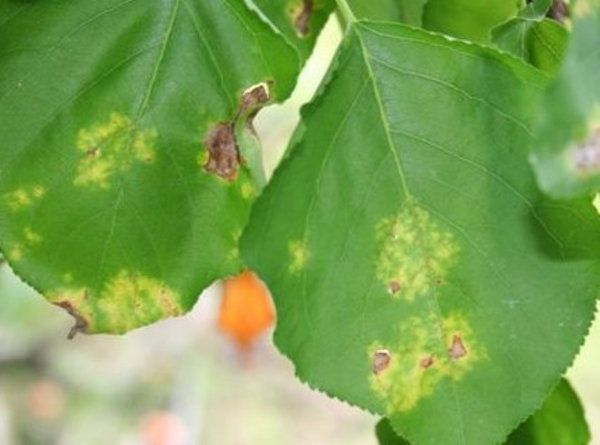
The second question: how to treat this disease? Suitable medications include Topsin-M, Vitaros, Gliocladin, and Rovral.
Clusterosporiasis
Clasterosporium leaf spot is also known as apricot hole spot. Small, round spots appear on the leaves. These quickly dry out and fall off, leaving numerous holes on the leaf blades. In severe cases, the apricot tree sheds its hole-ridden leaves. Clasterosporium leaf spot also causes gum-exuding growths to appear on the apricot tree, and the fruit becomes riddled with holes and deformed.
Clasterosporium can be noticed in the spring: gum appearing on the shoots floods some of the buds, causing them to darken and fail to open. Inspect the plant frequently, as clasterosporium is most likely to be eliminated in its early stages. Bordeaux mixture or copper sulfate (1%) can be used for this purpose. All parts of the plant affected by clasterosporium are removed.
Vals's mushroom
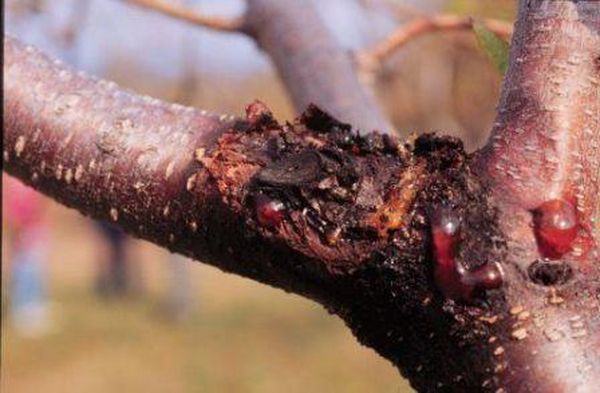
Spores enter the plant through untreated wounds. The disease causes ulcers to appear on the bark, usually amber-yellow. The disease is often caused by improper or untimely pruning (for example, during the dormant period). To cure the plant, it is recommended to treat it with Switch (10 g per 10 liters of water) every 7-10 days. Stop treatments a few weeks before harvest.
Leaf curl
There is another reason why apricot leaves turn yellow - leaf curl.
The disease causes yellowed areas to appear on apricot leaves, which darken to a deep red color. The leaves curl and become deformed, developing red, blister-like tumors. Leaves and fruits fall off en masse. Young shoots become deformed.
If the leaves turn red, remove all affected branches immediately. Copper-containing products can help save the plant. Proper tree care, including fertilizing with boric acid, is essential.
Brown leaf spot
Another reason why leaves turn yellow.
Initially, yellowing appears as small, diffuse spots. These areas expand, turn red, darken, and eventually affect the entire leaf. Eventually, the affected leaves fall off. Infected fruits become deformed and often fall off before ripeness.
To combat yellowing, after removing the affected areas, the tree and the soil underneath are treated with Bordeaux mixture, copper sulfate (1%) or Nitrafen.
Bacterial necrosis
This infection is also called bacterial cancer, and it is one of the most dangerous diseases of apricots.
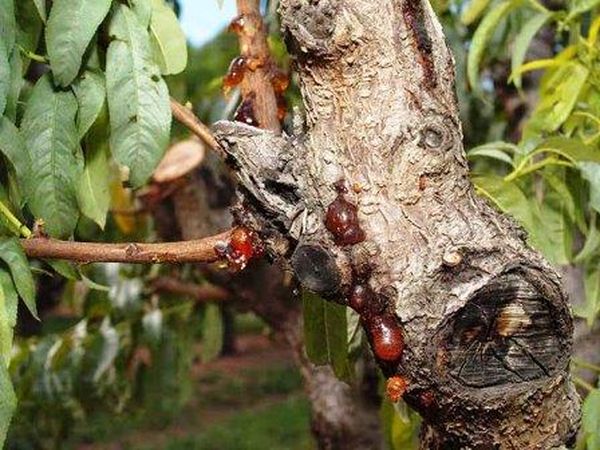
At first, black spots appear on various parts of the plant. Gradually, they enlarge. Gum-spewing ulcers appear on the blackened areas. The bark turns brown and dies.
Infected branches should be cut off, retaining some healthy tissue, and burned. Treat the tree with Fitolavin. If the plant cannot be saved, dig up the soil with bleach (200 g per square meter).
Gum flow
If the gum is leaking for a reason unrelated to those mentioned above (there are no other symptoms), the problem may be unsuitable climate, weather, or soil. After removing the gum, trim away the dead tissue, treat the cut with copper sulfate (1%) or an iodine-containing product, and seal with wax. Remember to follow proper cultivation practices and fertilizers (boric acid, iodine fertilizer, etc.).
If the cause is excess lime in the soil, watering with a light solution of potassium permanganate throughout the season will help.
Scab
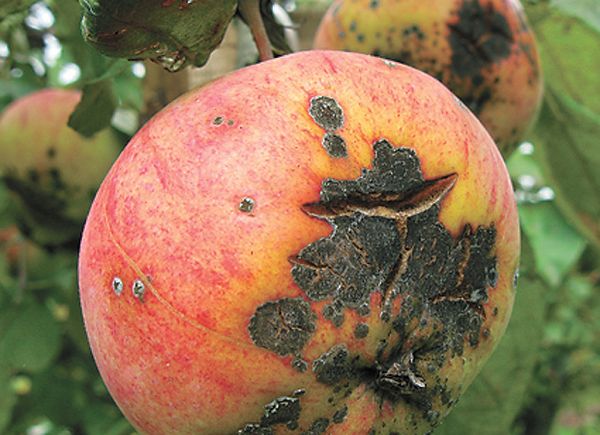
Scab is a common disease of apricots. The first signs are dark green spots on the foliage, usually round. These soon darken to brown. The lesion can spread and engulf the entire leaf, after which it dries up and falls off. Infected shoots dry out. Hard, gray or brown spots appear on the fruit.
What should you do if the first symptoms of the disease are detected? Use copper-containing preparations or systemic fungicides (Hom, Topsin-M, Skor).
Pests
The next point is common apricot pests and how to control them.
Aphid
On apricot trees, aphids attach themselves to the underside of leaves and suck their sap. This causes the leaf blade to dry out and gradually curl. Young shoots become deformed, and the yield decreases. Without treatment, these pests can cause the death of an adult apricot plant or seedling.
Let's look at how to deal with aphids on apricots.
If there are only a few parasites, you can get rid of aphids by hand collection.
Planting nearby plants, such as chamomile, marigolds, and onions, provides natural protection against aphids. If you don't want to use chemicals, you can get rid of them with predatory insects like ladybugs or lacewings. Ants, which feed on the parasites' sweet secretions, promote aphid reproduction.
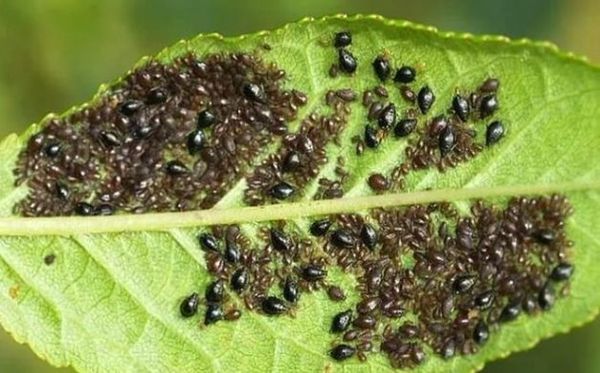
In case of severe infestation, you can save the tree from aphids using chemicals (Fitoverm, Aktofit, Fufanon, Aktara).
Codling moth
A small butterfly whose caterpillar damages fruit. The larvae typically overwinter in a cocoon, around the tree trunk, or in cracks in the tree. Treat the infected plant with Entobacterin (0.5%) or Chlorophos (0.2%). Also, make trapping belts from corrugated paper, burlap, or duct tape.
Leaf roller
A small beige-brown insect. The caterpillars feed on buds, flowers, leaves, and young shoots. To control them, remove curled leaves (they contain pupating larvae). Spray with Fitoverm or Akarin, and in severe infestations, use pyrethroids.
Comma scale insect
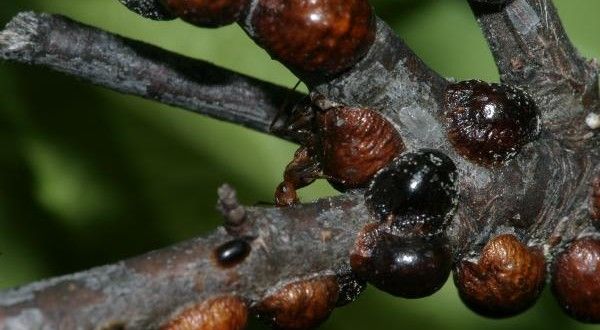
The insect is 3–4 mm in size, comma-shaped (tapering toward the tail). Its brown shield resembles a growth on a tree. It feeds on tree sap, causing it to dry out. In winter, the female lays eggs under the shield, which turns dark brown, and dies. The larvae hatch in the spring at 8°C. Pesticides (such as Fufanon, Calypso, and Aktara) are used for treatment, and Fitoverm is a biological treatment.
Glass-box
A butterfly with transparent wings that lays eggs near buds. The larva bores a hole in the bark and moves along the core of the branch, feeding on it. Naturally, the branch dies. Use Fitoverm, Akarin, and Lepidocid for control. Monitor young shoots, cutting them off if they dry out.
Fruit striped moth
A butterfly with dark gray wings. The caterpillars feed on buds, fruits, and the cores of young shoots. In spring, use DNOC (1%) or Nitrafen (3%) for control. A week after flowering ends, spray the plant with Karbofos (0.3%), Metathion (0.15%), or Metaphos (0.2%).
Video "Diseases of Fruit Trees"
This video will tell you about the diseases that fruit trees can suffer from and how to treat them.